22 citations
,
November 2008 in “The journal of investigative dermatology/Journal of investigative dermatology” This study observed that cathepsin L and transglutaminase 3 colocalize in the human hair bulb and nail matrix, suggesting their involvement in terminal differentiation within these epidermal appendages.
 October 2023 in “Journal of the Endocrine Society”
 This case report describes a challenging diagnosis of Cushing’s syndrome using endocrine tests and imaging, which ultimately identified an adrenal etiology. Successful treatment involved a non-invasive desmopressin stimulation test and right adrenalectomy, leading to improvement in symptoms and health outcomes for the patient.
1 citations
,
September 2023 in “Genes” This study found no significant difference in CUX1 core promoter methylation levels between different lambskin patterns in Hu sheep, suggesting other mechanisms influence CUX1 expression related to hair follicle development.
4 citations
,
January 1993 in “Clinical Chemistry and Laboratory Medicine (CCLM)” This study developed a highly sensitive fluorescent assay for measuring enzyme activity in single hair follicles, allowing the efficient analysis of over 100 samples per day.
1 citations
,
August 1985 in “Proceedings annual meeting Electron Microscopy Society of America” This study discusses using SEM/EDX for elemental analysis of hair samples in forensic science but notes challenges in detecting certain trace elements from raw hair.
November 2024 in “Journal of Investigative Dermatology” Blocking the JAK/STAT pathway may help reduce skin sensitivity in Xeroderma pigmentosum.
2 citations
,
August 2020 in “CRC Press eBooks” This article discusses the impact of the tabby mutation on secondary vibrissae and hair follicle patterns in mice and reports no new clinical results.
5 citations
,
July 1996 in “Journal of Cutaneous Medicine and Surgery” This study explains that while trichothiodystrophy and xeroderma pigmentosum share genetic defects, TTD patients primarily exhibit issues in transcription initiation, not the increased skin cancer risk seen in XP.
March 2026 in “Drug Testing and Analysis” This study observed that the degradation product PTeCA significantly increased in hair treated with oxidative cosmetics, suggesting it could be a reliable marker for detecting such treatments, with a proposed PTCA cut-off value using PTeCA as the gold standard.
22 citations
,
November 2014 in “Proteins Structure Function and Bioinformatics” In this study, researchers mapped cysteine accessibility in wool keratins and KAPs, revealing that certain cysteines in keratin end domains and Types I and II rod domains are accessible and likely involved in forming disulfide bonds.
 109 citations
,
October 2007 in “American Journal of Human Genetics”
109 citations
,
October 2007 in “American Journal of Human Genetics” This study found that postnatal treatment with recombinant EDA normalized adult teeth, improved sweating, and restored normal lacrimation in dogs with XLHED, suggesting its potential as a treatment for the condition.
January 2024 in “Animals” This study suggests that the transcription factors SP1 and KROX20 regulate CUX1 gene's effect on the proliferation of ovine dermal papilla cells in vitro.
14 citations
,
January 2022 in “Evidence-based Complementary and Alternative Medicine” This study found that cryptotanshinone improved bone mass, inhibited osteoclast differentiation, and protected against kidney damage in ovariectomized rats, suggesting potential benefits for clinical use.
 1 citations
,
August 2023 in “The journal of pharmacology and experimental therapeutics/The Journal of pharmacology and experimental therapeutics”
1 citations
,
August 2023 in “The journal of pharmacology and experimental therapeutics/The Journal of pharmacology and experimental therapeutics” This study developed a new method to analyze Cantú syndrome mutations in KATP channels, finding that while Kir6.1 mutations increase sensitivity to potassium channel openers, SUR2B mutations show reduced sensitivity, but both result in marked hyperpolarization compared to wild-type channels under basal conditions.
September 2023 in “Journal of the American Academy of Dermatology” CTP-543 significantly improved eyebrow and eyelash regrowth and patient satisfaction in adults with alopecia areata.
 10 citations
,
November 2018 in “Genetics in medicine”
10 citations
,
November 2018 in “Genetics in medicine” This study identified a genetic variant in the CTS6 gene associated with a hypotrichosis syndrome, emphasizing the significant role of cystatin M/E in hair and skin health.

This study constructed a genomic map of copy number variations in fine-wool sheep, revealing their potential impact on traits like growth, nutrient metabolism, and susceptibility to selection pressures.
September 2021 in “Journal of the American Academy of Dermatology” This study found that reported stress and hair growth changes related to facial/body hair excess or scalp hair loss differ among ethnic gender minority groups, with black and other ethnic respondents experiencing more stress compared to Caucasians, particularly in relation to facial/body hair excess.
January 2012 in “Hacettepe University Institutional Repository (hacettepe.edu.tr)” This study found that using a contrast agent in Microbeam Radiation Therapy simulations increased the target dose but concluded that using a linear accelerator as an X-ray source did not preserve MRT advantages.
5 citations
,
March 2017 in “Gene” This study found that the transcription factor CAP1 negatively regulates KRT83 expression in Tan sheep, possibly influencing their curly hair phenotype.
48 citations
,
August 1998 in “Developmental Biology” In this study, researchers created a mutant mouse lacking the first cut repeat in the Cux/CDP protein, resulting in curly vibrissae and wavy hair, supporting the role of Cux/CDP's DNA binding domains in gene regulation during development.
 17 citations
,
January 2010 in “Acta Dermato Venereologica”
17 citations
,
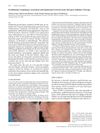
January 2010 in “Acta Dermato Venereologica” This report details a case of a 43-year-old woman developing yellowish papular eruptions alongside typical acneiform skin reactions on her cheeks and chest following a switch from cetuximab to panitumumab treatment.
 2 citations
,
December 2021
2 citations
,
December 2021 This study found that the observed isotropic ss-ECD spectrum of finasteride is influenced by the anisotropy of locally oriented crystals, offering new possibilities for analyzing solid-state chiral materials.
 1 citations
,
August 2024 in “Transgenic Research”
1 citations
,
August 2024 in “Transgenic Research” In this study, the researchers observed that inducing and then withdrawing β-catenin expression in a bigenic mouse model caused reversible changes in skin morphology, indicating dependence on β-catenin signaling.
4 citations
,
August 2023 in “Biomedicine & Pharmacotherapy” This study found that in noise-exposed FVB/NJ mice and cell models, ivacaftor reduced oxidative stress and hearing damage by maintaining CFTR function and increasing Nrf2 expression, suggesting its potential for treating noise-induced hearing loss.
 4 citations
,
January 2021 in “Journal of Clinical Medical Research”
4 citations
,
January 2021 in “Journal of Clinical Medical Research” This review provides an in-depth analysis of the structure and function of c-kit activation, and its role in both normal physiological and pathological conditions, with no new research findings reported.
 April 2018 in “Journal of Investigative Dermatology”
 This study observed that β-catenin overexpression in human squamous cell carcinoma cells led to increased CREB expression, which significantly enhanced clonogenic activity, suggesting CREB as a β-catenin-regulated factor promoting cancer characteristics.
70 citations
,
December 2008 in “Cancer Research” This study found that activating CXCR2 on ras-transformed keratinocytes promotes migration and tumor development in a mouse skin model.
 November 1998 in “Journal of The European Academy of Dermatology and Venereology”
 A man's skin cancer improved and some of his hair grew back after treatment with a special light therapy and a medication.
February 2023 in “PLOS ONE” In this study, Caizhixuan hair tonic was found to promote hair growth in androgenetic alopecia mice by regulating the PI3K/Akt and apoptosis pathways.