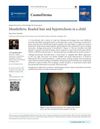
 January 2026 in “Cosmoderma”
 In this clinical case study, a 9-year-old girl was diagnosed with monilethrix, a hereditary hair shaft disorder characterized by weak, beaded hair, with management focusing on minimizing hair trauma.
 216 citations
,
October 1997 in “American Journal of Ophthalmology”
216 citations
,
October 1997 in “American Journal of Ophthalmology” This study found that unilateral topical latanoprost use for glaucoma was associated with hypertrichosis and increased pigmentation of eyelashes in the treated eye compared to the untreated eye.
 37 citations
,
May 2016 in “JAAD case reports”
37 citations
,
May 2016 in “JAAD case reports” This abstract describes monilethrix, an autosomal dominant genodermatosis with symptoms like hair fragility and keratosis pilaris, and does not report new experimental results.
26 citations
,
January 1993 in “Dermatology” This report describes a new case of isolated trichothiodystrophy with characteristic brittle hair and suggests a simplified classification scheme for understanding sulfur-deficient hair disorders.
2 citations
,
September 2021 in “JAAD case reports” This report describes a case of trichodysplasia spinulosa in a renal transplant patient, characterized by unique dermatoscopic features and highlighting the need for timely diagnosis.
1 citations
,
June 2016 in “Medicina” This article reviews monilethrix, a rare genetic hair disorder causing brittle hair and alopecia, and emphasizes the need for clinical diagnosis and characteristic tricoscopic findings.
January 2005 in “Veterinarski glasnik” This study concluded that Micanfin did not cause leukotrichia in a Rottweiler dog, which was diagnosed with hypothyroidism after ruling out other causes of alopecia.
144 citations
,
May 1990 in “Journal of the American Academy of Dermatology” 12 citations
,
June 2011 in “Journal of Dermatological Case Reports” This case report describes successful treatment of trichomycosis axillaris, a bacterial infection of hair shafts, using shaving and topical antibiotics, resulting in complete odor elimination within weeks.
 9 citations
,
May 2013 in “JAMA Dermatology”
9 citations
,
May 2013 in “JAMA Dermatology” This report details a case of extensive leukotrichia induced by dasatinib in a patient with refractory chronic myelogenous leukemia.
35 citations
,
September 2003 in “Archives of dermatology” This study proposed that the tiger tail phenomenon in trichothiodystrophy hair is caused by regular undulations of hair fibers, altering the optical properties seen under polarized light.
 24 citations
,
July 1983 in “Clinical and Experimental Dermatology”
24 citations
,
July 1983 in “Clinical and Experimental Dermatology” Tigason improved hair growth in a boy with monilethrix without side effects.
13 citations
,
July 2012 in “International Journal of Trichology” In this study, the varied phenotype of trichothiodystrophy was highlighted, with findings of distinctive hair shaft abnormalities and a wide range of multisystem issues, including neurologic and urologic disorders.
17 citations
,
December 2013 in “Dermatologic Surgery” This study found that autologous noncultured epidermal suspension transplantation improved leukotrichia in 88.1% of treated vitiligo lesions without significant adverse events.
 11 citations
,
February 1989 in “Journal of veterinary medicine. Series A”
11 citations
,
February 1989 in “Journal of veterinary medicine. Series A” This study observed that congenital hypotrichosis in crossbred cattle is linked to short, curly, dilute-color hair, potentially due to color dilution mutants in European breeds.
6 citations
,
October 1998 in “PubMed” This case study reports a new variant of chronic dermatophytosis with giant cutaneous horns, suggesting a possible genetic link and highlighting successful treatment with antifungal medications.
 January 2022 in “Revista Dermatológica Centro Uraga”
 This article reviews two cases of monilethrix in siblings, detailing their clinical and dermatoscopic characteristics, but reports no new findings.
 17 citations
,
January 2010 in “Acta Dermato Venereologica”
17 citations
,
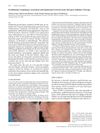
January 2010 in “Acta Dermato Venereologica” This report details a case of a 43-year-old woman developing yellowish papular eruptions alongside typical acneiform skin reactions on her cheeks and chest following a switch from cetuximab to panitumumab treatment.
 21 citations
,
January 2005 in “Pediatric Dermatology”
21 citations
,
January 2005 in “Pediatric Dermatology” An 8-year-old girl with vitiligo developed extra hair growth on her knee after using tacrolimus ointment.
 74 citations
,
March 1963 in “Archives of Dermatology”
74 citations
,
March 1963 in “Archives of Dermatology” This article reviews historical reports of skin changes, such as pseudoacanthosis nigricans, associated with cholesterol-lowering drugs like triparanol and nicotinic acid, but presents no new clinical findings.
 January 2013 in “The Pan African medical journal”
 This report describes two cases of monilethrix in Afghan siblings, detailing the hair disorder's clinical presentation and potential influences on hair growth, such as hormonal changes and iron supplementation.
 September 2016 in “Journal of The American Academy of Dermatology”
 This case study identified the condition as Monilethrix in a 17-year-old female, characterized by a beaded hair appearance and linked to a genetic cause.
30 citations
,
August 2005 in “British journal of dermatology/British journal of dermatology, Supplement” This study identified a novel CDH3 mutation associated with sparse hair and pigmentary macular changes in two siblings with hypotrichosis but no visual symptoms.
188 citations
,
June 1998 in “Molecular cell” This study found that mimicking the XPD point mutation in mice resulted in trichothiodystrophy-like symptoms, supporting the role of basal transcription and DNA repair defects in the disease.
March 2003 in “中華皮膚科醫學雜誌” This report describes a patient with trichothiodystrophy exhibiting both specific hair abnormalities and developmental delay, contributing to the understanding of this rare disorder's clinical presentation.
 1 citations
,
February 2018 in “Australasian journal of dermatology”
1 citations
,
February 2018 in “Australasian journal of dermatology” Advanced imaging techniques are crucial for accurately diagnosing Monilethrix, a rare hair disorder.
 4 citations
,
July 2019 in “Clinics in Dermatology”
4 citations
,
July 2019 in “Clinics in Dermatology” This article reviews various "white diseases" characterized by hypopigmentation or depigmentation and emphasizes the role of melanosomes in skin and eye color, but it does not present new clinical results.
10 citations
,
January 1997 in “Dermatology” This case report details two siblings with trichothiodystrophy, identifying reduced hair sulfur content as essential for diagnosis despite varied symptoms complicating recognition.
January 2026 in “American Journal of Medical Genetics Part A” The researchers reported two brothers with a new variant of X-linked trichothiodystrophy associated with an RNF113A gene mutation, highlighting features such as intellectual disability and growth failure, but without previously reported endocrinological or genital abnormalities, underlining the importance of genetic counseling for such variants.
1 citations
,
January 2018 in “Indian dermatology online journal” This case report presents a 14-year-old girl with both type I diabetes and monilethrix, detailing her symptoms and treatment with topical minoxidil, while exploring a possible genetic link between the conditions.