 October 2022 in “The American journal of gastroenterology”
 This case report details a patient with myasthenia gravis and a malignant thymoma whose rising liver function tests, initially thought to be related to antibiotic use, were ultimately attributed to thymoma-associated multiorgan autoimmunity.
 September 2019 in “Journal of evolution of medical and dental sciences”
 In this study of patients with obesity, the most common skin disorders observed were acanthosis nigricans, skin tags, and stretch marks, emphasizing the impact of obesity on dermatological health.
138 citations
,
June 2023 in “Molecules” This review examines various skin pigmentation disorders, their causes, and potential treatments, detailing 25 plants, 4 marine species, and 17 clinically tested topical and oral medications for managing these conditions.
 January 2013 in “Journal of dermatology”
 This letter to the editor raises the possibility of a new medical entity characterized by symptoms such as poikiloderma, hyperpigmentation, alopecia, malformed bones, lymphedema, and decreased cortisol, but provides no clinical results.
20 citations
,
January 2012 in “Indian Journal of Endocrinology and Metabolism” This study found that 76.19% of patients with acquired hypoparathyroidism had mucocutaneous manifestations, with common features including loss of hair and xerotic skin.

In this case report, researchers observed that a malnourished male patient developed pseudoglucagonoma syndrome, characterized by necrolytic migratory erythema and diffuse hair loss, following Frey's surgery, which rapidly improved with enhanced nutrition.
 January 2007 in “Journal of the American Academy of Dermatology”
 A 73-year-old man's grey-white hair turned dark brown after eczema treatment.
 2 citations
,
November 2015 in “Endocrinology, Diabetes & Metabolism Case Reports”
2 citations
,
November 2015 in “Endocrinology, Diabetes & Metabolism Case Reports” This case report describes a 57-year-old man's late diagnosis of X-linked adrenoleukodystrophy, highlighting the need to consider this condition in patients with non-autoimmune primary adrenal insufficiency and neurological issues.
 March 2019 in “Journal der Deutschen Dermatologischen Gesellschaft”
 This clinical letter identifies Rothmund-Thomson syndrome type 2 as a rare cause of chronic wounds, but provides no new experimental findings.
18 citations
,
December 2010 in “Transplantation Proceedings” This study reported that black hairy tongue can occur after allogeneic stem cell transplantation and may indicate cutaneous graft-versus-host disease, highlighting the need for histopathologic evaluation.
 April 2026 in “Diagnostics”
 This study found that skin changes in morbidly obese individuals are associated with underlying metabolic disturbances but are not currently valuable as independent tools for assessing metabolic risk or treatment response.
 December 2025 in “Dermatology Reports”
 This source describes vitiligo as a chronic condition marked by the loss of skin pigmentation and discusses leukotrichia, a feature affecting 10% to 60% of cases, which arises from melanocyte loss in hair follicles and appears as well-defined white patches on the skin.
15 citations
,
March 2004 in “British Journal of Dermatology” This case report describes a 40-year-old Indian male with sclerosing cholangitis whose skin lesions and liver function improved following surgical treatment.
 January 2009 in “Springer eBooks”
 Skin problems can be a sign of hormone-related diseases.
 13 citations
,
July 2007 in “Pediatric dermatology”
13 citations
,
July 2007 in “Pediatric dermatology” In this case report, an ointment containing 1.24R-dihydroxyvitamin D3 was effective for treating follicular keratosis of the chin but did not provide lasting benefits after treatment ended.
 January 2024 in “Brazilian journal of veterinary pathology”
 In this case report, a 6-year-old spayed female Samoyed dog presented with non-pruritic alopecia and hyperpigmentation on the hips and back, with unremarkable bloodwork and negative Cushing's disease and skin tests.
 14 citations
,
July 2012 in “Journal of the American Academy of Dermatology”
14 citations
,
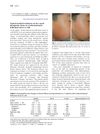
July 2012 in “Journal of the American Academy of Dermatology” This study found that topical tacalcitol improved roughness and scaling in erythromelanosis follicularis faciei et colli, although it was less effective for facial erythema.
2 citations
,
April 2024 in “Medical Journal Armed Forces India” 10 citations
,
January 2016 in “ACG Case Reports Journal” This case report describes a 73-year-old male with numerous colon polyps whose long-term use of Cape Aloe likely caused melanosis coli, which helped highlight the polyps' locations.
 48 citations
,
September 2009 in “Dermato-endocrinology”
48 citations
,
September 2009 in “Dermato-endocrinology” This article reviews skin signs in patients with anorexia nervosa and their potential role in early diagnosis but reports no clinical results; it emphasizes the importance of dermatologists in recognizing these signs.
 10 citations
,
June 2011 in “Archives of Dermatology”
10 citations
,
June 2011 in “Archives of Dermatology” Finasteride caused blisters on hands and feet.
 August 2018 in “Pediatric Dermatology”
 This case report describes a unique instance of an otherwise healthy infant with phylloid terminal hair nevus, a form of hypomelanosis without extracutaneous abnormalities.
 11 citations
,
August 2010 in “Pediatric dermatology”
11 citations
,
August 2010 in “Pediatric dermatology” This report details two cases of Lichen spinulosus in the submental area, treated effectively and safely with topical tacalcitol cream.
5 citations
,
July 1996 in “Journal of Cutaneous Medicine and Surgery” This study explains that while trichothiodystrophy and xeroderma pigmentosum share genetic defects, TTD patients primarily exhibit issues in transcription initiation, not the increased skin cancer risk seen in XP.
 January 2016 in “Japanese Journal of Oral & Maxillofacial Surgery”
 This case report documents a trichofolliculoma of the upper lip in a 70-year-old woman, highlighting its clinical presentation and successful surgical removal without recurrence.
April 2021 in “Authorea (Authorea)” In this case report, a woman with segmental vitiligo and hemifacial atrophy showed signs of stabilization after treatment with chloroquine and betamethasone pulse, suggesting a common underlying cause for these dermatoses.
October 2024 in “Indian Journal of Dermatology” In this case report, a 13-year-old boy was diagnosed with a rare variant of cutaneous sarcoidosis presenting as Lichen Planus Pigmentosus-like hyperpigmentation, highlighting the diagnostic challenges associated with identifying uncommon manifestations of this disease.
 21 citations
,
January 2005 in “Pediatric Dermatology”
21 citations
,
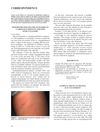
January 2005 in “Pediatric Dermatology” An 8-year-old girl with vitiligo developed extra hair growth on her knee after using tacrolimus ointment.
8 citations
,
December 2006 in “Journal of Vascular Surgery” Foam sclerotherapy for varicose veins may cause unexpected hair growth.
8 citations
,
January 2014 in “Indian Dermatology Online Journal” This article presents a case of trichostasis spinulosa, a common but often unrecognized disorder, diagnosed through dermoscopic examination of black macules revealing bundled vellus hairs, with the patient declining treatment.