210 citations
,
February 2008 in “Nature genetics” This study found mutations in the P2RY5 gene that are linked to autosomal recessive woolly hair in Pakistani families, implicating it in hair texture determination.
 April 2016 in “The journal of investigative dermatology/Journal of investigative dermatology”
 This study suggests that infiltrating M2 macrophages promote wound-induced hair neogenesis in mice by producing growth factors that activate the wnt signaling pathway during the late phase of wound healing.
 April 2016 in “Chinese Journal of Dermatology”
 This study found that Wnt10b induces hair follicle regeneration in mice, likely by activating the canonical Wnt signaling pathway in stem cells and their daughter cells.
5 citations
,
October 2020 in “bioRxiv (Cold Spring Harbor Laboratory)” In this study, the authors found that inhibiting Cdc42 activity with CASIN restored hair follicle stem cell function and hair growth in aged mice, suggesting potential for treating aging-related hair regeneration issues.
 54 citations
,
April 2019 in “Journal of cellular physiology”
54 citations
,
April 2019 in “Journal of cellular physiology” In this study, miR-218-5p was found to enhance hair shaft growth and positively regulate the Wnt signaling pathway by targeting SFRP2 during skin and hair follicle development.
October 2020 in “Research Square (Research Square)” This study found that treating aged mice with the Cdc42 inhibitor CASIN restored hair follicle stem cell functionality and improved hair regeneration by inducing anagen onset and increasing anagen skin areas.
 8 citations
,
May 2024 in “PLoS Biology”
8 citations
,
May 2024 in “PLoS Biology” This study on feather pattern formation in chicken skin found that inhibiting gap junctional intercellular communication can lead to the emergence of new feather buds in specific spatial patterns, suggesting that GJIC may facilitate Turing-type periodic patterning by propagating inhibitory signals over long distances.
4 citations
,
February 2024 in “Poultry Science” This study found that the miR-140-y-TCF4 axis regulates the proliferation of goose embryonic dermal fibroblast cells by affecting the Wnt signaling pathway, highlighting its role as a dynamic regulator during skin and feather follicle development.
 6 citations
,
June 2021 in “Developmental biology”
6 citations
,
June 2021 in “Developmental biology” This study found that dermal EZH2 plays a crucial role in controlling fibroblast differentiation by regulating Wnt/β-catenin and retinoic acid signaling during skin development.
 July 2022 in “Journal of Investigative Dermatology”
 This study found that the transcription factor Lef1 is crucial for normal skin and hair development and wound healing, highlighting its role in regulating essential genes and pathways in papillary fibroblasts.
 13 citations
,
November 2012 in “PLoS ONE”
13 citations
,
November 2012 in “PLoS ONE” This study identified a novel recessive mutation in mice causing lethal congenital lamellar ichthyosis, with skin and hair follicle alterations similar to human congenital ichthyoses, linked to a specific genetic defect affecting Fatp4.
13 citations
,
January 2024 in “Journal of Nanobiotechnology” This research reported that a newly developed adhesive wound dressing (SIS/PAA/LAP) demonstrated higher tissue adhesion and burst strength compared to conventional products, and improved tissue repair outcomes in animal models, suggesting potential for enhanced wound healing applications.
 December 2023 in “The journal of investigative dermatology/Journal of investigative dermatology”
 In a mouse model study, researchers observed that the absence of MCPIP1 in myeloid cells decreased susceptibility to chemically induced skin papillomas but caused significant hair loss and skin pigmentation changes, suggesting a role for MCPIP1 in skin carcinogenesis and follicle integrity.
20 citations
,
July 2005 in “Experimental dermatology” This study found that the fuzzy mutation in mice is linked to both structural hair defects and accelerated hair follicle cycling, influencing the regulation of hair cycle phases such as catagen and anagen.
48 citations
,
August 1998 in “Developmental Biology” In this study, researchers created a mutant mouse lacking the first cut repeat in the Cux/CDP protein, resulting in curly vibrissae and wavy hair, supporting the role of Cux/CDP's DNA binding domains in gene regulation during development.
176 citations
,
January 2013 in “Proceedings of the National Academy of Sciences” This study reveals an antagonistic competition between BMP and Wnt signaling within stem cells, influencing their fate towards hair germ characteristics based on the BMP/Wnt activity ratio.
 12 citations
,
September 2021 in “PLoS ONE”
12 citations
,
September 2021 in “PLoS ONE” In this study, researchers found that interaction between transcription factor EBF1 and gene WNT10A, influenced by a genetic variant, may play a role in hair shaft formation and anagen shortening in male pattern baldness.
August 2026 in “Scientific Reports” This study found that FAM19A5 acts as a negative regulator of wound healing by hindering keratinocyte migration and partially transitioning them between epithelial and mesenchymal states, suggesting that targeting the FAM19A5-PPARD-Snail axis could offer new therapeutic options for impaired wound repair.
6 citations
,
February 2023 in “Genes” This study found that overexpression of the CUX1 protein promotes proliferation of Hu sheep dermal papilla cells and affects key genes in the Wnt/β-catenin signaling pathway.
 8 citations
,
September 2017 in “Journal of Investigative Dermatology”
8 citations
,
September 2017 in “Journal of Investigative Dermatology” This study found that inhibiting the interaction between CXXC5 and Dishevelled could stimulate hair regrowth in mouse models by enhancing WNT/β-catenin signaling, suggesting a potential therapeutic strategy for hair loss involving compounds that block this interaction, such as interfering short peptides.
 10 citations
,
November 2018 in “Nature Biotechnology”
10 citations
,
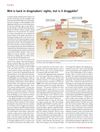
November 2018 in “Nature Biotechnology” Drugmakers are optimistic about targeting the Wnt pathway for new treatments despite past challenges.
324 citations
,
May 2002 in “Oncogene”  29 citations
,
July 2014 in “PloS one”
29 citations
,
July 2014 in “PloS one” In this study, Meis1 was found to regulate epidermal homeostasis and act as a proto-oncogenic factor in skin tissues, with differences in expression patterns between normal and tumor cells.
 16 citations
,
February 2014 in “Journal of Investigative Dermatology”
16 citations
,
February 2014 in “Journal of Investigative Dermatology” This study developed a mouse model to monitor hair follicle cycling macroscopically through live bioluminescence imaging, enabling detailed analysis of hair cycle and propagation dynamics influenced by environmental factors.
July 2026 in “Journal of Investigative Dermatology” July 2026 in “Frontiers in Immunology” This review explores the mechanisms of wound-induced hair follicle neogenesis in mice, discussing its potential to inform precision therapies for alopecia and scarless wound healing, but reports no new clinical results.
36 citations
,
February 2006 in “Biochemical and Biophysical Research Communications” Wnt-10b helps skin cells develop into hair-related structures.
 April 2017 in “Journal of Investigative Dermatology”
 In this study, the authors concluded that the TS-associated polyomavirus may disrupt Wnt/β-catenin signaling, likely contributing to abnormal hair follicle formation in trichodysplasia spinulosa.
 11 citations
,
November 2015 in “Experimental Dermatology”
11 citations
,
November 2015 in “Experimental Dermatology” This study reported that IL-6/STAT3 signaling influences p63 isoform expression in keratinocytes and is involved in wound-induced hair follicle neogenesis, highlighting the interplay between immune and developmental pathways.
105 citations
,
October 2017 in “Stem cells” This review discusses Wnt signaling pathways in skin development and stem cell regulation, highlighting potential interactions with other pathways but reports no new findings.