This review discusses the role of vitamin D in various diseases, including its involvement in dermatoses, and reports on vitamin D status in patients with seborrheic dermatitis without new clinical results.
87 citations
,
August 1974 in “Journal of Investigative Dermatology” 3 citations
,
January 2017 in “Dermatology online journal” This case report describes the diagnosis of monilethrix in a 2-year-old boy using trichoscopy, highlighting its rarity and the challenge of diagnosing it without a family history.
10 citations
,
January 2011 in “Journal of biomedical optics” This study found that optical coherence tomography provides highly reproducible and less variable measurements of hair shaft thickness compared to standard light microscopy, offering a promising noninvasive tool for clinical practice.
 19 citations
,
April 2019 in “Journal of the European Academy of Dermatology and Venereology”
19 citations
,
April 2019 in “Journal of the European Academy of Dermatology and Venereology” This study found that acne lesion formation involves early hyperkeratinization and inflammation around hair follicles, creating a self-sustaining cycle that may progressively worsen acne.
7 citations
,
January 2020 in “Dermatology online journal” In this case report, adult-onset porokeratotic eccrine ostial and dermal duct nevus improved with topical tazarotene treatment, as evidenced by dermatoscopic images.
 March 2023 in “Journal of skin and stem cell”
 This study concluded that trichoscopy is a reliable, non-invasive, and faster diagnostic method for ambiguous cases of alopecia.
 28 citations
,
February 2014 in “Journal of Telemedicine and Telecare”
28 citations
,
February 2014 in “Journal of Telemedicine and Telecare” Smartphone-based teledermatology is effective for diagnosing skin diseases in the military with good accuracy.
 June 2020 in “Journal of Investigative Dermatology”
 This study found that human hair follicle dermal papilla cells and keratinocytes self-assembled differently in 3D spheroid co-cultures, providing insights into cell distribution and organogenesis during skin regeneration.
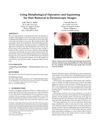
This study presents a new approach to automatically remove hair artifacts from dermoscopic images, which reportedly performed well compared to existing methods like DullRazor using the PH2 datasets.
 September 2017 in “Journal of Investigative Dermatology”
 This study found that infrared thermography might be a useful non-invasive tool to help diagnose frontal fibrosing alopecia by identifying active phases of the disease.
November 2023 in “Frontiers in Medicine” This study demonstrated a novel use of tape stripping on a human skin model to simulate the inflammation and barrier damage caused by dry razor shaving, highlighting potential shaving and skin-care formulations that may mitigate such damage.
11 citations
,
May 2022 in “JEADV. Journal of the European Academy of Dermatology and Venereology/Journal of the European Academy of Dermatology and Venereology” This systematic review provides a detailed overview of the clinical and dermoscopic features of cutaneous adnexal tumors, highlighting their potential to mimic other skin lesions and assisting in differential diagnosis.
 1 citations
,
December 2022 in “The journal of investigative dermatology/Journal of investigative dermatology”
1 citations
,
December 2022 in “The journal of investigative dermatology/Journal of investigative dermatology” This review discusses various methods for processing and separating human skin samples for research purposes, evaluating factors like processing time and cell viability, but reports no new experimental findings.
 June 2026 in “Indian Journal of Dermatology Venereology and Leprology”
 This study analyzed trichoscopic features of discoid lupus erythematosus on the scalp in skin of color and found distinct patterns based on clinical morphology.
 7 citations
,
July 2017 in “Australasian Journal of Dermatology”
7 citations
,
July 2017 in “Australasian Journal of Dermatology” This article evaluates reflectance confocal microscopy features of scalp melanoma but reports no new clinical results, suggesting further investigation is needed.
April 2015 in “Journal of Investigative Dermatology” July 2024 in “Journal of Investigative Dermatology” The new skin organoid system effectively mimics human skin for studying its functions, injuries, and diseases.
 2 citations
,
January 2022 in “Skin research and technology”
2 citations
,
January 2022 in “Skin research and technology” In this study, optical coherence tomography detected hair follicles at the dermoepidermal junction not visible on the scalp surface in alopecia areata patients, suggesting OCT may help monitor treatment response.
36 citations
,
July 2004 in “Journal of Controlled Release” This study demonstrates that confocal laser scanning microscopy can effectively visualize the rapid diffusion and penetration pathway of a dye into the hair follicle in fresh human scalp skin.
February 2023 in “Default Digital Object Group” This study demonstrated that a single multimode fiber can be used for single-shot wide-field reflectance imaging, achieving high correlation with the ground truth and enabling real-time microendoscopy at up to 180 frames per second.
20 citations
,
February 2018 in “Journal of the European Academy of Dermatology and Venereology” This study reported that applying a cream with 5% vitamin C reduced dermatoporosis-related purpura, suggesting the condition may be linked to vitamin C deficiency.
14 citations
,
March 2006 in “TSpace” This archive discusses the history and purpose of the Bioline International platform for disseminating scholarly research from developing countries, but reports no new research findings.
January 2022 in “Skin appendage disorders” In this study, the researchers found that trichoscopy can effectively visualize scalp micropigmentation, identified by homogenous, grey to black circular dots similar to closely cut hair, potentially reducing the need for invasive procedures.
March 2026 in “Minia Journal of Medical Research” In this prospective study, patients with patchy alopecia areata showed significant dermoscopic improvement after three months of topical corticosteroid treatment, with a marked decrease in activity signs and increase in regrowth features.
August 1993 in “Journal of Dermatological Science” 
This case report describes a pediatric instance of follicular atopic dermatitis in a dark-skinned patient, highlighting its unique clinical and dermoscopic features, such as purplish to brownish scaly papules and specific dermoscopic patterns, which are crucial for enhancing diagnostic accuracy in similar cases.
 13 citations
,
October 2020 in “Frontiers in Medicine”
13 citations
,
October 2020 in “Frontiers in Medicine” This study found that teledermatology has a high accuracy rate of 78% for diagnosing inflammatory dermatoses, supporting its use as a viable patient care option.
 March 2024 in “Indian Journal of Dermatology/Indian journal of dermatology”
 In this article, the authors compile various dermatological conditions that metaphorically reference animal-related visuals, such as "buffalo hump" in HIV-associated lipodystrophy or "leonine facies" in lepromatous leprosy, to enhance learning through mnemonic and visual associations.
 9 citations
,
May 2021 in “Archives of Dermatological Research”
9 citations
,
May 2021 in “Archives of Dermatological Research” This study concluded that while home-based intense pulsed light, laser diodes, radiofrequency, and light-emitting diode devices are recommended for certain skin conditions, ultraviolet B phototherapy for psoriasis showed mixed evidence compared to clinic treatments.