 June 2023 in “International Journal of Pharmaceuticals Nutraceuticals and Cosmetic Science”
 This review compiles recent findings on the pharmacokinetics, pharmacodynamics, and pharmacogenomics of Valproate, highlighting potential new uses, benefits, and risks, but reports no new clinical results.
21 citations
,
August 2002 in “British Journal of Ophthalmology” This article discusses topical and intralesional cidofovir use for SCC and suggests a successful outcome in one case, with no systemic toxicity observed so far.
 October 2022 in “Journal of experimental and clinical medicine”
 This review covers the potential of repurposing existing drugs for treating COVID-19 and updates on virus- and host-targeting drug candidates, reporting no new experimental results.
 6 citations
,
April 2013 in “International Journal of Dermatology”
6 citations
,
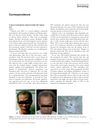
April 2013 in “International Journal of Dermatology” This correspondence article discusses a case of androgenetic alopecia treated with valproic acid but does not present new clinical findings.
January 2024 in “Specialty journal of Pharmacognosy Phytochemistry and Biotechnology” This study highlights that the evidence linking valproic acid to specific genetic variants is limited, unlike other antiseizure medications such as carbamazepine and phenytoin.
This study found that both levetiracetam and valproate sodium effectively reduced seizure frequency and duration in patients with refractory epilepsy, but levetiracetam had fewer side effects related to liver enzyme changes.
 11 citations
,
January 2016 in “Bipolar Disorder”
11 citations
,
January 2016 in “Bipolar Disorder” This article reviews the uses, mechanisms, and side effects of valproate in treating bipolar disorder, noting its first-line status for several manic conditions but also highlighting serious risks such as fetal abnormalities.
 1 citations
,
September 2007 in “European journal of paediatric neurology”
1 citations
,
September 2007 in “European journal of paediatric neurology” Low dose valproic acid treatment caused hair loss in a young patient.
 40 citations
,
August 2010 in “Archives of dermatology”
40 citations
,
August 2010 in “Archives of dermatology” This case report describes the youngest known patient with viral-associated trichodysplasia of immunosuppression, where systemic valganciclovir therapy improved facial papule eruptions following cardiac transplantation.
64 citations
,
March 1989 in “PubMed” This review discusses the development of valproate as an effective monotherapy for controlling generalized seizures and reports no new clinical results.
This study explored new molecular structures as potential COVID-19 treatments, identifying a compound called Hit15 that inhibited viral infection in lab settings and reduced inflammation markers in human neutrophils, suggesting further development is warranted.
 August 2018 in “Online journal of neurology and brain disorders”
 This study reported that sodium valproate completely stopped epilepsy in 43% of patients and reduced seizures by 50% in 22% of patients who were resistant to other anticonvulsants.
 3 citations
,
September 2020 in “Molecular Brain”
3 citations
,
September 2020 in “Molecular Brain” This study reports that Elvitegravir, a drug currently approved for other uses, shows potential as a neuro- and mitoprotective agent by attenuating mitochondrial damage caused by NMDA receptors in primary mouse cortical neurons.
November 2020 in “bioRxiv (Cold Spring Harbor Laboratory)” This study identified five FDA-approved drugs, including cepharantine and clofazimine, as potential COVID-19 therapies through in silico and in vitro screening targeting viral entry mechanisms.
September 2014 in “Archives of disease in childhood” This case report describes a 12-year-old boy who developed severe shingles with skin erosion and hair loss despite early aciclovir treatment after a stem-cell transplant for relapsed acute myeloid leukemia.
 37 citations
,
February 2014 in “Journal of Dermatology”
37 citations
,
February 2014 in “Journal of Dermatology” This study found that topical valproic acid significantly increased hair count in male patients with moderate androgenetic alopecia compared to placebo over 24 weeks.
 August 2023 in “Journal of The American Academy of Dermatology”
 In this commentary, the authors highlighted that valproic acid, unlike lamotrigine, is notably associated with alopecia in various studies, with an incidence rate up to 12% and mechanisms involving telogen effluvium and hyperandrogenism contributing to hair loss in patients.
September 2018 in “Practical diabetes” This review indicates that sodium valproate might benefit diabetic peripheral neuropathy patients, but evidence is limited and inconsistent, so it should be reserved for treatment-resistant cases.
17 citations
,
October 1980 in “PubMed” In this study, sodium valproate achieved complete seizure control in 82% of children as monotherapy, with higher plasma levels potentially linked to resistant cases.
 41 citations
,
February 2021 in “Cureus”
41 citations
,
February 2021 in “Cureus” In this study, Proxalutamide significantly increased the rate of viral clearance and reduced clinical remission time in patients with mild to moderate COVID-19 compared to placebo.
 6 citations
,
March 2022 in “Frontiers in drug discovery”
6 citations
,
March 2022 in “Frontiers in drug discovery” This review summarizes 25 small molecule drugs with in vitro and in vivo data for COVID-19 treatment, highlighting their structural diversity and potential to guide future antiviral discovery.
This compilation details various potential side effects and interactions of vitamin A, but it reports no new research findings.
 November 2022 in “The journal of investigative dermatology/Journal of investigative dermatology”
 This study suggests that varicella-zoster virus infection in skin cells may play a role in segmental vitiligo's progression and depigmentation.
2 citations
,
November 2004 in “Hospital pharmacy” This article reviews adverse drug reactions, emphasizes methods of prevention, and encourages reporting to the FDA's medWatch program, but presents no new study findings.
 17 citations
,
February 2011 in “Expert Opinion on Drug Safety”
17 citations
,
February 2011 in “Expert Opinion on Drug Safety” This review discusses adverse effects associated with pegylated IFN therapy for chronic hepatitis C and highlights the potential of new antiviral drugs to reduce side effects and improve treatment adherence, but reports no new clinical results.
January 2011 in “Arqueología, historia y viajes sobre el mundo medieval/Arqueología, historia y viajes sobre el mundo medieval” In this study, acute liver disease occurred in five patients, including four children, after treatment with sodium valproate, leading to the death of three patients.
 47 citations
,
March 2019 in “Journal of immunology research”
47 citations
,
March 2019 in “Journal of immunology research” This review discusses the effects of valproic acid on immune cell activation and gene expression, potentially influencing infection outcomes and suggesting its promise for autoimmune and hypersensitivity condition management.
21 citations
,
August 2002 in “British Journal of Ophthalmology” This report notes that while surgical excision is typically curative for squamous cell carcinoma, the authors suggest considering the intralesional use of cidofovir for its potential success without systemic toxicity.
July 2024 in “The Egyptian Journal of Hospital Medicine” In this study of Egyptian patients on hepatitis C treatment, 34% experienced skin-related side effects from sofosbuvir and daclatasvir, such as itching and hyperpigmentation, but most reactions were mild and reversible without needing to stop therapy.
2 citations
,
September 2014 in “International Journal of Dermatology” Sodium valproate can worsen psoriasis-like skin conditions.