1 citations
,
January 2018 in “Advances in cancer prevention” This review discusses the preventable nature of many cancers due to modifiable risk factors and emphasizes the importance of preventive oncology in reducing the global cancer burden; it reports no new clinical results.
January 2026 in “Methods in molecular biology” This paper discusses methods for distinguishing viable microbial communities in hair follicle dysbiosis studies and reports no new clinical results, suggesting potential improvements in sample analysis.
July 2025 in “Bioactive Materials” This review summarizes advancements in biomedical engineering for hair follicle regeneration, highlighting strategies like cell transplantation and tissue engineering to reconstruct hair follicles, and discusses both their technical limitations and potential future innovations in regenerative medicine.
 May 2025 in “Clinical Medicine Insights Case Reports”
 This case study reported on a 6-year-old boy with Kindler Syndrome born to consanguineous parents, featuring atypical symptoms like hyperpigmented macules and glucose intolerance, contributing to expanding insights into the condition's phenotypic diversity.
May 2025 in “Preprints.org” This review discusses the potential of olive mill wastewater as a sustainable source of dermatological ingredients with antioxidant and regenerative properties but reports no new clinical findings.
 October 2024 in “Journal of Cosmetic Dermatology”
 This study in Saudi Arabia found that 55.9% of participants reported premature graying of hair before age 30, with risk factors including genetic, health, and lifestyle aspects such as smoking, anxiety, nutrient deficiencies, and family history.
September 2022 in “Scientific Reports” This study found that scalp melanoma often occurs in areas with androgenetic alopecia, and patients without alopecia might experience a later diagnosis due to hair coverage, leading to potentially worse outcomes.
 39 citations
,
June 2017 in “Journal of Applied Research on Medicinal and Aromatic Plants”
39 citations
,
June 2017 in “Journal of Applied Research on Medicinal and Aromatic Plants” This review examines around 68 plant sources from six major plant families, assessing their scientific rationale and use by the cosmeceutical industry for applications like anti-ageing and sun protection.
 April 2019 in “The journal of investigative dermatology/Journal of investigative dermatology”
 In this study, researchers found that CCCA in women of African descent is associated with molecular changes, including dysregulation of fatty acid metabolism and fibrosis pathways, suggesting potential targets for new treatments.
 April 2019 in “The journal of investigative dermatology/Journal of investigative dermatology”
 This study found that keloids significantly impair quality of life, with pain and itch being major contributors to this impact, comparable to other chronic dermatologic conditions.
 184 citations
,
December 2018 in “Nature Communications”
184 citations
,
December 2018 in “Nature Communications” This study demonstrated that enhancing human skin constructs with hair follicles through engineered cell organization and vascularization improved hair growth in immunodeficient mice, suggesting potential advances for treating alopecia and chronic wounds.
 148 citations
,
April 2009 in “Molecular Pharmaceutics”
148 citations
,
April 2009 in “Molecular Pharmaceutics” This study reports that three synthesized PSMA-targeted radioimaging agents demonstrated high affinity and specific localization to prostate cancer tumors in a mouse model, highlighting their potential for cancer detection and monitoring.
 74 citations
,
October 1998 in “Journal of biological chemistry/The Journal of biological chemistry”
74 citations
,
October 1998 in “Journal of biological chemistry/The Journal of biological chemistry” This study discovered nine human type I hair keratin genes, including a transcribed pseudogene, in a 190 kbp genomic region, revealing three gene subclusters based on sequence homologies.
 66 citations
,
December 2014 in “Nature Communications”
66 citations
,
December 2014 in “Nature Communications” Fibroblasts can be turned into melanocytes for potential skin treatments.
 52 citations
,
February 2006 in “Archives of Dermatology”
52 citations
,
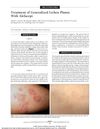
February 2006 in “Archives of Dermatology” This case report describes a 25-year-old woman with widespread lichen planus who did not respond to multiple systemic treatments, including antihistamines, hydroxychloroquine sulfate, and corticosteroids.
 48 citations
,
December 2013 in “Drug Delivery and Translational Research”
48 citations
,
December 2013 in “Drug Delivery and Translational Research” This study found that minoxidil-loaded niosomes with a Span 60 and cholesterol ratio of 1:2 significantly increased skin retention of minoxidil compared to control gel.
 41 citations
,
September 2017 in “Advanced Healthcare Materials”
41 citations
,
September 2017 in “Advanced Healthcare Materials” This study found that the DexIEME hydrogel promotes complete skin regeneration and scar attenuation in murine and porcine models, suggesting potential for treating deep dermal injuries.
 25 citations
,
January 2011 in “Pharmacognosy magazine”
25 citations
,
January 2011 in “Pharmacognosy magazine” This study found that Nardostachys jatamansi DC rhizome extracts and specific isolated terpenoids promoted hair growth.
 11 citations
,
March 2025 in “Environmental Monitoring and Assessment”
11 citations
,
March 2025 in “Environmental Monitoring and Assessment” This review discusses how faecal pollution contributes to antimicrobial resistance in surface water and highlights the need for standardized methods and better wastewater management but reports no new clinical results.
 9 citations
,
November 2018 in “Drug Discovery Today”
9 citations
,
November 2018 in “Drug Discovery Today” This review discusses insights from scar-free animal models and cellular factors in skin regeneration, suggesting potential strategies for developing scar-free treatments in clinical and cosmetic practices, but reports no new clinical results.
 9 citations
,
October 2018 in “Elsevier eBooks”
9 citations
,
October 2018 in “Elsevier eBooks” This article discusses how challenges in drug development and success rates are driving a shift in the pharmaceutical industry towards engineering targeted drug delivery systems, with nanomaterials offering potential solutions for selective therapeutic delivery.
 4 citations
,
November 2022 in “British Journal of Cancer”
4 citations
,
November 2022 in “British Journal of Cancer” This study found that men with a cutaneous melanoma diagnosis had an increased risk of subsequently being diagnosed with prostate cancer compared to those without melanoma.
 3 citations
,
January 2018 in “Chiang Mai University Journal”
3 citations
,
January 2018 in “Chiang Mai University Journal” This study found that while the EtOAc fraction of Centella asiatica had the highest antioxidant activity, it was toxic to human follicle dermal papilla cells, but the EtOH crude extract promoted hair growth by enhancing VEGF expression.
 October 2025 in “Interdiciplinary Journal and Hummanity (INJURITY)”
 This study characterized bioactive compounds in extracts from six Kalimantan herbal plants, confirming traditional medicinal uses with findings such as triterpenoids and several potent compounds with antimicrobial and cardiovascular benefits, laying groundwork for potential therapeutic applications and conservation efforts.
 June 2025 in “ARSHI Veterinary Letters”
 In this case study, a 5-month-old cat with dermatophytosis caused by Microsporum canis showed resolution of skin symptoms and hair regrowth after receiving topical antifungal shampoo and systemic itraconazole treatment for two weeks.
 February 2024 in “Journal of applied pharmaceutical research”
 This study formulated herbal hair oils using extracts such as Coconut and Amla, observing significant improvements in hair growth promotion, antioxidant, and antimicrobial properties in animal models, suggesting potential natural remedies for hair care with further research needed for human application.
 December 2023 in “Medicine and Materials”
 This study reviewed the use of essential oils in cosmetics and highlighted that while chamomile, rosemary, and geranium oils can be applied directly to the skin when diluted, most essential oils require caution due to potential dermatological reactions.
 April 2018 in “The journal of investigative dermatology/Journal of investigative dermatology”
 This study found that treating human skin explants with TPA increased the number of certain melanocyte phenotypes in the interfollicular epidermis, suggesting that this ex vivo model can effectively replicate human skin's pharmacologic responses for studying potential treatments.
 March 2012 in “Pathy's Principles and Practice of Geriatric Medicine”
 Older adults often have skin problems due to aging, and treating these conditions requires attention to both physical and mental health.
 January 2006 in “The Journal of Korean Medicine Ophthalmology and Otolaryngology and Dermatology”
 This study found that Rubus coreanum extract promotes hair growth in mice, but its effects are not due to inhibition of specific enzymatic activities or growth factor expression.