 1 citations
,
July 2022 in “The journal of investigative dermatology/Journal of investigative dermatology”
1 citations
,
July 2022 in “The journal of investigative dermatology/Journal of investigative dermatology” In this open-label trial, Tofacitinib was well tolerated and improved IFN and cytokine scores, as well as overall skin pathology, in individuals with Down syndrome and immune skin conditions.
4 citations
,
January 2014 in “Vegetos” This review discusses various medicinal properties and traditional uses of Ziziphus species in human health, emphasizing their potential for new therapeutic applications but reports no new clinical results.
 23 citations
,
September 2009 in “Child Abuse & Neglect”
23 citations
,
September 2009 in “Child Abuse & Neglect” This case report highlights the importance of considering hair-thread tourniquet syndrome as a potential diagnosis for girls with genital swelling and pain, emphasizing the need for prompt intervention.
 18 citations
,
February 2019 in “Scientific Reports”
18 citations
,
February 2019 in “Scientific Reports” This study found that TSA restored the hair-inductive capacity of skin-derived precursors in mice by enhancing BMP gene expression and signaling through histone acetylation.
1 citations
,
June 1999 in “American Journal of Contact Dermatitis” In this study, tazarotene 0.1% gel showed greater efficacy than tretinoin 0.025% gel in reducing acne lesions and demonstrated similar efficacy to adapalene 0.1% gel when used less frequently.
 195 citations
,
February 2005 in “Journal of biological chemistry/The Journal of biological chemistry”
195 citations
,
February 2005 in “Journal of biological chemistry/The Journal of biological chemistry” This study shows that ZIP7 is a functional zinc transporter in mammalian cells, facilitating the movement of zinc from the Golgi apparatus to the cytoplasm.
 19 citations
,
February 2018 in “Nutrients”
19 citations
,
February 2018 in “Nutrients” This review discusses the relationship between zinc deficiency and skin disorders, emphasizing zinc transporters' roles, but it reports no new clinical results; the authors highlight potential benefits of regulating zinc levels via transporters.
July 2024 in “Journal of Investigative Dermatology” Recombinant human TSG-6 speeds up wound healing in diabetic mice.
8 citations
,
January 2014 in “Indian Dermatology Online Journal” This article presents a case of trichostasis spinulosa, a common but often unrecognized disorder, diagnosed through dermoscopic examination of black macules revealing bundled vellus hairs, with the patient declining treatment.
1 citations
,
January 2024 in “Pharmaceuticals” The researchers reported that dPGS-PCL as a carrier improved the penetration of tofacitinib in an ex-vivo human skin model compared to free tofacitinib, but did not show significant differences in inhibiting IL-6 and IL-8 during short incubation.
 1 citations
,
June 2001 in “Annals of Internal Medicine”
1 citations
,
June 2001 in “Annals of Internal Medicine” This letter to the editor discusses data from a study on troglitazone for lipodystrophy, noting significant increases in subcutaneous fat without dietary changes.
2 citations
,
September 2021 in “JAAD case reports” This report describes a case of trichodysplasia spinulosa in a renal transplant patient, characterized by unique dermatoscopic features and highlighting the need for timely diagnosis.
 May 2023 in “Advancements in Homeopathic Research”
 This study investigated the effectiveness of a botanical formulation, Zauberӧl®, on testosterone-induced alopecia in Wistar rats, focusing on ingredients such as Arnica montana and Hibiscus Rosa sinensis. Results are not reported in the abstract.
22 citations
,
March 2017 in “Transplant Infectious Disease” This case report describes successful treatment of generalized trichodysplasia spinulosa with leflunomide in a patient undergoing immunosuppressive therapy following solid organ transplantation.
3 citations
,
April 2021 in “Oncology Times” This study reports that sacituzumab govitecan achieved a 33.3% overall response rate in patients with metastatic triple-negative breast cancer who had prior treatments, with a median response duration of 7.7 months.
 August 2022 in “Archives of pediatric surgery”
 This article reviews cultural differences in the incidence of hair-thread tourniquet syndrome and finds it may be less prevalent in Iranian children compared to Europe, possibly due to social and cultural factors.
March 2026 in “Voprosy dermatologii i venerologii/Dermatologiâ ža̋ne veneralogiâ ma̋selelerì” This literature review highlights the critical importance of early dermatological diagnosis of tuberous sclerosis, focusing on its genetic basis, dermatological markers, and the role of genetic testing and multidisciplinary support, while discussing treatment options like mTOR inhibitors and their limitations.
 January 2026 in “Cell and Tissue Biology”
 The researchers reported that administration of the antioxidant compound TS-13 in mice with chemotherapy-induced alopecia accelerated hair regrowth, although it did not fully prevent chemotherapy-related hair loss, suggesting TS-13 may aid in managing hair loss without negating the cancer treatment's effectiveness.
 January 1999 in “American Journal of Medical Genetics Part A”
 This case report describes a rare occurrence of ectodermal dysplasia features in a 14-year-old with MBTPS1 gene variants, expanding the known spectrum of related disorders.
21 citations
,
May 2014 in “Toxicological Sciences” This study found that skin exposure to toluene diisocyanate in mice creates immune-recognition reservoirs in the skin's stratum corneum and hair follicles, potentially leading to sensitization and allergic reactions.
35 citations
,
September 2011 in “The Journal of Dermatology” This article discusses the trichoscopic diagnosis of temporal triangular alopecia, but reports no new clinical results.
January 2007 in “Edward Elgar eBooks” In this study, overexpressing TSPO in the mouse hippocampal dentate gyrus led to significant anxiolytic and antidepressant-like effects, partly through increased allopregnanolone biosynthesis.
1 citations
,
January 2017 in “Hair therapy & transplantation” This study found that using a topical zinc-thymulin spray on the scalp for more than 6 months was safe and significantly improved hair growth in adults with male pattern baldness, with notable increases in certain hair types and no reported adverse effects.
10 citations
,
January 1997 in “Dermatology” This case report details two siblings with trichothiodystrophy, identifying reduced hair sulfur content as essential for diagnosis despite varied symptoms complicating recognition.
5 citations
,
October 2021 in “American Journal of Medical Genetics Part A” This case report identifies a novel maternally inherited MBTPS2 variant associated with an expanded phenotypic spectrum of BRESHECK syndrome, including cytopenias, bone marrow fibrosis, and chronic diarrhea.
June 2026 in “Journal of Investigative Dermatology”  1 citations
,
October 2022 in “Molecular therapy”
1 citations
,
October 2022 in “Molecular therapy” This study found that betibeglogene autotemcel significantly improved transfusion independence in 89% of patients with transfusion-dependent beta-thalassemia, although the high cost and manufacturing challenges may limit widespread adoption.
28 citations
,
October 2010 in “Targeted Oncology” This case report presents an instance of tufted hair folliculitis in a woman treated with trastuzumab, highlighting a previously unreported skin side effect of this selective HER2 inhibitor.
 13 citations
,
June 2012 in “Journal of Dermatological Case Reports”
13 citations
,
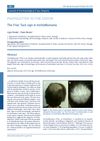
June 2012 in “Journal of Dermatological Case Reports” This report describes an 8-year-old male with trichotillomania, confirmed by trichoscopy showing characteristic hair damage and patterns.
 5 citations
,
May 2011 in “Movement Disorders”
5 citations
,
May 2011 in “Movement Disorders” Finasteride significantly reduced tics and obsessive-compulsive symptoms in Tourette syndrome patients.