47 citations
,
November 1966 in “Archives of Dermatology” This study found that trichorrhexis nodosa, a common cause of unexplained hair loss, is primarily caused by trauma rather than a metabolic defect.
 7 citations
,
March 2012 in “Journal of Investigative Dermatology”
7 citations
,
March 2012 in “Journal of Investigative Dermatology” This study presents evidence that specific thymus-derived peptides affect human hair follicle growth, identifying thymulin as a potential hair growth stimulator despite interindividual response variations.
40 citations
,
May 2005 in “Journal of Cell Science” In this study, transgenic mice expressing a truncated form of latent transforming growth factor-β-binding protein exhibited altered hair cycles due to increased active transforming growth factor-β, impacting keratinocyte proliferation and hair cycle phases.
 February 2009 in “Journal of The American Academy of Dermatology”
 Most patients with Tuberous sclerosis had neurological or skin issues, and over half had psychiatric problems.
 16 citations
,
June 2009 in “Dermatologic Surgery”
16 citations
,
June 2009 in “Dermatologic Surgery” This abstract does not contain research results or findings.
 2 citations
,
February 2018 in “Journal of dermatology & cosmetology”
2 citations
,
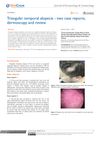
February 2018 in “Journal of dermatology & cosmetology” This article discusses triangular temporal alopecia, highlighting dermoscopy's role in diagnosis and the limited therapeutic options, without reporting new clinical results.
 December 2022 in “Frontiers in plant science”
 This study identifies two new proteins, CCDC22 and CCDC93, essential for root and root hair growth in Arabidopsis, and demonstrates their genetic link to a VTI13-dependent vacuolar trafficking pathway.
 May 2025 in “The FASEB Journal”
 This study concluded that TNFRSF1B is a potential pathogenic factor in androgenetic alopecia, suggesting it as a novel therapeutic target.
22 citations
,
August 2020 in “Cells” This review discusses the role of TGM3 in skin and hair follicle biology, human tumor pathology, and genetic abnormalities, and reports no novel results; the authors highlight its potential as a cancer diagnostic biomarker.
11 citations
,
July 2010 in “European Journal of Dermatology” In this study, researchers confirmed linkage of a form of hair-nail ectodermal dysplasia to chromosome 12 in a Pakistani family, suggesting a possible non-coding mutation in KRTHB5 or a mutation in an unknown gene.
 December 2019 in “Journal of pediatrics & neonatology”
 This case report discusses the diagnosis and management of temporal triangular alopecia in a pediatric patient experiencing asymptomatic hair loss, emphasizing its nonprogressive nature and poor prognosis for regrowth.
3 citations
,
January 2011 in “生物医学研究杂志:英文版” In this study, a novel heterozygous transition mutation in the KRT86 gene was identified, which may be pathogenic for monilethrix in a Chinese family.
 7 citations
,
January 2014 in “Case reports in pediatrics”
7 citations
,
January 2014 in “Case reports in pediatrics” This report discusses a case of hair toe tourniquet syndrome in an infant and emphasizes the importance of early diagnosis and treatment to prevent severe complications.
January 1996 in “Studia iuridica” This study identified two novel point mutations in the hHb6 gene associated with monilethrix, suggesting these mutations could serve as diagnostic markers for this genetic hair disorder.
2 citations
,
May 2022 in “The journal of immunology/The Journal of immunology” In vivo using the C3H mouse model, this study observed that BST2 expression occurs before hair loss in alopecia areata and is followed by an increase in epidermal γδ T cell numbers.
28 citations
,
July 1980 in “British Journal of Dermatology” This study describes a case of generalized trichorrhexis nodosa and finds that defects in alpha-keratin chain formation and low cystine levels in hair may contribute to the condition.
 January 2023 in “Indian dermatology online journal”
 This case report describes a novel NECTIN4 gene mutation linked to ED-syndactyly syndrome 1 in a young girl, contributing to the understanding of this rare ectodermal dysplasia.
15 citations
,
February 2015 in “Anais brasileiros de dermatologia/Anais Brasileiros de Dermatologia” This article reviews the use of dermoscopy in distinguishing temporal triangular alopecia from alopecia areata, emphasizing its role in avoiding invasive diagnostics and ineffective treatments; it reports no new clinical findings.
30 citations
,
June 1993 in “The Journal of Cell Biology” This study found that transgenic mice expressing a mutant E1a oncoprotein in their skin had disturbed hair follicle maturation but did not show increased tumor development or proliferation.
July 2025 in “Indian Dermatology Online Journal” This study reports a unique case of trichotillomania incognita in an adult female that mimicked female pattern hair loss, highlighting the importance of trichoscopy and histology for accurate diagnosis.
52 citations
,
June 1991 in “Journal of Virology” In this study, researchers found that the ability of hamster polyomavirus to cause lymphoid tumors in Syrian hamsters may be linked to its association with the tyrosine kinase p59fyn.
 May 2020 in “Research Square (Research Square)”
 This study found that trichilemmal carcinoma shares genetic changes with other skin cancers, suggesting a similar pathogenesis, particularly in those with aggressive clinical courses linked to TP53 mutations.
 19 citations
,
December 2015 in “European Journal of Human Genetics”
19 citations
,
December 2015 in “European Journal of Human Genetics” This study found that a novel rare variant in ITGB6 may cause intellectual disability, alopecia, and dentogingival anomalies in a specific Pakistani family, highlighting a potential role for ITGB6 beyond enamel formation.
 169 citations
,
May 2006 in “Genes & Development”
169 citations
,
May 2006 in “Genes & Development” This study found that keratin 17 and TNFα play interdependent roles in regulating hair follicle cycling, with TNFα required for the anagen–catagen transition and its ablation partially rescuing hair cycling defects in K17-null mice.
 September 2019 in “The journal of investigative dermatology/Journal of investigative dermatology”
 This study found that deleting all three Tet genes in mice led to shorter hair shafts and altered hair types, with associated changes in gene expression and DNA hydroxymethylation.
28 citations
,
August 2005 in “Journal of Investigative Dermatology” TG5 helps maintain hair follicle health, while TG3 aids in hair shaft development.
111 citations
,
April 2000 in “British journal of dermatology/British journal of dermatology, Supplement” In this study, physiological levels of free T3 significantly enhanced the survival of human hair follicles in vitro.
 10 citations
,
August 2020 in “Drug metabolism and drug interactions”
10 citations
,
August 2020 in “Drug metabolism and drug interactions” This case series found that patients with the NUDT15 415C>T variant experienced severe azathioprine toxicity, suggesting genotype-based dosing could reduce adverse effects.
 January 2021 in “ABC Heart Failure & Cardiomyopathy”
 This case report describes a 90-year-old man diagnosed with wild-type transthyretin cardiac amyloidosis, confirmed by pyrophosphate cardiac scintigraphy and exclusion of gene mutations.
9 citations
,
June 2017 in “American journal of ophthalmology. Case reports” This case report identifies a novel CDH3 gene mutation associated with hypotrichosis with juvenile macular dystrophy in a 13-year-old Turkish girl, highlighting implications for future genetic analysis and counseling.