January 2026 in “Biomolecules” This review suggests that the TSC22D family genes may influence metabolism and cancer, potentially serving as a therapeutic target for conditions like diabetes, obesity, and certain tumors, depending on the tumor environment.
May 2018 in “The journal of immunology/The Journal of immunology” This study identified that patients with compound heterozygous mutations in FOXN1 exhibited severe T-cell lymphopenia but retained normal hair and nail development, indicating a distinct clinical phenotype from classic FOXN1 cases.
5 citations
,
July 1996 in “Journal of Cutaneous Medicine and Surgery” This study explains that while trichothiodystrophy and xeroderma pigmentosum share genetic defects, TTD patients primarily exhibit issues in transcription initiation, not the increased skin cancer risk seen in XP.
175 citations
,
August 1997 in “Nature Genetics” September 2016 in “Journal of dermatological science” This study identified TSC2 as an important regulator of hair follicle morphogenesis and patterning, with Tsc2cKO mice showing altered hair patterns and frequencies compared to controls.
 77 citations
,
January 1989 in “Clinical Infectious Diseases”
77 citations
,
January 1989 in “Clinical Infectious Diseases” Toxic Shock Syndrome progresses quickly, often involves multiple organs, and is linked to Staphylococcus aureus toxins, with treatment options available but diagnostic challenges remaining.
July 2024 in “Journal of Investigative Dermatology” In these two clinical trials, DS-2325a, a KLK5 inhibitor, was found to be generally safe and well tolerated in healthy volunteers, with mild and non-serious adverse events, suggesting its potential for further development as a treatment for Netherton Syndrome.
3 citations
,
January 2022 in “Burns & Trauma” This study found that CTHRC1 is crucial for sweat gland function and vascular network integrity in mice, and its administration improved sweat gland performance by reconstructing nearby blood vessels.
 6 citations
,
October 2012 in “Journal of Heredity”
6 citations
,
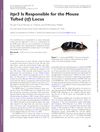
October 2012 in “Journal of Heredity” This study identified the Itpr3 gene as responsible for the tufted hair loss phenotype in the BTBR mouse strain.
 66 citations
,
October 1984 in “Annual Review of Microbiology”
66 citations
,
October 1984 in “Annual Review of Microbiology” This article reviews historical and recent developments related to toxic shock syndrome (TSS), emphasizing the increase in cases among young women using tampons, and calls for new research tools but does not report new results.
 February 2009 in “Journal of The American Academy of Dermatology”
 Most patients with Tuberous sclerosis had neurological or skin issues, and over half had psychiatric problems.
July 2026 in “Journal of Investigative Dermatology” April 2023 in “Zenodo (CERN European Organization for Nuclear Research)” In this report, a 35-year-old patient with beta thalassemia experienced thyroid dysfunction following repeated blood transfusions, highlighting that such disorders are common among transfused thalassemia patients.
26 citations
,
February 1978 in “Journal of Pediatric Surgery” This study found that long-term total parenteral nutrition in pediatric patients led to severe zinc deficiency, which improved with intravenous zinc therapy, highlighting the need for adequate zinc inclusion in nutritional solutions.
 55 citations
,
June 2014 in “Nature Communications”
55 citations
,
June 2014 in “Nature Communications” This study found that overexpression of the transcription factor Tcf3 accelerates keratinocyte migration and skin wound healing in mice, highlighting its potential as a therapeutic target for wound repair.
 2 citations
,
November 2017 in “Case Reports”
2 citations
,
November 2017 in “Case Reports” This case report describes an instance of hair thread tourniquet syndrome in an infant, successfully treated through surgical release of the constricting hair.
 32 citations
,
February 2008 in “Developmental dynamics”
32 citations
,
February 2008 in “Developmental dynamics” This study indicates that the Sp6 gene is crucial for the development of skin, teeth, limbs, and lungs in mice, possibly through regulating apoptosis.
4 citations
,
January 2019 in “Journal of cutaneous pathology” This study found that phospho-S6 is strongly expressed in malignant hair follicle tumors but only patchily in a minority of benign tumors, indicating a potential marker for distinguishing between the two.
2 citations
,
August 2022 in “Animals” In this study, a specific genetic variant of KRTAP6-2 in Longdong cashmere goats was associated with finer cashmere fiber diameter, suggesting its potential as a molecular marker for breeding improvements.
 32 citations
,
January 2017 in “Orphanet journal of rare diseases”
32 citations
,
January 2017 in “Orphanet journal of rare diseases” This article reviews the genetic basis, diagnostic approaches, and treatment options for nude severe combined immunodeficiency, but does not present any new research findings.
5 citations
,
January 2011 in “Archives de Pédiatrie” This study illustrates the severe neonatal clinical presentation of Netherton syndrome, which can be fatal despite intensive care, highlighting a specific homozygous mutation (c.1431-12G > A) associated with lethal cases.
 10 citations
,
March 2015 in “Journal of dermatology”
10 citations
,
March 2015 in “Journal of dermatology” This case report describes a 12-year-old boy with severe skin scaling due to novel compound heterozygous null truncation mutations in the TGM1 gene, resulting in loss of transglutaminase 1 activity.
May 2022 in “The journal of immunology/The Journal of immunology” This study developed a foxn1-deficient Xenopus laevis model using CRISPR/Cas9, observing reduced T-cell markers and altered immune responses in tadpoles, providing a nonmammalian model for immunological research.
A new mutation in the TRPS1 gene caused Trichorhinophalangeal syndrome in a 17-year-old, highlighting the need for genetic testing.
September 2019 in “The journal of investigative dermatology/Journal of investigative dermatology” This study identified a novel G207E STING mutation causing a distinct phenotype involving alopecia, photosensitivity, and thyroid dysfunction, and suggests that common polymorphisms in TMEM173 and IFIH1 may influence disease presentation.
 1 citations
,
July 2022 in “The journal of investigative dermatology/Journal of investigative dermatology”
1 citations
,
July 2022 in “The journal of investigative dermatology/Journal of investigative dermatology” In this open-label trial, Tofacitinib was well tolerated and improved IFN and cytokine scores, as well as overall skin pathology, in individuals with Down syndrome and immune skin conditions.
January 2026 in “Biochemical Pharmacology”  3 citations
,
January 2018 in “Food Science and Technology Research”
3 citations
,
January 2018 in “Food Science and Technology Research” This study found that 6-methylsulfinylhexyl isothiocyanate (6-MSITC) significantly promoted proliferation and upregulated specific mRNA levels in human dermal papilla cells, suggesting potential as a hair growth stimulant.
January 2016 in “Zurich Open Repository and Archive (University of Zurich)” This study concludes that dietary L-serine supplementation shows promise as a long-term therapy for hereditary sensory and autonomic neuropathy type 1, reducing neurotoxic 1-deoxysphingolipid levels and improving symptoms in severe cases.
143 citations
,
May 2002 in “PubMed” This study found that the retinoid LGD1069 suppressed mammary tumorigenesis in a mouse model without observable toxicity, while TTNPB showed modest effects but was associated with significant toxicity.