3 citations
,
May 2024 in “Indian Journal of Dermatology” In this case report, researchers identified a potential adverse skin reaction, called SDRIFE or Baboon syndrome, caused by the drug tofacitinib in a 19-year-old woman being treated for alopecia subtotalis, leading the authors to recommend discontinuation of the drug.
 6 citations
,
March 2009 in “Journal of the European Academy of Dermatology and Venereology”
6 citations
,
March 2009 in “Journal of the European Academy of Dermatology and Venereology” This study found no increased frequency of the TNF2 allele in Mexican patients with adverse cutaneous drug reactions mediated by delayed hypersensitivity, suggesting its lower relevance compared to findings in Caucasian populations.
 July 2025 in “Journal of Cosmetic Dermatology”
 In this clinical study involving individuals with localized alopecia areata, TrA injections were found to significantly outperform MTX, leading to better hair regrowth and higher patient satisfaction, though both treatments had similar mild side effects.
September 2026 in “Clinical Cosmetic and Investigational Dermatology” This case report highlights the diagnostic challenges in a patient with atypical lupus erythematosus tumidus due to long-term misdiagnosis and conflicting pathological findings, with effective treatment achieved using hydroxychloroquine and methylprednisolone.
 February 2024 in “Jurnal Kesehatan Yamasi Makassar”
 This study in South Sulawesi Province developed a shampoo using ethanol extract from Pondoh salak fruit peel, which met physical stability tests and demonstrated strong inhibitory effects against Staphylococcus epidermidis and Candida albicans, with formulations ranging from 10% to 20% concentrations.
 14 citations
,
February 2007 in “The Journal of Bone and Joint Surgery”
14 citations
,
February 2007 in “The Journal of Bone and Joint Surgery” This case report describes successful treatment of an 11-week-old infant with hair thread tourniquet syndrome causing toe swelling, highlighting the condition's rarity and the critical need for prompt surgical intervention.
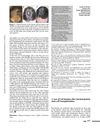 May 2018 in “European Journal of Dermatology”
 Adjusting the medication tacrolimus resolved a boy's red nail beds after a stem cell transplant.
 November 2020 in “Dubai medical journal”
 This case report described a 24-year-old with alopecia totalis who saw full scalp hair regrowth by the 9th month while using oral tofacitinib, which was well-tolerated and did not show serious adverse effects. Longer-term studies are needed to confirm its overall effectiveness for alopecia totalis.
January 2026 in “Journal of Dermatological Science” This research observed that Salvianolic acid B (Sal B) significantly promoted hair regeneration in vivo and in vitro, outperforming minoxidil in a mouse model of androgenetic alopecia, by activating Wnt/β-catenin and mTORC2/Akt pathways and upregulating MMPs and MAPKs.
 April 2023 in “Journal of the American Academy of Dermatology”
 This study aimed to evaluate the outcomes of switching between two JAK inhibitors, tofacitinib and baricitinib, in treating alopecia areata, due to the lack of data on their comparative efficacy.
8 citations
,
August 2016 in “Journal of the European Academy of Dermatology and Venereology” Oral tacrolimus helped a rheumatoid arthritis patient regrow hair lost due to alopecia areata.
 January 2012 in “Modern Plastic Surgery”
 This review discusses Toe Tourniquet Syndrome, a frequently misdiagnosed condition that can lead to necrosis if untreated, and calls for increased clinician awareness, but reports no new clinical findings.
2 citations
,
January 2014 in “Dermatology Online Journal” This article reviews hair-thread tourniquet syndrome, discussing its demographics, causes, and current treatment methods, but presents no new clinical findings.
 April 2018 in “British Journal of Oral & Maxillofacial Surgery”
 This article responds to Shastri et al.'s interest in an alternate approach to superficial temporal artery biopsy, but it reports no new clinical results.
21 citations
,
March 2015 in “Neurological Sciences” This study reports that a novel frameshift mutation in the HTRA1 gene in a CARASIL pedigree led to reduced HTRA1 protein and increased TGF-β1 expression, potentially causing severe CARASIL and peripheral small arterial disease.
 4 citations
,
May 2011 in “Journal of The American Academy of Dermatology”
4 citations
,
May 2011 in “Journal of The American Academy of Dermatology” This study by Rucker Wright et al. found that hair care practices, particularly traction on relaxed hair, are associated with an increased risk of traction alopecia in African American girls.
July 2023 in “Media Dermato Venereologica Indonesiana” In this study, researchers highlighted that in sarcoidosis, macrophages in granulomas can produce vitamin D, potentially leading to calcium imbalances, where vitamin D supplementation may cause hypercalcemia, necessitating careful laboratory assessment before supplementation.
1 citations
,
August 2025 in “Australasian Journal of Dermatology” This case series highlights that anti-TNF agents, though beneficial for autoimmune conditions, can cause a rare adverse reaction of psoriasiform alopecia areata, stressing the importance of specific histopathological features for accurate diagnosis and better management to avoid unnecessary drug discontinuation.
14 citations
,
July 2021 in “Bioscience Reports” In this study, activation of Tgr5 was found to improve alopecia areata and bone microstructure in mice by down-regulating the JAK1-STAT3 signaling pathway.
This case study from Morocco reports the country's first suspected instance of Tinea capitis caused by Trichophyton tonsurans, identified in a 25-year-old member of the national judo team, highlighting the need for screening and improved hygiene in sports environments to prevent potential outbreaks.
 1 citations
,
April 2018 in “Journal of Investigative Dermatology”
1 citations
,
April 2018 in “Journal of Investigative Dermatology” This open-label study found that oral tofacitinib led to significant hair regrowth in patients with moderate-to-severe alopecia areata, supported by changes in gene expression and T cell dynamics.

In this phase 2 trial, STS01 1% significantly improved hair regrowth in patients with mild to moderate patchy alopecia areata compared to placebo, with a manageable skin irritation side effect profile.
 1 citations
,
January 2019 in “Open Journal of Internal Medicine”
1 citations
,
January 2019 in “Open Journal of Internal Medicine” This case report describes a 19-year-old patient with systemic lupus and a composite heterozygosis SC with thalassemic component, highlighting the diagnostic challenge when symptoms of both conditions occur simultaneously.
12 citations
,
July 2016 in “Journal of dermatology” This study found that intramuscular triamcinolone acetonide may be an effective and safe treatment option for managing refractory alopecia areata, showing a 63% response rate in patients and hair regrowth negatively correlated with initial scalp involvement.
January 2025 in “Dermatologic Therapy” In this study, patients with alopecia areata were found to have higher high-sensitivity cardiac troponin T levels compared to healthy controls, indicating a potential link between the condition and cardiovascular risk.
November 1968 in “Journal of the American Pharmaceutical Association”  8 citations
,
December 2021 in “BMJ neurology open”
8 citations
,
December 2021 in “BMJ neurology open” This study on Alzheimer's patients found that chronic sodium selenate treatment (up to 23 months) was safe and well-tolerated, with most adverse events being mild, and suggested potential slowing of cognitive decline, though confirmation requires further controlled studies.
 1 citations
,
April 2020 in “Asian Journal of Medicine and Biomedicine”
1 citations
,
April 2020 in “Asian Journal of Medicine and Biomedicine” This article reports a case of hair tourniquet syndrome in a child's toe, successfully treated surgically, and emphasizes the need for healthcare providers to be aware for early detection and treatment.
 1 citations
,
October 2023 in “BMC oral health”
1 citations
,
October 2023 in “BMC oral health” This study reported that while Intralesional Triamcinolone Acetonide injections effectively improved mouth opening in patients with Oral Submucous Fibrosis, it also led to symptoms of Cushing's Syndrome, highlighting the need for careful monitoring of adverse effects.
2 citations
,
January 2023 in “Anais Brasileiros de Dermatologia”