8 citations
,
October 2020 in “Clinical Psychopharmacology and Neuroscience” This case series found that low-frequency repetitive transcranial magnetic stimulation may benefit some patients with trichotillomania, although one of five patients experienced worsening symptoms after treatment.
1 citations
,
July 2023 in “Journal of the European Academy of Dermatology and Venereology”  16 citations
,
January 2010 in “American Journal of Neuroradiology”
16 citations
,
January 2010 in “American Journal of Neuroradiology” This case report describes a 3-year-old boy with trichothiodystrophy, highlighting specific MRI findings of diffuse dysmyelination and osteosclerosis that may be unique to the disorder.
October 2024 in “Frontiers in Oncology” This case study reports a novel mutation in the TRPV3 gene causing atypical Olmsted syndrome, characterized by disabling keratoderma and squamous cell carcinoma, highlighting the need for careful long-term monitoring in affected patients.
 May 2023 in “bioRxiv (Cold Spring Harbor Laboratory)”
 This study found that Cannabidivarin (CBDV) promotes neuronal survival, proliferation, and differentiation via TRPV1 activation but inhibits oligodendrocyte differentiation in postnatal neurogenesis.
April 2012 in “Neuropediatrics” This article reviews the genetic and phenotypic characteristics of Trichothiodystrophy and discusses the associated DNA repair defects, but does not report new clinical findings.
May 2008 in “10th European Congress of Endocrinology” This study discovered that TTR is expressed in the human placenta as early as 6 weeks gestation, with increased levels in the first trimester potentially facilitating thyroid hormone delivery to the fetus.
 2 citations
,
June 2026 in “Frontiers in Science”
2 citations
,
June 2026 in “Frontiers in Science” This review examines the potential of regulatory T cell-based therapies to transform treatment across various medical specialties by promoting immune tolerance and tissue repair, but it reports no new clinical results.
69 citations
,
August 2006 in “Behavior Therapy” This study found that group behavior therapy for trichotillomania led to greater short-term symptom improvement compared to supportive therapy, but did not achieve clinically significant changes or prevent relapse over six months.
13 citations
,
January 2018 in “Yonsei Medical Journal” This study reports the first case of Olmsted syndrome in a Korean patient, identifying a novel TRPV3 gene mutation, p.Gly568Val, associated with the condition.
35 citations
,
March 2010 in “BMC veterinary research” The study found that while a clinical protocol showed high specificity in detecting scrapie in goats, its low sensitivity suggests many cases might be missed if diagnosis is only based on clinical signs.
 August 2025 in “Aesthetic Plastic Surgery”
 This review explores the mechanisms, current products, challenges, and innovative approaches related to cosmetics for hair loss prevention and growth promotion, emphasizing the need for multidisciplinary cooperation to enhance product development and market success.
May 2020 in “Authorea (Authorea)” This review discusses the diverse functions and therapeutic potential of ectopic olfactory receptors throughout the body, emphasizing their roles in various cellular processes and potential in cancer detection and therapy, but reports no new clinical results.
 7 citations
,
January 2016 in “Laboratory Investigation”
7 citations
,
January 2016 in “Laboratory Investigation” TR3 is mainly found in hair follicle stem cells and may be involved in hair loss.
 3 citations
,
March 2020 in “Dermatology Research and Practice”
3 citations
,
March 2020 in “Dermatology Research and Practice” In this study, 33 overweight women with normal hormone levels but showing PCOS symptoms experienced substantial reductions in acne lesions and improvements in hirsutism and menstrual irregularities after 8 weeks of Tracnil™ treatment, with minimal adverse reactions reported.
59 citations
,
November 2011 in “Development” This study found that the transcription factor Trps1 acts as a novel regulator of the Wnt signaling pathway and early hair follicle progenitors in developing vibrissa follicles in mice.
 6 citations
,
October 2012 in “Journal of Heredity”
6 citations
,
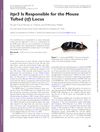
October 2012 in “Journal of Heredity” This study identified the Itpr3 gene as responsible for the tufted hair loss phenotype in the BTBR mouse strain.
 23 citations
,
January 2005 in “Nihon Ishinkin Gakkai zasshi”
23 citations
,
January 2005 in “Nihon Ishinkin Gakkai zasshi” This case study identified Trichophyton rubrum as the cause of trichophytia profunda acuta in a patient using nested PCR, suggesting an alternative diagnostic approach when KOH tests and cultures fail.
7 citations
,
May 1979 in “Medical & biological engineering & computing” The trichometer accurately measures hair growth and is easy to use.
15 citations
,
August 2011 in “Lasers in medical science” This study reported that a single treatment with a short-pulsed 755-nm alexandrite laser effectively treated trichostasis spinulosa in patients with skin types II to V, providing rapid results with minimal pain and no recurrence during a 3-month follow-up.
68 citations
,
August 2009 in “American Journal of Medical Genetics Part A” This study systematically reviewed clinical findings in trichothiodystrophy patients and suggested a new clinico-genetic classification to help better understand the ichthyotic phenotype and its management.
123 citations
,
November 2003 in “Neuroscience Letters” In this study, TRPV4 channels were found in specific mechanosensory endings in mice skin, suggesting a role in pressure sensation transmitted through A- and C-fibers.
35 citations
,
September 2011 in “The Journal of Dermatology” This article discusses the trichoscopic diagnosis of temporal triangular alopecia, but reports no new clinical results.
 2 citations
,
January 2008 in “Journal of The American Academy of Dermatology”
2 citations
,
January 2008 in “Journal of The American Academy of Dermatology” Trichoscopy is a helpful and quick method to diagnose hair loss without shaving.
 2 citations
,
December 2020 in “American Journal of Dermatological Research and Reviews”
2 citations
,
December 2020 in “American Journal of Dermatological Research and Reviews” This study found that combining 308-excimer phototherapy with intramuscular triamcinolone acetonide was effective and well tolerated for treating resistant alopecia totalis, showing a 90% overall response rate in the ten patients studied, with the best results observed in younger patients.
5 citations
,
November 2010 in “Veterinary Record” Treatment with oral terbinafine and topical enilconazole was successful in resolving a Trichophyton dermatophytosis outbreak in L'Hoest's monkeys, with complete mycological cure achieved after eight weeks.
 March 2025 in “Clinical Cosmetic and Investigational Dermatology”
 In this study, researchers found that the "U" allele of the Tru9I variant may be associated with low vitamin D levels and altered VDR gene activity in alopecia areata patients, while the "u" allele might have a protective role against developing the condition.
3 citations
,
March 2023 in “ACTA SCIENTIAE VETERINARIAE” This case report describes how real-time PCR rapidly identified Trichophyton mentagrophytes in a dog's dermatophytosis when traditional mycological methods were slower.
September 2017 in “Griffith Research Online (Griffith University, Queensland, Australia)” This study found that in a mouse model of Ross River virus-induced joint inflammation, targeting IL-17A and IL-17A/F heterodimers reduced disease severity.
188 citations
,
June 1998 in “Molecular cell” This study found that mimicking the XPD point mutation in mice resulted in trichothiodystrophy-like symptoms, supporting the role of basal transcription and DNA repair defects in the disease.