18 citations
,
January 2015 in “Experimental Dermatology” This study reports new monilethrix cases in Venezuela, the Netherlands, Belgium, and France, expanding the known mutational spectrum of the disorder with novel mutations in KRT81, KRT83, and KRT86 genes.
1 citations
,
May 2020 in “bioRxiv (Cold Spring Harbor Laboratory)” In this study, researchers identified a temperature-sensitive mutation in the FERONIA gene of plants that prevents root hair formation at elevated temperatures, highlighting its role in maintaining root hair growth and response to plant hormones.
November 2025 in “Journal of Investigative Dermatology” Ritlecitinib effectively treats severe Alopecia Areata by reducing harmful immune activity in the skin.
 7 citations
,
June 2010 in “Journal of The American Academy of Dermatology”
7 citations
,
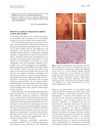
June 2010 in “Journal of The American Academy of Dermatology” This paper reports a single case of lichenoid cutaneous sarcoidosis that was unresponsive to standard treatments but showed marked improvement with the administration of oral tranilast.
July 2024 in “International Journal of Molecular Sciences” In this ex vivo and in vitro study, researchers found that capacitive resistive electrical transfer therapy increased cell proliferation and reduced cell death in hair follicles from patients with androgenic alopecia, suggesting potential benefits for alopecia treatment.
July 2017 in “Cancer Research” This study identified a radio-resistant population of Krt15+ stem cells in the mouse small intestine that can initiate tumors, suggesting potential targets for colon cancer therapy.
 6 citations
,
September 2019 in “Skin pharmacology and physiology”
6 citations
,
September 2019 in “Skin pharmacology and physiology” This study found that RCS-01 cell therapy for aged skin was well tolerated and associated with increased gene expression related to extracellular matrix homeostasis, suggesting potential skin improvement.
 4 citations
,
January 2018 in “Cosmetics”
4 citations
,
January 2018 in “Cosmetics” This review discusses the potential use of spin traps in cosmetic products to limit reactive oxygen species generated by pollution, emphasizing the need for further research due to toxicity and regulatory concerns.
June 2025 in “International Journal of Dermatology” In this case series conducted in Austrian dermatology clinics, tralokinumab was found to be a well-tolerated and effective long-term treatment for adults with moderate-to-severe atopic dermatitis, with improvements in eczema severity and symptom suppression maintained over up to three years.
January 2004 in “Linchuang pifuke zazhi” In this study, all-trans retinoic acid was found to promote differentiation and inhibit proliferation of amelanotic melanocytes from human hair follicles, suggesting a potential role in melanogenesis.
March 2026 in “Bioengineering & Translational Medicine” This study reported that a modified version of Thymosin beta 4, called PEG-rTβ4, demonstrated potential as a treatment for acute myocardial infarction by improving cardiac function and reducing cell death via specific biochemical pathways, suggesting its promise in drug development efforts.
 November 2022 in “Journal of Investigative Dermatology”
 This study found that "early" transit amplifying cells, marked by CD271, are the first keratinocyte stem cell progenitors with distinct features, playing a significant role in early epidermal differentiation and regeneration.
 9 citations
,
January 2018 in “Plastic and Reconstructive Surgery – Global Open”
9 citations
,
January 2018 in “Plastic and Reconstructive Surgery – Global Open” Using PDRN injections and RF treatments improved revision nose surgery results without major side effects.
49 citations
,
December 2022 in “Pharmacological Reviews” This review discusses androgen receptor targeting as a potential treatment strategy for triple-negative breast cancer and reports no new experimental outcomes.
1 citations
,
September 2024 in “Animals” In this study, researchers identified six unique genetic variants of a sheep gene, KRTAP19-3, with specific variants linked to changes in wool fibre traits, such as increased fibre diameter variability, suggesting these genetic differences affect wool characteristics in Chinese Tan sheep.
15 citations
,
March 2000 in “The journal of investigative dermatology/Journal of investigative dermatology” This study found that vitamin D receptor expression is associated with proliferating keratinocytes, while retinoid X receptor α is linked to differentiating keratinocytes, suggesting differential targeting by vitamin D metabolites.
22 citations
,
March 2017 in “Transplant Infectious Disease” This case report describes successful treatment of generalized trichodysplasia spinulosa with leflunomide in a patient undergoing immunosuppressive therapy following solid organ transplantation.
 36 citations
,
January 2018 in “Clinical and Medical Reports”
36 citations
,
January 2018 in “Clinical and Medical Reports” Rare earth elements are crucial in medical imaging and cancer treatment.
 July 2023 in “Zenodo (CERN European Organization for Nuclear Research)”
 In this study, the authors propose that drugs like trazodone and antipsychotics such as chlorpromazine, which can induce priapism, may help restore libido synaptic circuits, offering potential treatment for post-finasteride syndrome and post-SSRI sexual dysfunction.
September 2024 in “Journal of Ethnopharmacology” In this study, Terminalia bellirica extracts promoted hair regrowth in testosterone-induced AGA mice, possibly by inhibiting type II 5α-reductase activity and enhancing the MAPK signaling pathway.
 3 citations
,
September 2020
3 citations
,
September 2020 This study found that the medication dyclonine has a potent inhibitory effect on the TRPV3 channel, effectively rescuing cell death and alleviating pruritus symptoms in a mouse model with gain-of-function TRPV3 mutations, suggesting potential for treating skin inflammation.
April 2019 in “The journal of investigative dermatology/Journal of investigative dermatology” This study in mice suggests that defects in hair follicles with mesenchymal TSC2 disruption may result from an impaired TGFβ1 response, indicating a potential novel treatment approach for tuberous sclerosis complex.

In this study, researchers found that the keratin-associated protein 36-1 gene (KRTAP36-1) allele C is linked to variations in mean fibre curvature of fine wool in Chinese Tan lambs, suggesting its role in their distinctive curly coat.
 November 2022 in “Journal of Investigative Dermatology”
 This study reports that activating the bitter taste receptor TAS2R4 with rebaudioside A can inhibit hair growth in human scalp hair follicles by promoting catagen through TGF-β pathway activation.
June 2026 in “Kocatepe Veterinary Journal” This study found that periodic intratesticular PRP administration may slightly enhance testicular development in male lambs, indicated by increased testicular blood flow, length, and reduced resistance index compared to saline.
 April 2023 in “Journal of Investigative Dermatology”
 In this retrospective cohort study, 53.8% of adult rosacea patients who started CGRP monoclonal antibodies for migraines experienced improvement in papules/pustules and erythema/flushing, although moderate adverse events were noted, suggesting these antibodies may benefit rosacea symptoms.
 February 2025 in “International Journal of Molecular Sciences”
 This study found that melatonin may enhance hair follicle stem cell viability by downregulating the nuclear receptor RORA, which otherwise inhibits cell proliferation and promotes apoptosis.
January 2015 in “The Encyclopedia of Clinical Psychology” This review discusses trichotillomania treatments, highlighting that habit reversal training shows promise for children and adolescents, although further research is needed, as existing literature on this age group is sparse.
 3 citations
,
November 2022 in “Frontiers in molecular biosciences”
3 citations
,
November 2022 in “Frontiers in molecular biosciences” This study suggests that in mice, plasmalogens may enhance hair growth by activating TRPC4 channels, which increases calcium influx and subsequently stimulates AMPK in hair follicles.
 March 2026 in “Preprints.org”
 This study found that the MIRA technique, which customizes needle length and injection angle guided by ultrasound, improved structural and esthetic outcomes for cellulite treatment compared to standard methods.