 April 2024 in “Diagnostics”
 In this study, researchers found that 68% of orthodontic patients with oligodontia displayed hair disorders, such as hypotrichosis and androgenetic alopecia, highlighting trichoscopy and trichogram as valuable diagnostic tools to distinguish between isolated and syndromic forms of the condition.
 April 2024 in “Frontiers in medicine”
 This Delphi study found that moderate-to-severe alopecia areata in Poland, Czechia, Russia, and Türkiye significantly impacts quality of life and highlights an unmet need for more effective treatments.
 July 2023 in “Portuguese journal of dermatology and venereology”
 This study describes a rare case of a 9-year-old boy with simultaneous alopecia areata and trichotillomania, diagnosed through clinical history and trichoscopy, highlighting the complexity of pediatric hair loss caused by psychological and immune factors.
This study found that DR SKS Hair Growth Booster Serum significantly reduced hair fall and improved hair density in patients with androgenic alopecia over six months, with high patient satisfaction and no major adverse events reported.
December 2020 in “Rossijskij žurnal kožnyh i veneričeskih boleznej” This study observed that severe forms of alopecia areata were associated with significantly lower vitamin D levels compared to mild forms, suggesting vitamin D as a possible factor in disease severity.
This study reported that prompt diagnosis and treatment with 5-alpha-reductase inhibitors and topical immunomodulators are key to mitigating the effects of frontal fibrosing alopecia and preventing permanent hair loss.
July 2018 in “Elsevier eBooks” This study underscores the importance of using trichoscopy and histopathology for the differential diagnosis of primary neutrophilic cicatricial alopecias to facilitate early intervention and prevent cicatricial alopecia progression.
This study reviews various causes of hair loss in midlife women, emphasizing the importance of accurate diagnosis due to the overlapping features of different types of alopecia and suggesting a comprehensive approach that includes detailed history, scalp examination, and sometimes biopsies or blood tests.
The study reported that a poly herbal gel containing Lagenaria siceraria, Trichosanthis cucumarina, and Tridax procumbens promoted hair growth in human volunteers, with noticeable effects observed after 90 days.

This study describes a system called FOLLYSIS©, which uses mathematics and image analysis to optimize Follicular Unit Extraction hair transplants, showing high accuracy in measuring donor area density and reducing donor site injury.
September 2014 in “Turkish Journal of Dermatology” This study found that non-scarring acquired alopecias were the most common hair and scalp diseases among children visiting a pediatric dermatology outpatient clinic.
January 2000 in “Proyectar La Rioja” This study reports that telogen effluvium, a type of hair thinning, commonly follows SARS-CoV-2 infection after 1 to 3 months, possibly due to stress, inflammation, or direct viral impact on hair follicles.
January 2023 in “Italian journal of dermatology and venereology” This study found that a new oral supplement with sulfurated amino acids and trace elements effectively improved hair growth and reduced hair loss in women with telogen effluvium and mild to moderate androgenetic alopecia.
This pilot study found that Optical Coherence Tomography can non-invasively resolve hair follicle density and hair shaft and follicle diameters in patients at varying stages of hair loss.
January 2022 in “Indian Journal of Paediatric Dermatology” This case study reports that patchy nonscarring alopecia without systemic involvement can be an atypical initial indication of juvenile onset systemic lupus erythematosus.
 14 citations
,
June 2013 in “Anais Brasileiros de Dermatologia”
14 citations
,
June 2013 in “Anais Brasileiros de Dermatologia” This report found follicular red dots in patients with scalp pigmentary disorders, suggesting they might be linked to the scalp's vascular structure and may have implications for conditions like discoid lupus erythematosus.
7 citations
,
May 2024 in “Life” This study found no significant laboratory differences between Caucasian adults with non-cicatricial alopecia and healthy controls, but reported that affected individuals were significantly younger, suggesting that lifestyle and diet might contribute to early hair loss risk.
 1 citations
,
April 2025 in “Dermatology Practical & Conceptual”
1 citations
,
April 2025 in “Dermatology Practical & Conceptual” In this study, trichoscopy was highlighted as a valuable diagnostic tool for traction alopecia, particularly in black women, revealing common signs like vellus hair and hair casts, although it requires a suggestive clinical history for effective use.
1 citations
,
July 2024 in “Indian Journal of Sexually Transmitted Diseases and AIDS” In this study, a 38-year-old male with syphilis-related mixed pattern alopecia showed marked hair regrowth and resolution of postauricular lymphadenopathy after treatment with benzathine penicillin, suggesting that lymph node and hair examinations, along with trichoscopy, can aid in the diagnosis of alopecia syphilitica.
 1 citations
,
January 2020 in “Skin appendage disorders”
1 citations
,
January 2020 in “Skin appendage disorders” This case study documents the co-existence of trichorhinophalangeal syndrome and loose anagen syndrome in a patient, highlighting a previously unreported association between the two conditions.
June 2026 in “JAAD Case Reports” Scurvy, caused by vitamin C deficiency, can occur in people with restrictive diets and can be diagnosed by twisted hair shafts.
February 2026 in “Clinical Traditional Medicine and Pharmacology” In this study, both Unani formulations tested were effective in managing Telogen Effluvium, with Itrifal Kishneezi and Roghan Amla showing slightly faster early results in reducing hair shedding, although overall efficacy between the two treatments was comparable.

This case study reports that a 35-year-old woman developed nonscarring alopecia following the cosmetic use of poly-L-lactic acid on her face and hairline.
 January 2023 in “Voennaâ medicina”
 This case study illustrates the successful treatment of chronic diffuse telogen effluvium in a young woman attributed to latent iron deficiency and emphasizes the importance of comprehensive assessment in similar cases.
 August 2021 in “Acta medica Philippina”
 This case study highlights how trichoscopy helped differentiate between diffuse alopecia areata and trichotillomania in an 11-year-old girl, demonstrating its importance in distinguishing hair disorders with similar presentations.
 December 2020 in “bioRxiv (Cold Spring Harbor Laboratory)”
 In this study, 25% of CCHCR1-deficient mice exposed to stress developed hair loss similar to human alopecia areata, suggesting CCHCR1 is a susceptibility gene for the disease.
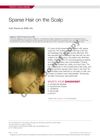
This case study describes a young girl with sparse, brittle scalp hair and multiple keratotic papules, but no systemic or familial abnormalities were found.
 2 citations
,
June 2016 in “PubMed”
2 citations
,
June 2016 in “PubMed” This case study reports successful treatment of an 11-year-old girl's trichotillomania with cognitive behavioral therapy, mild topical treatments, and supportive parental involvement, without psychopharmacologic intervention.
July 2026 in “Scholars Journal of Medical Case Reports” This case study reports a rare coexistence of alopecia areata and lichen planopilaris in a 37-year-old woman and highlights the importance of targeting active scalp areas for biopsy to appropriately manage coexisting scarring and non-scarring alopecias, with distinct therapeutic priorities.
February 2025 in “International Journal of Clinical & Experimental Dermatology” In this study, trichoscopy was identified as an effective tool for diagnosing trichotillomania in children, and a multidisciplinary, individualized approach along with family support was deemed essential for managing the condition and achieving sustained remission.