 7 citations
,
August 2018 in “The American Journal of Dermatopathology”
7 citations
,
August 2018 in “The American Journal of Dermatopathology” This study describes a newly observed "inflammatory vellus involvement" pattern in early frontal fibrosing alopecia, which may lead to misdiagnosis due to the absence of typical histological features.
5 citations
,
February 2025 in “Journal of Clinical Medicine” This study introduced a non-invasive, three-step diagnostic algorithm for alopecia that combines clinical and trichoscopic features to accurately identify alopecia subtypes, potentially reducing reliance on invasive histopathology.
4 citations
,
April 2024 in “Clinical Cosmetic and Investigational Dermatology” This review examines the trichoscopic characteristics of scalp DLE and LPP, correlating these findings with histopathological data, but provides no new clinical results.
 3 citations
,
January 2020 in “Clinical dermatology review”
3 citations
,
January 2020 in “Clinical dermatology review” This review describes distinct trichoscopic findings for various alopecias in individuals with skin of color, but reports no new clinical results.
3 citations
,
September 2019 in “European Medical Journal” This paper presents a case of scalp sarcoidosis with systemic involvement and notes the importance of dermoscopy in its diagnosis, along with a literature review of 46 alopecia-inducing sarcoidosis cases.
2 citations
,
January 2017 in “International Journal of Trichology” This case report describes the trichoscopic and histological features observed in a 7-year-old boy with morphea en coup de sabre and details the positive response to systemic immunosuppressive therapy.
 1 citations
,
January 2017 in “International Journal of Dermoscopy”
1 citations
,
January 2017 in “International Journal of Dermoscopy” This article reviews the use of dermoscopy as a noninvasive tool for diagnosing various types of nonscarring alopecia but presents no new clinical findings.
 January 2026 in “Forum Dermatologicum”
 This study observed that 2.5% of patients with mycosis fungoides or Szary syndrome experienced alopecia, predominantly within skin lesions, with scalp metastases from other cancers also potentially causing hair loss, highlighting the diagnostic value of trichoscopy in differentiating alopecia types.
January 2026 in “Diagnostics” This study reports that publicly available large language models are currently less accurate than human experts in diagnosing trichoscopic images, suggesting the need for further development and specialized training for these AI tools in trichology.
December 2025 in “Journal of Pharmacy And Bioallied Sciences” In this study, trichoscopy was found to enhance the early assessment of minoxidil therapy in males with pattern hair loss, leading to improved satisfaction and treatment compliance by revealing positive changes visible within one month.
 January 2025 in “Clinical Dermatology Review”
 In this case report, a 16-year-old female with Netherton syndrome, a rare genetic disorder, exhibited symptoms such as skin issues, hair abnormalities, and elevated serum IgE levels. The diagnosis was supported by skin biopsy, and treatment included topical therapies, NB-UVB, and infliximab.
 July 2023 in “International journal of trichology”
 In this study, no significant association was found between the severity of androgenetic alopecia in males and trichoscopy features such as hair diameter diversity, vellus hair, and white dots, suggesting that trichoscopy may not predict alopecia severity based on the Hamilton–Norwood scale.
 February 2022 in “International journal of research in dermatology”
 This case series describes seven distinct hair shaft disorders, highlighting the importance of accurate diagnosis since these conditions are often treated incorrectly as alopecias without improvement.
 January 2022 in “Journal of Dermatology and Dermatologic Surgery”
 This study found that trichoscopy is a valuable tool for diagnosing various hair disorders by identifying specific trichoscopic patterns, such as hair diameter diversity in androgenetic alopecia and exclamatory marks in alopecia areata.
 8 citations
,
January 2020 in “International Journal of Trichology”
8 citations
,
January 2020 in “International Journal of Trichology” The authors concluded that trichoscopy is a valuable noninvasive tool for diagnosing and monitoring nonscarring alopecia, aiding in the identification of new hair signs in difficult cases.
 August 2026 in “Dermatology and Therapy”
 In this study, researchers identified elongated corkscrew hairs as a new trichoscopic pattern in immunosuppressed adults with chronic endothrix tinea capitis, which may help in earlier diagnosis and targeted mycological investigation.
 September 2021 in “Mağallaẗ al-Muẖtar li-l-ʿulūm”
 This report describes a case of two sisters with kinky, tangled hair diagnosed using trichoscopic and microscopic methods; they were treated with topical minoxidil.
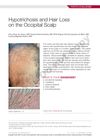 September 2023 in “Cutis”
 This study presents a case of a 6-month-old infant girl with hypotrichosis and an alopecic plaque in the occipital region, characterized by broken and dystrophic hairs with follicular papules and perifollicular hyperkeratosis, suggesting a diagnostic consideration.

This study found that hair loss is common among urban market traders in Nigeria, with a higher prevalence in women and linked to hair care practices like braiding and chemical relaxing.

In this study, chronic telogen effluvium was identified as the most common cause of alopecia in patients with systemic lupus erythematosus, with trichoscopy proving effective in diagnosing different alopecia patterns.
 68 citations
,
August 2012 in “Journal of the American Academy of Dermatology”
68 citations
,
August 2012 in “Journal of the American Academy of Dermatology” This paper discusses the use of dermatoscopy as a fast, noninvasive technique for diagnosing hair shaft disorders and reports no new results; the authors highlight its advantages over traditional microscopy methods.
30 citations
,
February 2015 in “Anais Brasileiros de Dermatologia” This case report describes a 4-year-old boy with Netherton syndrome, where trichoscopy importantly aided diagnosis and is recommended for all children with erythroderma.
 23 citations
,
April 2018 in “Journal der Deutschen Dermatologischen Gesellschaft”
23 citations
,
April 2018 in “Journal der Deutschen Dermatologischen Gesellschaft” This review discusses the classification and diagnosis of primary cicatricial alopecias and reports no new clinical results; it highlights the need for effective treatments owing to limited evidence of current therapies' efficacy.
6 citations
,
January 2019 in “Indian Journal of Dermatology, Venereology and Leprology” In this study, researchers found that a low-cost USB dermoscope can effectively detect microscopic hair changes associated with early female pattern hair loss, making it a useful tool for diagnosis even without expensive equipment or programs.
 5 citations
,
November 2012 in “Actas Dermo-Sifiliográficas”
5 citations
,
November 2012 in “Actas Dermo-Sifiliográficas” Comma hairs are a new sign for identifying scalp fungal infections.

In this study, researchers describe a technique for preparing mesenchymal stem cells to optimize hair transplantation for androgenetic alopecia, highlighting future plans to assess stem cell characteristics and hair density improvements through flow cytometry and trichoscopy.
 June 2021 in “International journal of research in dermatology”
 This case report describes a man with trichorrhexis nodosa of the beard, who experienced symptomatic improvement after being advised to shave and avoid brushing, confirming the diagnosis.
 16 citations
,
January 2011 in “International Journal of Trichology”
16 citations
,
January 2011 in “International Journal of Trichology” This article discusses the principles and considerations of clinical photography for hair disorders in dermatology, reporting no new clinical findings.
 March 2023 in “International Journal of Biomedicine”
 This review discusses telogen effluvium, including its causes, symptoms, diagnostic methods, and treatment strategies, without presenting new clinical findings.
 30 citations
,
January 2014 in “Annals of Dermatology”
30 citations
,
January 2014 in “Annals of Dermatology” This study observed no significant relationship between trichoscopic findings and disease severity in male or female androgenetic alopecia, despite some specific patterns correlating with different severity levels in female patients.