 14 citations
,
June 2018 in “JAMA Dermatology”
14 citations
,
June 2018 in “JAMA Dermatology” This Viewpoint discusses the utility of dermoscope in routine practice and how familiarity with dynamic vs static trichoscopy may address its limitations, but it reports no new clinical findings.

In this simulation study, higher cannabis exposure was associated with increased hair shedding severity and reduced follicular density, with greater effects observed in female-assigned profiles, but these associations are based on modeled data and not clinical observations.
 89 citations
,
March 2018 in “The Journal of Dermatology”
89 citations
,
March 2018 in “The Journal of Dermatology” This review presents various trichoscopic findings for diagnosing alopecia areata but reports no new clinical results, emphasizing that no single marker is pathognomonic and multiple features should be considered together.
 62 citations
,
October 2016 in “Dermatologic Therapy”
62 citations
,
October 2016 in “Dermatologic Therapy” This study found that platelet-rich plasma was more effective for treating alopecia areata than topical 5% minoxidil, leading to earlier hair regrowth and reduction in hair abnormalities.
 47 citations
,
December 2020 in “Journal of the European Academy of Dermatology and Venereology”
47 citations
,
December 2020 in “Journal of the European Academy of Dermatology and Venereology” This article reviews the classification, diagnosis, and management of hair disorders, emphasizing the role of trichoscopy and early diagnosis for effective treatment but reports no new clinical findings.
 43 citations
,
August 2013 in “Pediatric Dermatology”
43 citations
,
August 2013 in “Pediatric Dermatology” This review discusses the use of trichoscopy in diagnosing and managing pediatric hair and scalp disorders and reports no new experimental findings.
 30 citations
,
March 2015 in “Journal of Dermatology”
30 citations
,
March 2015 in “Journal of Dermatology” This study found that certain trichoscopic features like white peripilar sign, yellow dots, and scalp pigmentation are positively correlated with the severity of androgenetic alopecia in Chinese patients.
 16 citations
,
July 2016 in “Veterinary Dermatology”
16 citations
,
July 2016 in “Veterinary Dermatology” This study found that dermoscopy can identify distinctive features in canine pattern alopecia, such as hair shaft thinning and pigmentation patterns, which may aid in diagnosing this and potentially other skin disorders.
 14 citations
,
August 2019 in “Journal of Dermatological Treatment”
14 citations
,
August 2019 in “Journal of Dermatological Treatment” This study found that 5% topical minoxidil was moderately more effective at increasing hair regrowth than 10% minoxidil and placebo in men with androgenetic alopecia.
 13 citations
,
October 2017 in “Anais Brasileiros de Dermatologia”
13 citations
,
October 2017 in “Anais Brasileiros de Dermatologia” This review highlights the occurrence of yellow dots, a trichoscopic finding, in several scalp conditions beyond alopecia areata and reports no new clinical results.
 10 citations
,
September 2020 in “Archives of Dermatological Research”
10 citations
,
September 2020 in “Archives of Dermatological Research” Both methods improve hair density and thickness; double-spin may be more effective.
 10 citations
,
June 2019 in “Case reports in dermatology”
10 citations
,
June 2019 in “Case reports in dermatology” This paper presents a case of a young male with linear and annular lupus panniculitis of the scalp, detailing trichoscopic findings and their correlation with histopathological features, but reports no new generalizable results.
 9 citations
,
July 2018 in “International Journal of Dermatology”
9 citations
,
July 2018 in “International Journal of Dermatology” This study suggests that yellow and white dot signs may be new dermoscopic indicators of advanced androgenetic alopecia in dark-skinned females, with certain trichoscopic features associated with darker skin types.
 7 citations
,
March 2019 in “Medicine”
7 citations
,
March 2019 in “Medicine” This protocol outlines a study aiming to determine if combining 660 nm red laser photobiomodulation and microneedling increases hair density in female pattern hair loss, but it reports no results yet.
 6 citations
,
January 2016 in “JAMA Dermatology”
6 citations
,
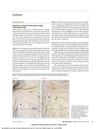
January 2016 in “JAMA Dermatology” This article discusses the presence of dirty dots as a normal trichoscopic finding in children, noting they are not observed in adults or other age groups, and reports no new results.
 5 citations
,
January 2018 in “Skin Research and Technology”
5 citations
,
January 2018 in “Skin Research and Technology” This letter compares automated digital image analysis (TrichoScan) with manual marking of hairs in male patients with androgenetic alopecia but reports no new results.
 4 citations
,
May 2020 in “Journal of The American Academy of Dermatology”
4 citations
,
May 2020 in “Journal of The American Academy of Dermatology” This letter argues that cicatricial pattern hair loss likely represents end-stage androgenetic alopecia and not a variant of lichen planopilaris, as previously suggested.
 1 citations
,
March 2022 in “Berkala Ilmu Kesehatan Kulit dan Kelamin/Berkala ilmu kesehatan kulit dan kelamin (Periodical of dermatology and venerology)”
1 citations
,
March 2022 in “Berkala Ilmu Kesehatan Kulit dan Kelamin/Berkala ilmu kesehatan kulit dan kelamin (Periodical of dermatology and venerology)” This case analysis found that trichoscopy is a valuable tool for diagnosing and monitoring treatment progress in tinea capitis by distinguishing between Microsporum and Trichophyton etiologies.
 1 citations
,
July 2020 in “Benha Journal of Applied Sciences”
1 citations
,
July 2020 in “Benha Journal of Applied Sciences” This study identified that trichoscopy can effectively diagnose frontal fibrosing alopecia by highlighting specific scalp abnormalities in postmenopausal women.
 June 2026 in “EXPERIMENTAL & CLINICAL MEDICINE GEORGIA”
 In this study, researchers found a positive correlation between trichoscopic features and histomorphological findings, supporting trichoscopy as a valuable tool for assessing androgenetic alopecia severity and monitoring treatment outcomes.
 March 2026 in “Journal of Skin and Sexually Transmitted Diseases”
 This study reports ten cases of non-marginal traction alopecia in women with very long hair, which was improved with shorter hair cuts and topical minoxidil application.
 February 2026 in “Dermatology Reports”
 In this case study, trichoscopy was found to be a valuable non-invasive tool for diagnosing dissecting cellulitis of the scalp, enabling early detection and intervention to prevent disease progression and reduce the need for invasive procedures.
 January 2026 in “Forum Dermatologicum”
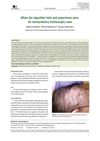
 This case study examined a 72-year-old woman with unique hair shaft constrictions consistent with monilethrix, despite features atypical for this condition, ultimately reaching a diagnosis that led to successful improvement using oral minoxidil and reduced hair trauma.
 November 2025 in “International Journal of Research in Medical Sciences”
 In this case study, the authors explored the management of ophiasis, a rare and challenging form of alopecia areata, in a 3-year-old boy using the Unani system of medicine, aiming to provide insights for treatment approaches.
 November 2023 in “Laser therapy”
 In this case report, trichoscopy was highlighted as a vital diagnostic tool for pediatric alopecia areata, showing significant hair regrowth in a 4-year-old girl with toxoplasma-related alopecia after six weeks of therapy, emphasizing its role in tracking therapeutic progress.
 July 2021 in “Australasian Journal of Dermatology”
 This manuscript describes a proposed ‘trichoscopy-assisted hair pull test’ that enhances the diagnosis of hair loss conditions by allowing immediate examination of proximal hair shafts and roots in patients with a positive hair pull test.
This study suggests that dermoscopy provides additional insights for diagnosing pattern alopecia in short coated dogs, beyond what is visible through standard dermatological examination.
 April 2016 in “Journal of The American Academy of Dermatology”
 The study found that Temporal Triangular Alopecia often starts in early childhood, mainly affects the left side of the scalp, and has no effective treatment except surgery.
 April 2016 in “Journal of The American Academy of Dermatology”
 The study found that Temporal Triangular Alopecia often starts in early childhood, while Folliculitis Decalvans is characterized by tufted hairs and redness around hair follicles.
 8 citations
,
March 2011 in “Archives of Dermatology”
8 citations
,
March 2011 in “Archives of Dermatology” This study suggests that corkscrew hair could serve as a new diagnostic marker for tinea capitis and that dermoscopy might help diagnose atypical cases swiftly.