5 citations
,
March 2023 in “Journal of the European Academy of Dermatology and Venereology” This review discusses the use of trichoscopy for diagnosing systemic diseases and concludes that certain trichoscopic features may help dermatologists suspect these conditions.
 6 citations
,
January 2012 in “Springer eBooks”
6 citations
,
January 2012 in “Springer eBooks” This study found that trichoscopy has limited value for diagnosing telogen effluvium, as common findings are not specific enough to differentiate it from other conditions like androgenetic alopecia.
21 citations
,
September 2022 in “Actas Dermo-Sifiliográficas” This study reviews the use of trichoscopy in diagnosing and monitoring alopecia areata, highlighting that certain trichoscopic findings like yellow and black dots, exclamation mark hairs, and others, provide valuable insights into disease status and treatment response.
 June 2026 in “International Journal of Ayurvedic Medicine”
 In this study, researchers investigated the alignment of trichoscopic findings with ayurvedic signs (lakshanas) for diagnosing hair loss, suggesting that integrating these perspectives could enhance diagnostics and management of hair and scalp conditions.
 162 citations
,
August 2005 in “The journal of investigative dermatology/Journal of investigative dermatology”
162 citations
,
August 2005 in “The journal of investigative dermatology/Journal of investigative dermatology” This study introduces a novel non-invasive method called "differential stripping" to quantify the penetration of topically applied substances into hair follicles.
 26 citations
,
March 1986 in “Clinical and Experimental Dermatology”
26 citations
,
March 1986 in “Clinical and Experimental Dermatology” Scalp hair grows at 0.37 mm/day, forearm hair at 0.18 mm/day, and thigh hair at 0.30 mm/day, with no significant differences found in people with certain hair conditions.
7 citations
,
May 2007 in “Nutrition Journal” This study found that due to variability in measurements, hair pluckability is not a reliable indicator of adult nutritional status, although it may hold potential in certain emergency situations if improved for consistency.
 1 citations
,
July 2018 in “Elsevier eBooks”
1 citations
,
July 2018 in “Elsevier eBooks” This article reviews the role of trichoscopy in diagnosing hair weathering conditions like trichorrhexis nodosa and trichoptilosis and suggests treatment by avoiding harmful chemical and physical factors, but it provides no new research findings.
 1 citations
,
October 2024 in “Dermatology Practical & Conceptual”
1 citations
,
October 2024 in “Dermatology Practical & Conceptual” This study suggests that RCM may be a promising non-invasive diagnostic tool for alopecia areata incognita, showing substantial agreement with histopathology while noting some discrepancies.
 12 citations
,
September 2020 in “Journal of cosmetic dermatology”
12 citations
,
September 2020 in “Journal of cosmetic dermatology” This study found that trichoscopy aided in assessing treatment responses for patchy alopecia areata, with both intralesional corticosteroids and platelet-rich plasma showing effectiveness, but only PRP significantly improved patient symptom impact scores.
 January 2015 in “Springer eBooks”
 Understanding hair structure and growth is key for diagnosing hair diseases accurately.
 1 citations
,
November 2020 in “bioRxiv (Cold Spring Harbor Laboratory)”
1 citations
,
November 2020 in “bioRxiv (Cold Spring Harbor Laboratory)” This study introduced a new high-throughput method for analyzing scalp hair morphology and found that quantifying hair form provides more accurate information than traditional classification based on racial categories, challenging the belief that cross-sectional morphology predicts hair curvature.
 245 citations
,
March 2012 in “Journal of The American Academy of Dermatology”
245 citations
,
March 2012 in “Journal of The American Academy of Dermatology” This review discusses the dermoscopic features of common hair and scalp disorders and reports no new clinical results, aiming to assist dermatologists in diagnosing conditions like tinea capitis and alopecia areata.

This review discusses recent advances in noninvasive hair imaging technologies, such as global photography, trichoscopy, reflectance confocal microscopy, and optical coherence tomography, highlighting their potential to improve hair diagnostics and treatment monitoring, while also outlining their clinical applications and limitations.
This article reviews confocal microscopy findings in trichoepithelioma and desmoplastic trichoepithelioma, noting similarities with histological features, but it provides no new clinical results.
 February 2026 in “JOURNAL OF CLINICAL AND DIAGNOSTIC RESEARCH”
 This study observed that white dots, focal atrichia, and honeycomb pigmentation on the scalp were significantly associated with the severity of androgenetic alopecia in men under forty.
 1 citations
,
May 2018 in “jurnal veteriner”
1 citations
,
May 2018 in “jurnal veteriner” This study concluded that among the three diagnostic techniques for detecting Demodex mites in dogs, the scraping technique provided the best diagnostic value.
 4 citations
,
November 2011 in “Archives of Dermatology”
4 citations
,
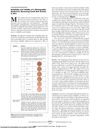
November 2011 in “Archives of Dermatology” This study describes a simple, noninvasive hair counting method used in a hair growth prevention trial, assessing its reliability and validity.
6 citations
,
August 2008 in “Journal of Forensic Sciences” This study used electron microscopy to characterize tissues on telogen hair roots, finding that tissue quality, including nucleated and nonnucleated epithelial cells, may play a crucial role in DNA typing for forensic analysis.
 June 2023 in “Italian journal of dermatology and venereology”
 In this retrospective study, researchers from the University of Bologna observed that trichoscopy can aid in diagnosing allergic scalp contact dermatitis, with key findings including common trichoscopic patterns of erythema, white scales, arborizing vessels, and simple red loops in 12 patients diagnosed with the condition.
19 citations
,
July 2004 in “Australasian Journal of Dermatology” In this case study, a 74-year-old woman improved her scalp hair condition by reducing chronic rubbing, leading to hair regrowth without ongoing abnormalities after behavior modification.
 10 citations
,
September 2020 in “Computational and Mathematical Methods in Medicine”
10 citations
,
September 2020 in “Computational and Mathematical Methods in Medicine” This paper introduces an algorithm for using smart device-mounted microscopes to analyze scalp images and diagnose hair loss by extracting specific hair loss features.
 6 citations
,
December 2018 in “Australasian Journal of Dermatology”
6 citations
,
December 2018 in “Australasian Journal of Dermatology” This study found a strong correlation between the Sinclair Scale and cumulative hair thickness density, allowing the estimation of the Sinclair Scale from trichoscopy-derived statistics.
November 2021 in “International Journal of Trichology” This study found that trichoscopy can confirm the diagnosis and assess the clinical severity of female androgenetic alopecia, correlating specific features with different severity grades.
January 2021 in “International journal of dermatology, venereology and leprosy sciences” This study identified specific trichoscopic features in patients with androgenetic alopecia and telogen effluvium, highlighting differences in hair shaft diameter variation between fronto-temporal and occipital areas.
 June 2018 in “The Medical Journal of Cairo University/The Medical Journal of Cairo University”
 This study found that dermoscopy is effective for distinguishing Tinea Capitis from Alopecia Areata by identifying unique trichoscopic features specific to each condition.
January 2020 in “Hair therapy & transplantation” This article discusses the role of trichology in treating hair and scalp conditions by addressing underlying body systems and reports no new clinical findings.
 January 2020 in “Journal of Current Medical Research and Practice”
 In this study, trichoscopy was found to be helpful in diagnosing the types of noncicatricial alopecia, and alopecia's negative impact on quality of life was highlighted through the correlation with clinical severity.
May 2022 in “Dermatology practical & conceptual” This study developed new graded visual scales integrating macroscopic and trichoscopic images for assessing the severity of androgenetic alopecia in men and women, potentially aiding in more objective disease evaluation.
April 2026 in “Spectrochimica Acta Part A Molecular and Biomolecular Spectroscopy”