 May 2020 in “Research Square (Research Square)”
 This study found that trichilemmal carcinoma shares genetic changes with other skin cancers, suggesting a similar pathogenesis, particularly in those with aggressive clinical courses linked to TP53 mutations.
 2 citations
,
May 2014 in “Journal of the Egyptian Women's Dermatologic Society (Print)”
2 citations
,
May 2014 in “Journal of the Egyptian Women's Dermatologic Society (Print)” This review examines the use of dermoscopy for diagnosing common hair disorders and highlights its importance, but it does not report new clinical results.
 July 2024 in “Dermatology Practical & Conceptual”
 This article discusses the diagnostic challenges between certain neonatal scalp conditions and highlights the potential of line-field confocal optical coherence tomography to provide detailed, non-invasive skin examination, without presenting new clinical findings.
January 2026 in “Figshare” This table reports gene set enrichment analysis scores for hair follicle compartments across diseases and sampling methods, providing comparisons but no new experimental findings.
September 1989 in “PubMed” This study reported detailed three-dimensional ultrastructural observations of human hair and hair follicles using a modified preparation method, including morphological differences in hair bulb cell layers and surface projections on root sheath cells.
 1 citations
,
May 2001 in “Proceedings of SPIE, the International Society for Optical Engineering/Proceedings of SPIE”
1 citations
,
May 2001 in “Proceedings of SPIE, the International Society for Optical Engineering/Proceedings of SPIE” This paper presents an RGB video microscopic system to monitor optical properties of hair shafts and follicles in vitro, but reports no new clinical results.
 June 2023 in “International journal of pharmaceutical quality assurance”
 This study found that videodermoscopy is a promising non-invasive tool for distinguishing between types of non-scarring alopecia on the scalp, highlighting its potential in dermatological practice.
68 citations
,
August 2014 in “PeerJ” This study found that proteomic analysis can distinguish hair samples across different ethnicities and body regions based on keratin protein levels, which may aid forensic hair identification.

This study evaluated the accuracy of the HairCheck device, a cross-section trichometer, and concluded that it effectively measures changes in hair diameter and density for assessing alopecia progression and treatment response.
 16 citations
,
January 2010 in “American Journal of Neuroradiology”
16 citations
,
January 2010 in “American Journal of Neuroradiology” This case report describes a 3-year-old boy with trichothiodystrophy, highlighting specific MRI findings of diffuse dysmyelination and osteosclerosis that may be unique to the disorder.
 July 2021 in “Australasian Journal of Dermatology”
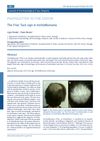
 This manuscript describes a proposed ‘trichoscopy-assisted hair pull test’ that enhances the diagnosis of hair loss conditions by allowing immediate examination of proximal hair shafts and roots in patients with a positive hair pull test.
1 citations
,
November 2021 in “International Journal of Dermatology and Venereology” This paper highlights a case where a 2-year-old boy with temporal triangular alopecia was initially misdiagnosed with alopecia areata, emphasizing the importance of dermoscopy for accurate early diagnosis to avoid unnecessary treatments.
 16 citations
,
November 2013 in “European Journal of Dermatology”
16 citations
,
November 2013 in “European Journal of Dermatology” In this study, researchers characterized the normal scalp hair properties in South Koreans, observing that hair density declined with age and varied across scalp sites, while hair thickness patterns remained relatively stable until later in life.
 July 2025 in “Clinical Dermatology Review”
 In this case report, researchers observed multiple trichofolliculomas in family members, noting this as a rare manifestation of typically singular hair follicle hamartomas.
 November 2025 in “Archiv für Pathologische Anatomie und Physiologie und für Klinische Medicin”
 This study examined 16 sporadic trichoblastic tumors and found that although one showed malignant transformation, clinical follow-up revealed no residual or metastatic disease. RNA sequencing indicated a high tumor mutational burden and absence of a UV-related signature, helping to distinguish these tumors from similar growths.
This article discusses trichopigmentation as an innovative, reversible treatment for hair loss in both males and females, but it does not report new clinical results.
1 citations
,
January 2018 in “International Journal of Trichology” This report discusses the characteristics of circle hairs, a type of body hair growth disorder, and emphasizes the value of trichoscopy for diagnosis.
 13 citations
,
June 2012 in “Journal of Dermatological Case Reports”
13 citations
,
June 2012 in “Journal of Dermatological Case Reports” This report describes an 8-year-old male with trichotillomania, confirmed by trichoscopy showing characteristic hair damage and patterns.
13 citations
,
March 2020 in “Spectrochimica Acta Part A Molecular and Biomolecular Spectroscopy” This study used infrared spectroscopic imaging and scanning electron microscopy to reveal that alopecic hair has more irregular laminated structures and differing chemical profiles than normal hair, suggesting changes related to alopecia progression.
121 citations
,
December 2001 in “American Journal of Dermatopathology” This study found that trichoblastomas and nodular basal cell carcinomas have similar cytokeratin expression patterns, indicating differentiation towards the outer root sheath epithelium.

This study utilized polarized light microscopy to examine hair shafts in ten children with rare genetic disorders, such as Netherton syndrome and ectodermal dysplasia, providing valuable diagnostic insights into hair thickness, composition, and structural irregularities associated with these conditions.
21 citations
,
January 2000 in “Fetal Diagnosis and Therapy” This study found that trichothiodystrophy can be diagnosed prenatally in the second trimester using an endoscopically-guided fetal eyebrow biopsy, with sulfur content analysis being the most reliable test.
3 citations
,
July 2024 in “Dermatology and Therapy” The researchers reported that identifying specific hair shaft abnormalities is crucial for distinguishing patchy/plaque mycosis fungoides from psoriasis and eczematous dermatitis on non-scalp skin using dermoscopy.
4 citations
,
April 1989 in “The Journal of Dermatology” This study observed in mouse skin that trichohyalin granules in hair follicles transform into filamentous structures as inner root sheath cells differentiate and cornify.
 33 citations
,
March 2006 in “Seminars in cutaneous medicine and surgery”
33 citations
,
March 2006 in “Seminars in cutaneous medicine and surgery” This article illustrates various hair shaft defects and suggests that dermatologists can diagnose most of them using light microscopy and polarization without needing advanced imaging techniques.
 4 citations
,
June 2021 in “Scientific Reports”
4 citations
,
June 2021 in “Scientific Reports” This study found that examining hair morphology provides deeper insights than classification, suggesting a potential population stratification artefact between hair curvature and cross-sectional shapes in the examined admixed African-European sample.
 3 citations
,
January 2018 in “Dermatology”
3 citations
,
January 2018 in “Dermatology” This study found that transverse sections of scalp biopsies, particularly looking at the anagen:non-anagen hair ratio and presence of pigment casts, effectively distinguish alopecia areata from androgenetic alopecia.
 August 2025 in “ChemPhotoChem”
 This study demonstrated that CD anisotropy effectively distinguishes between two polymorphs of finasteride with nearly identical electronic circular dichroism spectra, using imaging and simulated spectra to uncover unique signatures that traditional methods miss.
 5 citations
,
November 2017 in “Dermatologica Sinica”
5 citations
,
November 2017 in “Dermatologica Sinica” In this study, transverse sectioning of scalp biopsy samples showed higher diagnostic accuracy than vertical sectioning for noncicatricial alopecia, although both techniques are important for accurate diagnosis.
 56 citations
,
July 2005 in “Journal of The American Academy of Dermatology”
56 citations
,
July 2005 in “Journal of The American Academy of Dermatology” This study found that vertical sections of alopecia biopsy specimens had a higher concordance rate with the original combined diagnosis compared to transverse sections alone, although both methods have their pros and cons.