May 2022 in “European Journal of Dermatology” In this study, increased treatment duration with vismodegib was associated with a decreased risk of relapse in patients with advanced or multiple basal cell carcinoma.
July 2021 in “Anais brasileiros de dermatologia/Anais Brasileiros de Dermatologia” This article reports on a family with six members diagnosed with monilethrix, highlighting varying degrees of alopecia linked to this rare hair shaft defect.
 13 citations
,
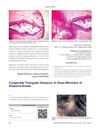
January 2011 in “International Journal of Trichology”
13 citations
,
January 2011 in “International Journal of Trichology” CTA is often mistaken for AA but doesn't respond to steroids and may require hair transplantation.
 March 2014 in “Journal of The American Academy of Dermatology”
 Azathioprine may help with severe hair loss, a new topical treatment could counteract hair thinning, and trichoscopy can diagnose hair-pulling disorder effectively.
March 2025 in “International Journal of Trichology” This case study reported that a 15-year-old female developed acquired localized trichorrhexis nodosa, a hair shaft disorder, due to vigorous rubbing of an herbal powder on her scalp as part of local cultural practices.
72 citations
,
July 1984 in “Journal of Investigative Dermatology”  90 citations
,
October 1983 in “British Journal of Dermatology”
90 citations
,
October 1983 in “British Journal of Dermatology” This study found that individuals with androgenic alopecia have an increased number of thin hairs (less than 40 microns in diameter) per cm², which may affect their clinical appearance.
 4 citations
,
February 1988 in “Journal of the American Academy of Dermatology”
4 citations
,
February 1988 in “Journal of the American Academy of Dermatology” Congenital triangular alopecia is more common than thought and some treatments can be beneficial for appearance concerns.
 1 citations
,
April 2020 in “International Journal of Research in Dermatology”
1 citations
,
April 2020 in “International Journal of Research in Dermatology” This observational study found that trichoscopy is a reliable tool for diagnosing various hair and scalp disorders, with common findings observed for different types of alopecia.
 January 2011 in “Reactions Weekly”
 Long-term use of minoxidil may cause hair follicles to transform into noticeable terminal hairs, leading to trichostasis spinulosa.
 6 citations
,
January 2012 in “Springer eBooks”
6 citations
,
January 2012 in “Springer eBooks” This study found that trichoscopy has limited value for diagnosing telogen effluvium, as common findings are not specific enough to differentiate it from other conditions like androgenetic alopecia.
40 citations
,
November 1966 in “Archives of Dermatology” This study found that trichorrhexis nodosa, a cause of unexplained hair loss, is often linked to mechanical trauma rather than a metabolic defect.
 January 2021 in “International journal of dermatology, venereology and leprosy sciences”
 This study found that trichoscopy is a valuable diagnostic tool for identifying hair loss patterns in women and can help avoid scalp biopsies in unclear cases.
 May 2017 in “InTech eBooks”
 This review discusses trichotillomania and traction alopecia, focusing on their clinical features, diagnostic criteria, and treatment options, but it reports no new research findings.
 38 citations
,
January 2016 in “Indian Journal of Dermatology, Venereology and Leprology”
38 citations
,
January 2016 in “Indian Journal of Dermatology, Venereology and Leprology” This study found that trichoscopy was useful in diagnosing different types of alopecia, with specific trichoscopic features aiding in the differential diagnosis.
July 2025 in “Indian Dermatology Online Journal” This study reports a unique case of trichotillomania incognita in an adult female that mimicked female pattern hair loss, highlighting the importance of trichoscopy and histology for accurate diagnosis.
 2 citations
,
February 2015 in “Journal of Tissue Engineering and Regenerative Medicine”
2 citations
,
February 2015 in “Journal of Tissue Engineering and Regenerative Medicine” This study found that transplanting trichogenous dermal cells significantly enhanced the restoration of in vivo-damaged hair follicles in a nude rat model, with a combination of dermal papilla and sheath cells proving more effective than either cell type alone.
 6 citations
,
January 2020 in “Postepy Dermatologii I Alergologii”
6 citations
,
January 2020 in “Postepy Dermatologii I Alergologii” This study identified several specific trichoscopic features of trichotillomania, with trichoptilosis, V hair, and hair powder being the most frequent findings.
10 citations
,
March 1997 in “Pediatric Dermatology” This case report describes a patient with trichothiodystrophy presenting with autism, mental retardation, and seizures, characterized by distinct hair abnormalities under microscopy.
July 2022 in “DOAJ (DOAJ: Directory of Open Access Journals)” This source discusses the characteristics and clinical presentation of androgenetic alopecia, emphasizing the importance of early recognition and grading for administering therapy and the role of trichoscopy in diagnosis and monitoring treatment response.
January 2026 in “Skin Appendage Disorders” This study concluded that including intermediate hairs or using relative shaft diameter methods can significantly improve the sensitivity of trichograms in diagnosing female androgenetic alopecia, aligning better with histopathology results.
3 citations
,
January 2021 in “Medicinski arhiv” In this study, trichoscopic examination revealed that patients with androgenetic alopecia had significantly more yellow dots, pilosebaceous units with one hair, and increased perifollicular hyperpigmentation compared to healthy controls.
 February 2021 in “Journal of the Korean Ophthalmological Society”
 This study examined a 7-year-old girl with trichomegaly of the eyelashes, showing no significant underlying or observable cause, suggesting a spontaneous occurrence.
 5 citations
,
December 2018 in “Journal of The American Academy of Dermatology”
5 citations
,
December 2018 in “Journal of The American Academy of Dermatology” This study highlights the importance of recognizing artifacts in trichoscopy, as certain cosmetic products can mimic signs of early androgenetic alopecia.
 2 citations
,
January 2019 in “Dermatology Review”
2 citations
,
January 2019 in “Dermatology Review” This study found that pigmented vellus and upright regrowing hairs are the only predictive trichoscopic markers of hair regrowth in patients with alopecia totalis and universalis.
3 citations
,
January 2017 in “Dermatology online journal” This case report describes the diagnosis of monilethrix in a 2-year-old boy using trichoscopy, highlighting its rarity and the challenge of diagnosing it without a family history.
3 citations
,
April 1997 in “Developmental Dynamics” In this study, topical trypsin treatment following depilation in a mouse model induced cell death at the follicular papilla, delaying hair growth and pigmentation.
Recognizing bamboo hair helps diagnose Netherton’s syndrome.
 June 2025 in “International Journal of Molecular Sciences”
 In this study, researchers used spatial transcriptomics to identify increased expression of genes linked to extracellular matrix organization and epithelial–mesenchymal transition in the progenitor cell regions of hair follicles in androgenetic alopecia patients, suggesting a possible role in progenitor cell loss and fibrogenic microenvironment development.
 37 citations
,
January 2017 in “International Journal of Dermatology”
37 citations
,
January 2017 in “International Journal of Dermatology” This study found that trichoscopic features like exclamation mark hairs and angulated hairs were more indicative of alopecia areata in an Asian population, while features like broken hairs of different lengths and flame hairs were more common in trichotillomania.