 42 citations
,
September 2000 in “British Journal of Dermatology”
42 citations
,
September 2000 in “British Journal of Dermatology” This report describes two children with congenital hypotrichosis and found their short hair is due to a shortened anagen phase, with the condition resolving spontaneously during puberty.
 February 2026 in “JOURNAL OF CLINICAL AND DIAGNOSTIC RESEARCH”
 This study observed that white dots, focal atrichia, and honeycomb pigmentation on the scalp were significantly associated with the severity of androgenetic alopecia in men under forty.
49 citations
,
March 2004 in “Journal of Investigative Dermatology” This study found that the hHa7 gene in hair follicle trichocytes is the first identified to have its expression directly regulated by androgens, suggesting it as a marker for androgen action on hair follicles.
8 citations
,
February 2023 in “Actas Dermo-Sifiliográficas” This review summarizes trichoscopic features for diagnosing common hair loss disorders and reports no new clinical results, emphasizing their diagnostic utility in conditions like alopecia areata and trichotillomania.
January 2020 in “Revista Dermatológica Centro Uraga” This article describes how recognizing distinct trichoscopic features aids in diagnosing various dermatological conditions and hair loss, but it reports no new clinical findings.
1 citations
,
January 2016 in “Dermatology Online Journal” This case report documents a rare instance of triangular temporal alopecia in an adult woman, emphasizing the importance of correct diagnosis to avoid unnecessary treatments, and reviews the literature on TTA.
21 citations
,
January 1999 in “Endocrine” 15 citations
,
March 2009 in “Pediatric dermatology” This case report documents a novel occurrence of bilateral trichomegaly with alopecia areata in a healthy 3-year-old girl, without known underlying health conditions or medication use.
 September 2023 in “Cutis”
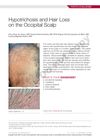
 This study presents a case of a 6-month-old infant girl with hypotrichosis and an alopecic plaque in the occipital region, characterized by broken and dystrophic hairs with follicular papules and perifollicular hyperkeratosis, suggesting a diagnostic consideration.
 August 2017 in “Journal of evolution of medical and dental sciences”
 In this study, researchers evaluated trichoscopy in diagnosing non-scarring alopecia and found diagnostic value in observing diverse hair diameters in androgenetic alopecia, black dots and broken hairs in alopecia areata, and empty follicles in telogen effluvium, supporting trichoscopy's utility in differentiating alopecia types.
 86 citations
,
October 2013 in “Dermatologic Clinics”
86 citations
,
October 2013 in “Dermatologic Clinics” Trichoscopy is a useful non-invasive method for diagnosing different hair loss conditions.
 12 citations
,
August 2018 in “Journal of Dermatological Science”
12 citations
,
August 2018 in “Journal of Dermatological Science” This study observed that adipose-derived stem cells modified with trichogenic factors have similar properties to dermal papilla cells and show enhanced hair regeneration potential compared to unmodified adipose-derived stem cells.
 5 citations
,
May 2008 in “Nature Precedings”
5 citations
,
May 2008 in “Nature Precedings” In this study, trichoscopy was used to diagnose female androgenic alopecia with 92% specificity by identifying specific hair and scalp patterns.
 November 2025 in “Archiv für Pathologische Anatomie und Physiologie und für Klinische Medicin”
 This study examined 16 sporadic trichoblastic tumors and found that although one showed malignant transformation, clinical follow-up revealed no residual or metastatic disease. RNA sequencing indicated a high tumor mutational burden and absence of a UV-related signature, helping to distinguish these tumors from similar growths.
January 2022 in “Clinical Cases in Dermatology” This review discusses the characteristics, potential genetic components, and treatment options for trichotillomania, a psychiatric condition that involves compulsive hair pulling, without reporting new clinical results.
2 citations
,
July 2001 in “Dermatologic Surgery” This study reports two cases of trichoblastic neoplasms with histologic features suggesting they may be distinct, locally aggressive trichoblastic carcinomas separate from basal cell carcinoma.
 4 citations
,
February 2021 in “International Journal of Women's Dermatology”
4 citations
,
February 2021 in “International Journal of Women's Dermatology” This study determined that trichoscopy is a sensitive and specific tool that effectively aids in diagnosing alopecia in women, especially when clinical diagnosis is uncertain.
 December 2023 in “International Journal of Medical Sciences And Clinical Research”
 This article discusses trichoscopy as a tool for differential diagnosis in female-type androgenetic alopecia and reports on three patient cases without providing new clinical results.
January 2025 in “Surgical & Cosmetic Dermatology” This article reviews temporal triangular alopecia, emphasizing the utility of dermoscopy for diagnosis, and reports no new clinical treatment findings.
 11 citations
,
May 2011 in “World Journal of Pediatrics”
11 citations
,
May 2011 in “World Journal of Pediatrics” The document emphasizes the importance of correctly identifying and classifying genetic hair disorders to help diagnose related health conditions.
61 citations
,
January 2002 in “American Journal of Clinical Dermatology”  January 2018 in “Indian Dermatology Online Journal”
 This case report highlights the importance of considering artefacts like artificial hair fibers during trichoscopy, as they can interfere with the accurate diagnosis of hair conditions.
46 citations
,
August 2012 in “Experimental Dermatology” In this study, engineered skin substitutes containing murine dermal papilla cells developed hair follicle-like structures when grafted onto mice, suggesting a model for generating chimeric hair.
 January 2011 in “International Journal of Trichology”
 The document concludes that doctors should recognize congenital triangular alopecia to avoid unnecessary treatments, as it does not respond to steroids like alopecia areata does.
35 citations
,
September 2003 in “Archives of dermatology” This study proposed that the tiger tail phenomenon in trichothiodystrophy hair is caused by regular undulations of hair fibers, altering the optical properties seen under polarized light.
 28 citations
,
August 2018 in “Dermatologic Clinics”
28 citations
,
August 2018 in “Dermatologic Clinics” This article discusses various aspects of trichoscopy for diagnosing hair and scalp disorders and reports no clinical results, offering guidance and highlighting pitfalls for better application of this tool by dermatologists.
 January 2022 in “Klinicheskaya dermatologiya i venerologiya”
 This study found that anisotrichia, yellow dots, and increased vellus hairs are key trichoscopic markers of early androgenetic alopecia, while late stages are characterized by anisotrichia, yellow dots, and increased single follicular units.
This study involved using smartphone applications and low-cost trichoscopy devices to assess various hair and scalp conditions, with diagnoses confirmed through detailed imaging during remote consultations and in-person evaluations.
 April 2025 in “Clinical Dermatology Review”
 In this study, researchers reported that dermatoscopy effectively differentiates between various types of alopecia and scalp disorders, offering a fast, minimally invasive diagnostic method that improves the standard of care and reduces the necessity for scalp biopsies.
6 citations
,
November 2001 in “Der Hautarzt” This article reviews new developments in hypertrichosis treatments and reports no new clinical results; permanent depilation by photothermolysis and eflornithine cream are highlighted as promising options.