53 citations
,
August 2015 in “The Italian Journal of Pediatrics/Italian journal of pediatrics” This review discusses congenital generalized hypertrichosis, focusing on its association with complex malformation syndromes, but it presents no new research findings.
45 citations
,
March 1997 in “Journal of Investigative Dermatology” TCDD changes skin gene expression and may harm skin health.
Results are not reported in this study, which investigated the effects of radiation on hair follicles and evaluated various cellular responses and signaling pathways, particularly focusing on WNT signaling and the impact of Wnt3a treatment.
 8 citations
,
November 2021 in “The Journal of Dermatology”
8 citations
,
November 2021 in “The Journal of Dermatology” This review addresses the complexities in trichoscopy terminology and proposes an updated diagnostic flowchart for hair diseases, but it reports no new clinical findings.
1 citations
,
March 2013 in “Clinical, cosmetic and investigational dermatology” This case report details an eleven-year-old male with recurring alopecia initially attributed to fungal infections but ultimately diagnosed as trichotillomania.
April 2026 in “Spectrochimica Acta Part A Molecular and Biomolecular Spectroscopy” 1 citations
,
May 2015 in “Experimental Dermatology” This study found that constitutive activation of Stat3 in transgenic mice led to impaired hair growth and structural disorganization due to aberrant regulation of hair follicle and cytoskeletal genes.
March 2026 in “Pakistan Armed Forces Medical Journal” This study found that trichoscopy positively correlates with disease severity in both male and female patients with androgenetic alopecia, suggesting its usefulness in early diagnosis and assessment.
2 citations
,
February 2012 in “PubMed” This study found that Gp₄G increased hair length, papilla cell numbers, and versican deposition in treated animals, potentially through alterations in hair follicle phases and nucleotide concentrations.

This study found that both trichoscopy and folliscopy are highly accurate for diagnosing telogen effluvium, though trichoscopy is simpler and faster to perform.
2 citations
,
September 2021 in “JAAD case reports” This report describes a case of trichodysplasia spinulosa in a renal transplant patient, characterized by unique dermatoscopic features and highlighting the need for timely diagnosis.
 6 citations
,
August 2012 in “The Journal of Pediatrics”
6 citations
,
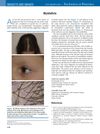
August 2012 in “The Journal of Pediatrics” This case report describes a 12-year-old girl diagnosed with monilethrix, characterized by fragile, beaded hair shafts, with no effective treatment currently available.
41 citations
,
December 2008 in “Pediatric Dermatology” This case report indicates that trichoscopy may significantly improve the diagnosis of Netherton syndrome by noninvasively identifying typical hair abnormalities without the need to pull hair.
January 2007 in “Durham e-Theses (Durham University)” This document details the usage policy for full-text reproduction from Durham E-Theses, providing guidelines for personal, educational, and non-commercial purposes without altering the text.
In this study, various cellular responses and signaling pathways were examined in hair follicles after exposure to ionizing radiation, including the effects of Wnt3a treatment, with findings noted in apoptosis, DNA damage, and differentiation processes.
26 citations
,
April 2011 in “British Journal of Dermatology” This study identified novel mutations in the DSG4 gene in a Japanese patient with monilethrix, affecting protein interactions that may disrupt hair shaft structure.
March 2024 in “Clinical Case Reports” In this study, the authors emphasize the importance of not ignoring the partial presence of comma or harpin hairs and black spots when identifying early lesions of tinea capitis, which may initially be overlooked due to their small size.
 April 2016 in “Journal of The American Academy of Dermatology”
 The study found that Temporal Triangular Alopecia often starts in early childhood, mainly affects the left side of the scalp, and has no effective treatment except surgery.
July 2002 in “Journal of applied cosmetology” This review discusses various syndromes and conditions associated with abnormal hair growth, including potential therapies, but reports no new clinical findings or results.
 September 1998 in “Journal of The European Academy of Dermatology and Venereology”
 Phototrichogram helps assess hair loss severity.
 1 citations
,
November 2017 in “Skin appendage disorders”
1 citations
,
November 2017 in “Skin appendage disorders” Ingrown hairs are a common feature in scarring alopecias due to follicular damage.
1 citations
,
April 2018 in “Turkish Journal of Dermatology” This review discusses childhood hypertrichosis, examining its generalized and localized forms and notes that it reports no new clinical results.
January 2007 in “Journal of the American Academy of Dermatology” Tinea can cause scarring alopecia in children, and fungal culture is crucial for diagnosis.
4 citations
,
April 1983 in “The Journal of Dermatology” This case report describes a 15-year-old Japanese girl with juvenile hypothyroidism who developed hypertrichosis and hyperkeratosis due to a keratin plug inhibiting hair growth on her back and arms.
10 citations
,
October 2000 in “PubMed” This study found that transgenic mice expressing HPV E6/E7 in the outer root sheath experience continuous hair follicle cycling due to delayed catagen entrance and insensitivity to telogen resting signals.
18 citations
,
January 2015 in “Experimental Dermatology” This study reports new monilethrix cases in Venezuela, the Netherlands, Belgium, and France, expanding the known mutational spectrum of the disorder with novel mutations in KRT81, KRT83, and KRT86 genes.
8 citations
,
December 2017 in “Small Ruminant Research” This study reports that variation in the ovine TCHH gene may influence wool fibre curvature, with specific gene variants affecting the mean fibre curvature in sheep.
September 2026 in “British Journal of Dermatology” This study identified 11 genes associated with non-syndromic hereditary hypotrichosis in a Chinese cohort and proposed a preliminary framework for phenotype-driven candidate-gene prioritization to aid clinical evaluation.
July 2023 in “International journal of physiology” This article outlines hypertrichosis lanuginosa, emphasizing its rarity, potential congenital or acquired nature, association with malignancy, challenges in diagnosis, limited treatment options, and the need for more research to understand its mechanisms.
45 citations
,
December 2004 in “Forensic Science International” This study reports that using laser microdissection to isolate telogen hair follicles significantly improves DNA extraction efficiency for STR typing, reducing contamination from keratin.