 March 2023 in “Journal of skin and stem cell”
 This study concluded that trichoscopy is a reliable, non-invasive, and faster diagnostic method for ambiguous cases of alopecia.
 89 citations
,
December 2010 in “The Journal of Dermatology”
89 citations
,
December 2010 in “The Journal of Dermatology” This study describes characteristic trichoscopic features of various hair loss diseases and proposes an algorithmic method for diagnosing them, but reports no new clinical results.

In this study, trichoscopy was found to be a valuable non-invasive tool for diagnosing scalp lesions, enhancing diagnostic accuracy and reducing the need for scalp biopsies by identifying specific trichoscopic features associated with conditions like psoriasis, seborrheic dermatitis, and alopecia areata.
30 citations
,
January 1994 in “Micron” This study found that the formation of the fibre cuticle surface in Merino sheep is similar to the epidermal stratum corneum process and not from a modified plasma membrane as previously thought.
December 2021 in “IP Indian journal of clinical and experimental dermatology” In this study, trichoscopy was identified as a useful non-invasive tool to aid in the diagnosis of female pattern hair loss, with peri pilar sign and hair diameter variability being common findings.
July 2025 in “Dermatology Practical & Conceptual” In this study, researchers found that hair alterations such as frontal-occipital inversion in males and a high occipital hairline may aid in diagnosing the uncommon condition TRPS.
 74 citations
,
July 2008 in “Journal of Dermatological Case Reports”
74 citations
,
July 2008 in “Journal of Dermatological Case Reports” This study found that trichoscopy can diagnose genetic hair shaft abnormalities without plucking or cutting hair, by visualizing characteristic features in a single session.
 2 citations
,
January 2017 in “Journal of Cosmetics, Dermatological Sciences and Applications”
2 citations
,
January 2017 in “Journal of Cosmetics, Dermatological Sciences and Applications” In this study, TrichotechTM, a phytocomplex derived from essential oils, enhanced fibroblast proliferation, increased FGF-7 and FGF-10 gene expression, and boosted collagen content in cultured human fibroblasts.
April 2023 in “Dohuk medical journal” This review discusses the use of trichoscopy for diagnosing alopecia and reports no new clinical results, emphasizing its role in identifying vascular and follicular features.
7 citations
,
June 2017 in “Journal of Cutaneous Pathology” This study reports a case of cystic panfolliculoma, highlighting the role of epithelial-mesenchymal interactions in its pathogenesis and explaining its histological resemblance to trichofolliculoma.
 96 citations
,
January 2013 in “International Journal of Trichology”
96 citations
,
January 2013 in “International Journal of Trichology” This article reviews the use of trichoscopy for diagnosing various types of alopecia and reports no new clinical results; it is suggested as a non-invasive method for diagnosis and monitoring treatment responses.
21 citations
,
December 2015 in “European journal of cell biology” In this study, researchers demonstrated that follicular tight junctions in porcine skin form a barrier to nanoparticle penetration, particularly in upper regions, which supports its use as a model for human skin.
 4 citations
,
February 2021 in “International Journal of Women's Dermatology”
4 citations
,
February 2021 in “International Journal of Women's Dermatology” This study determined that trichoscopy is a sensitive and specific tool that effectively aids in diagnosing alopecia in women, especially when clinical diagnosis is uncertain.
125 citations
,
February 2003 in “Journal of the American Academy of Dermatology” This review discusses various forms and categories of hypertrichosis, as well as methods for managing the condition, but does not report new clinical results.
17 citations
,
November 1967 in “American Journal of Anatomy” This study observed that the catagen phase in hairless mice displayed a slower shortening of the mutant epithelial column, resulting in longer total follicle length and abnormalities in the connective tissue sheath and glassy membrane.
 13 citations
,
October 2004 in “Anais Brasileiros De Dermatologia”
13 citations
,
October 2004 in “Anais Brasileiros De Dermatologia” This article reviews various self-aggressive hair disorders such as trichotillomania and emphasizes the psychiatric aspects of these conditions, but reports no new clinical findings.
2 citations
,
August 2007 in “Zoonoses and Public Health” This study documented clinical cases of dermatophytosis in two free-ranging southern chamois in the Eastern Pyrenees, with Trichophyton mentagrophytes identified in both animals.
 13 citations
,
August 2017 in “International Journal of Dermatology”
13 citations
,
August 2017 in “International Journal of Dermatology” This study reported that trichoscopy revealed distinctive patterns across different autoimmune bullous diseases, suggesting it can be a useful preliminary diagnostic tool for differentiating these conditions.
 8 citations
,
January 2020 in “International Journal of Trichology”
8 citations
,
January 2020 in “International Journal of Trichology” The authors concluded that trichoscopy is a valuable noninvasive tool for diagnosing and monitoring nonscarring alopecia, aiding in the identification of new hair signs in difficult cases.
 16 citations
,
July 2013 in “The American Journal of Dermatopathology”
16 citations
,
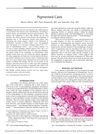
July 2013 in “The American Journal of Dermatopathology” This study observed that pigmented casts are present in various alopecia types but are not specific to any single diagnosis, with distinct morphological features noted in trichotillomania.
 August 2021 in “Acta medica Philippina”
 This case study highlights how trichoscopy helped differentiate between diffuse alopecia areata and trichotillomania in an 11-year-old girl, demonstrating its importance in distinguishing hair disorders with similar presentations.
17 citations
,
December 1994 in “International Journal of Dermatology” This article reports no new clinical findings but discusses two rare dermatological conditions, trichostasis spinulosa and eruptive vellus hair cysts, and their simultaneous occurrence.
 January 2020 in “Medpulse International Journal of General Medicine”
 This study observed that trichoscopic patterns, such as yellow dots and honey comb patterns, correlate with the severity of androgenetic alopecia in Indian patients, highlighting trichoscopy's diagnostic and prognostic value.
September 2025 in “British Journal of Dermatology”  759 citations
,
February 2009 in “Current Biology”
759 citations
,
February 2009 in “Current Biology” This review summarizes fundamental concepts and recent advancements in hair follicle biology, including insights from mouse models into broader molecular and cellular processes relevant to regeneration and development.
 74 citations
,
January 2006 in “The journal of investigative dermatology/Journal of investigative dermatology”
74 citations
,
January 2006 in “The journal of investigative dermatology/Journal of investigative dermatology” This study identified novel compound heterozygous mutations in the DSG4 gene in a Japanese patient with congenital hypotrichosis, suggesting overlap between localized autosomal recessive hypotrichosis and monilethrix.
 71 citations
,
August 2005 in “The journal of investigative dermatology. Symposium proceedings/The Journal of investigative dermatology symposium proceedings”
71 citations
,
August 2005 in “The journal of investigative dermatology. Symposium proceedings/The Journal of investigative dermatology symposium proceedings” This study revealed that human keratin-associated protein genes are expressed in specific patterns in hair fiber regions and vary in size, with some variations distinct across different populations.
 62 citations
,
January 2004 in “The journal of investigative dermatology/Journal of investigative dermatology”
62 citations
,
January 2004 in “The journal of investigative dermatology/Journal of investigative dermatology” This study identified 16 novel high sulfur KAP genes and two KAP pseudogenes on chromosome 21q23, showing expression in a specific region of the hair fiber cuticle.
 27 citations
,
April 2011 in “International journal of legal medicine”
27 citations
,
April 2011 in “International journal of legal medicine” This study reports that the completeness of DNA degradation in hair during cornification varies among individuals and affects the success rates of forensic hair DNA analysis.