November 2025 in “Bioactive Materials” In this study, researchers developed a novel nucleic acid nanoparticle system incorporating quercetin, which they found enhances functional hair follicle regeneration and maintains epithelial structure stability in androgenetic alopecia by regulating hair follicle stem and dermal papilla cells.
June 2025 in “British Journal of Dermatology” This systematic review reports that trichoscopy is highly accurate for diagnosing scalp disorders, suggesting it as a valuable alternative to biopsies and supporting recommendations for its integration into routine dermatology practice.
61 citations
,
March 2006 in “Colloids and surfaces. B, Biointerfaces” In this study, lecithin/n-propanol/isopropyl myristate/water/tetracaine hydrochloride microemulsion was found to be a safe carrier for transdermal drug delivery in animal models, with analgesic effects on Wistar rats.

This study found that local therapy with trichoriboside and trichosaccharide significantly increased cAMP levels in hair follicles of men with androgenic alopecia, with trichoriboside showing greater activity.
April 2016 in “Apollo (University of Cambridge)” This article reviews treatment approaches for trichotillomania, emphasizing differences from OCD therapies and recommending specific management strategies, without providing new experimental findings.
26 citations
,
January 1992 in “Carcinogenesis” This study suggests that chronic treatment with TPA in mouse skin selectively expands a keratinocyte subpopulation hyperinducible for ODC, which may be a key target for neoplastic transformation.
 124 citations
,
December 2016 in “Pharmaceuticals”
124 citations
,
December 2016 in “Pharmaceuticals” This review discusses the functions and potential therapeutic targeting of TRP ion channels in the skin, noting their involvement in both physiological processes and various pathological conditions, but reports no new experimental results.
1 citations
,
June 2016 in “Medicina” This article reviews monilethrix, a rare genetic hair disorder causing brittle hair and alopecia, and emphasizes the need for clinical diagnosis and characteristic tricoscopic findings.
July 2026 in “Journal of Cutaneous and Aesthetic Surgery” This study found that trichoscopic quantitative parameters reliably indicate the severity of female pattern hair loss and complement the Sinclair scale by offering a more objective and reproducible grading system.
4 citations
,
November 2023 in “SKIN The Journal of Cutaneous Medicine” In this study, ritlecitinib, an oral JAK3/TEC inhibitor, was evaluated for safety in patients aged 12 and older with alopecia areata across four clinical trials up to 36 months, showing a safety profile with reported adverse events and lab abnormalities summarized per dosing groups.
 37 citations
,
January 2017 in “International Journal of Dermatology”
37 citations
,
January 2017 in “International Journal of Dermatology” This study found that trichoscopic features like exclamation mark hairs and angulated hairs were more indicative of alopecia areata in an Asian population, while features like broken hairs of different lengths and flame hairs were more common in trichotillomania.
10 citations
,
January 1995 in “Dermatology” This case study suggests that early or significant alopecia in young adults may warrant investigation for underlying congenital conditions like trichorhinophalangeal syndrome.
 32 citations
,
April 2006 in “The Journal of Urology”
32 citations
,
April 2006 in “The Journal of Urology” Using finasteride with TIP extends time off period for prostate cancer patients.
 26 citations
,
June 2010 in “Acta Pharmaceutica”
26 citations
,
June 2010 in “Acta Pharmaceutica” The researchers reported that they successfully developed and validated RP-HPLC and TLC methods for accurately measuring tamsulosin hydrochloride and finasteride in combination forms.
 2 citations
,
February 2018 in “Journal of dermatology & cosmetology”
2 citations
,
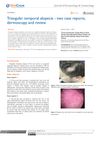
February 2018 in “Journal of dermatology & cosmetology” This article discusses triangular temporal alopecia, highlighting dermoscopy's role in diagnosis and the limited therapeutic options, without reporting new clinical results.
15 citations
,
August 2011 in “Lasers in medical science” This study reported that a single treatment with a short-pulsed 755-nm alexandrite laser effectively treated trichostasis spinulosa in patients with skin types II to V, providing rapid results with minimal pain and no recurrence during a 3-month follow-up.
 June 2025 in “International Journal of Science and Research (IJSR)”
 This study found that oral tofacitinib at a 5mg twice daily dosage was effective in treating recalcitrant alopecia areata, showing significant improvement in hair regrowth and a 27% reduction in SALT scores over six months, with minimal side effects among the 19 patients monitored.
January 2010 in “USFEU Scientific Library (Ural State Forest Engineering University)” This study developed a grooved microneedle platform enabling precise transdermal delivery of triamcinolone acetonide for alopecia areata, achieving accurate dosing by controlling groove position and drug concentration.
March 2022 in “Oncology Times” In this study, tebentafusp-tebn improved overall survival in patients with metastatic uveal melanoma compared to standard therapies, despite higher rates of significant adverse events.
 January 2023 in “Skin appendage disorders”
 The case study reports a patient with acute telogen effluvium in the donor region post-hair transplant, highlighting trichoscopic findings that aid in diagnosis and reassuring the self-resolutive nature of this condition.
June 2020 in “Zenodo (CERN European Organization for Nuclear Research)” This review discusses Robertsonian chromosomal translocations and their prevalence in the population, highlighting their association with infertility, and reports no new clinical results.
4 citations
,
July 2018 in “Molecules” This study found that blood and milk somatic cells show promise as matrices for monitoring illicit recombinant bovine somatotropin use in dairy cattle through gene-expression assays.
 14 citations
,
January 2011 in “Journal of analytical & bioanalytical techniques”
14 citations
,
January 2011 in “Journal of analytical & bioanalytical techniques” This research discusses a validated HPTLC method for simultaneously determining Tamsulosin Hydrochloride and Finasteride in bulk and pharmaceutical dosage forms but reports no new clinical results.
2 citations
,
March 2010 in “Acta Biochimica Polonica” This study observed that conjugates of the anticancer drug raltitrexed with dextran and albumin were more cytotoxic than the free drug at high concentrations, altering cell cycle effects.
1 citations
,
January 2022 in “Anais brasileiros de dermatologia/Anais Brasileiros de Dermatologia” In this study, authors reported that reflectance confocal microscopy may aid in diagnosing trichofolliculoma by identifying specific features correlated with histopathology that can be difficult to discern with other methods.
October 1984 in “Immunology Today”  9 citations
,
April 2020 in “Journal of dermatology”
9 citations
,
April 2020 in “Journal of dermatology” This case report describes a Thai male with TRPS1 who exhibited unique and unreported features such as hypoplastic mandibular condyles, double mental foramina, and distinctive hair abnormalities.
44 citations
,
May 2023 in “MedComm” This review highlights the potential of PROTAC technology in drug discovery for previously undruggable targets, particularly in cancer therapy, while emphasizing the urgent need to discover more E3 ligase recruiters to optimize targeted protein degradation.
July 2026 in “Indian Journal of Dermatology Venereology and Leprology”  1 citations
,
April 2025 in “Dermatology Practical & Conceptual”
1 citations
,
April 2025 in “Dermatology Practical & Conceptual” In this study, trichoscopy was highlighted as a valuable diagnostic tool for traction alopecia, particularly in black women, revealing common signs like vellus hair and hair casts, although it requires a suggestive clinical history for effective use.