 January 2021 in “Journal of Research in Medical and Dental Science”
 This study found that patients with androgenetic alopecia, particularly those with a U pattern, are prone to insulin resistance, with high fasting blood sugar and triglyceride values.
 January 2016 in “Elsevier eBooks”
 This chapter reviews trichoscopic criteria and diagnostic features for various hair and scalp conditions, emphasizing their utility in non-invasive diagnosis, but reports no new clinical results.
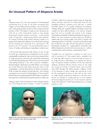 January 2014 in “International Journal of Trichology”
 A man had an unusual type of hair loss that didn't match known patterns and didn't improve with treatment.
 May 2021 in “Pakistan Journal of Medical and Health Sciences”
 This study found that among Pakistani men with hair loss, the M type pattern was the most prevalent according to BASP classification.
 6 citations
,
January 2020 in “Postepy Dermatologii I Alergologii”
6 citations
,
January 2020 in “Postepy Dermatologii I Alergologii” This study identified several specific trichoscopic features of trichotillomania, with trichoptilosis, V hair, and hair powder being the most frequent findings.
 October 2025 in “Indian Journal of Dermatology”
 This study examined the dermoscopic features of five patients with tuberous sclerosis and found that dermoscopy can differentiate characteristic cutaneous features from similar conditions, potentially aiding in earlier diagnosis when other symptoms are subtle or absent.
This study reported that Asian patients have few racial differences in trichoscopy compared to Caucasian patients, except for certain features like greater mean hair diameter and masking effects by normal skin color.
 40 citations
,
April 2006 in “Journal of the European Academy of Dermatology and Venereology”
40 citations
,
April 2006 in “Journal of the European Academy of Dermatology and Venereology” This study reported that Trichoscan, a computer-assisted hair measurement system, was not supported as accurate for clinical trials due to errors in signal detection, despite its analysis speed.
 2 citations
,
July 2015 in “The Open Dermatology Journal”
2 citations
,
July 2015 in “The Open Dermatology Journal” This review summarizes the main trichoscopic findings for diagnosing common hair and scalp disorders, but reports no new clinical results.
 13 citations
,
August 2017 in “International Journal of Dermatology”
13 citations
,
August 2017 in “International Journal of Dermatology” This study reported that trichoscopy revealed distinctive patterns across different autoimmune bullous diseases, suggesting it can be a useful preliminary diagnostic tool for differentiating these conditions.
28 citations
,
March 2014 in “Biological reviews/Biological reviews of the Cambridge Philosophical Society” This study introduces the multiple papillary centres model, offering a new explanation for hair twisting by combining known hair morphology features with differential growth rates caused by dermal papillae.
2 citations
,
February 2021 in “European Journal of Plastic Surgery” This study found that the Fibonacci 'snail' flap for scalp defect reconstruction healed faster and resulted in better aesthetic outcomes than skin grafts, though not all complication rate differences were statistically significant.
 June 2006 in “Experimental Dermatology”
 This article discusses various biological mechanisms that influence the formation of skin lesion patterns, emphasizing the need for more systematic research to improve understanding and treatment of skin disorders, but reports no new empirical findings.
 2 citations
,
June 2023 in “Skin Research and Technology”
2 citations
,
June 2023 in “Skin Research and Technology” This study reviewed 39 studies with 3204 patients to identify characteristic trichoscopic findings in alopecia areata, highlighting yellow and black dots, broken, short vellus, and tapering hairs as key indicators. It found no single diagnostic trichoscopic finding but observed trichoscopy's utility in monitoring treatment response.
 46 citations
,
April 2009 in “Journal of Dermatological Case Reports”
46 citations
,
April 2009 in “Journal of Dermatological Case Reports” This study established standard trichoscopy norms for adult white females, providing benchmarks for hair thickness, percentage of thin hairs, and pilosebaceous units with single hair across different scalp areas.
 5 citations
,
November 2009 in “Revista médica de Chile”
5 citations
,
November 2009 in “Revista médica de Chile” This study confirms that scalp hair follicles in Chilean subjects exhibit seasonal variations, with a higher percentage of follicles in the telogen (resting) phase during the summer compared to the winter.
 6 citations
,
July 2013 in “Archives of Plastic Surgery”
6 citations
,
July 2013 in “Archives of Plastic Surgery” This article explains that proliferating trichilemmal tumors, originating in the hair follicle, can exhibit low-grade malignant potential, and recommends wide excision to minimize recurrence risk, but reports no new clinical findings.
October 2023 in “Asian journal of pharmaceutical and clinical research” In this study, researchers used trichoscopy to establish standardized findings for normal hair and scalp characteristics in 360 healthy males, noting significant age-related differences in hair diameter variability and identifying potential pathological indicators like colored dots and scarring not present in healthy individuals.
 29 citations
,
March 2008 in “Dermatologic Surgery”
29 citations
,
March 2008 in “Dermatologic Surgery” This study developed a prototype device that suggests potential for diagnosing changes in hair quantity, diameter, and density, though formal clinical studies are needed to confirm these findings.
 5 citations
,
February 2017 in “Australasian Journal of Dermatology”
5 citations
,
February 2017 in “Australasian Journal of Dermatology” This report describes three cases of hair loss that appear consistent with cicatricial pattern hair loss, a possible new subtype of scarring alopecia presenting in a female pattern hair loss distribution.
8 citations
,
October 2024 in “Developmental Cell”  4 citations
,
May 2002 in “Dermatologic Surgery”
4 citations
,
May 2002 in “Dermatologic Surgery” This article describes a technique for evaluating and treating the under-addressed temporal peak areas in hair restoration surgery to improve cosmetic harmony with the frontal hairline.
 6 citations
,
November 2010 in “Histochemistry and cell biology”
6 citations
,
November 2010 in “Histochemistry and cell biology” This study found that transthyretin and megalin expression in human scalp hair follicles varies significantly with the hair growth cycle, peaking during anagen and diminishing in catagen and telogen phases.
 May 2002 in “Dermatologic Surgery”
 This article describes a method for evaluating and treating the temporal peak regions in hair restoration surgery to achieve cosmetic harmony with the frontal hairline, while reporting no new clinical findings.
1 citations
,
January 2001 in “PubMed” This study proposes that the terminal tuft structure in sensory nerve endings, involving Schwann cell processes and axon fingers, potentially plays a role in mechano-electric transduction in rats.
2 citations
,
May 2018 in “European Journal of Dermatology” Lupus erythematosus panniculitis on the scalp can cause unique geometric hair loss patterns.
January 2020 in “Revista Dermatológica Centro Uraga” This article describes how recognizing distinct trichoscopic features aids in diagnosing various dermatological conditions and hair loss, but it reports no new clinical findings.
2 citations
,
January 2012 Androgenetic alopecia is the only hair loss condition with specific diagnostic criteria in trichoscopy.
 18 citations
,
June 2017 in “Journal of The American Academy of Dermatology”
18 citations
,
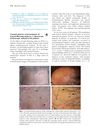
June 2017 in “Journal of The American Academy of Dermatology” In this study, trichoscopy consistently identified typical findings of frontal fibrosing alopecia, revealing three unusual clinical patterns in 18.4% of patients, which may aid in the differential diagnosis when clinical presentations are atypical.
 12 citations
,
June 2013 in “The American Journal of Dermatopathology”
12 citations
,
June 2013 in “The American Journal of Dermatopathology” This study reported that using photomnemonics facilitated accurate histopathologic interpretation of horizontal scalp sections in distinguishing between nonscarring and scarring alopecias by dermatopathologists and residents in a validation test.