 10 citations
,
January 1994 in “Advances in pharmacology”
10 citations
,
January 1994 in “Advances in pharmacology” This review examines the role of topoisomerase-interacting drugs in cancer treatment and emphasizes the importance of understanding their mechanisms for clinical development, but it presents no new results.
 November 2025 in “Mendeley Data”
 This study found that tofacitinib and baricitinib, when administered with unorthodox weight-stratified dosing in pediatric patients with moderate-to-severe AA, showed comparable efficacy and tolerability, though baricitinib's efficacy decreased with non-standard dosing.
 November 2025 in “Mendeley Data”
 In this study, tofacitinib and baricitinib showed comparable efficacy and tolerability under unorthodox weight-stratified dosing in pediatric patients with moderate-to-severe alopecia areata over 24 weeks; however, the unorthodox baricitinib regimen yielded a lower effectiveness in severe cases, emphasizing the importance of adherence to guideline-recommended dosing.
 55 citations
,
June 2014 in “Nature Communications”
55 citations
,
June 2014 in “Nature Communications” This study found that overexpression of the transcription factor Tcf3 accelerates keratinocyte migration and skin wound healing in mice, highlighting its potential as a therapeutic target for wound repair.
 2 citations
,
December 2019 in “International Journal of Medical Research and Review”
2 citations
,
December 2019 in “International Journal of Medical Research and Review” This study found that Tinea Corporis significantly impacts the quality of life of patients, with disease duration and body surface area involved being key factors.
 January 2015 in “Journal of evolution of medical and dental sciences”
 In this study, topical tacrolimus 0.03% cream showed good to excellent response in treating alopecia areata in 70% of participants, with no cutaneous or systemic side effects observed.
July 2026 in “Cosmoderma” This study highlights that alopecia areata, an autoimmune condition often starting in childhood, poses a higher risk of becoming chronic with an early onset and can result in poor therapy response.
3 citations
,
February 2023 in “BMJ Case Reports” This case report describes a woman with trichotillomania who experienced marked improvement and hair regrowth after off-label onabotulinumtoxinA treatment.
 June 2026 in “bioRxiv (Cold Spring Harbor Laboratory)”
 This study found that inhibiting the interaction between HOTAIR and EZH2 can block pro-fibrotic gene expression in fibroblasts and interfere with tissue remodeling in systemic sclerosis patient skin.
31 citations
,
September 1999 in “Molecular Carcinogenesis” This study in a transgenic mouse model found that repressing overexpression of ornithine decarboxylase reduced papilloma development, indicating its role in tumor promotion sensitivity.
 11 citations
,
March 2024 in “Cell and Tissue Research”
11 citations
,
March 2024 in “Cell and Tissue Research” In this review, researchers summarize the methods for characterizing telocytes, outline their physiological roles and implications in diseases, and discuss potential future studies including precise markers and targeted therapies.
2 citations
,
January 2014 in “Dermatology Online Journal” This article reviews hair-thread tourniquet syndrome, discussing its demographics, causes, and current treatment methods, but presents no new clinical findings.
July 2024 in “Journal of Controlled Release” In this study, researchers developed topical tofacitinib-loaded cationic lipid nanoparticles, which improved absorption and targeted hair follicles in an ex vivo pig ear model, showing promise in treating alopecia areata by reducing symptoms through the JAK/STAT pathway.
 47 citations
,
April 2003 in “Journal of dermatological science”
47 citations
,
April 2003 in “Journal of dermatological science” This study showed that Thujae occidentalis semen extract inhibited 5alpha-reductase type 2 in laboratory tests and reduced androgen-related hair loss in animal models, suggesting potential use for male pattern baldness.
 September 2023 in “Acta dermato-venereologica”
 This study observed that oral tofacitinib was effective and safe for treating alopecia areata in paediatric patients, with 82% of pre-adolescent participants experiencing hair regrowth and 64% showing significant improvement in their hair loss severity scores.
 January 2025 in “International Journal of Dermatology Venereology and Leprosy Sciences”
 This study found that oral tofacitinib significantly reduced alopecia severity and improved quality of life over 12 months for children with moderate to severe alopecia areata, though the authors recommend more research due to the small sample size and absence of a control group.
January 2026 in “Journal of Advanced Research” This study found that fermentation products from Bacillus sp. TC5 can effectively promote hair regrowth and improve transdermal drug absorption, suggesting their potential as eco-friendly agents in developing cosmeceuticals for hair restoration and skin repair.
October 2006 in “Urology” The study found that different criteria led to different patient groups in the CombAT study compared to the MTOPS study.
42 citations
,
June 2019 in “Aging” This study found that treatment with the polyphenolic compound TCQA activated β-catenin, promoting hair regrowth and the initiation of the anagen phase in mice and human dermal papilla cells.
 1 citations
,
October 2023 in “Clinical, cosmetic and investigational dermatology”
1 citations
,
October 2023 in “Clinical, cosmetic and investigational dermatology” In this report, a 35-year-old female with palmoplantar pustulosis undergoing secukinumab treatment developed alopecia areata, a rare side effect attributed to paradoxical reactions with IL-17 inhibitors; switching to tofacitinib improved both conditions.
 8 citations
,
May 2017 in “Singapore Medical Journal”
8 citations
,
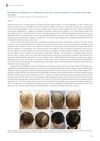
May 2017 in “Singapore Medical Journal” A Korean woman with complete hair loss regrew her hair after taking tofacitinib, with no side effects.
May 2024 in “Indian Journal of Pharmacology” In this case report, an 11-year-old girl with alopecia totalis initially treated with minoxidil experienced hypertrichosis, which reversed upon stopping the medication; hair regrowth on the scalp was achieved with tofacitinib after minoxidil discontinuation.
 14 citations
,
July 2012 in “Journal of the American Academy of Dermatology”
14 citations
,
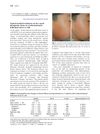
July 2012 in “Journal of the American Academy of Dermatology” This study found that topical tacalcitol improved roughness and scaling in erythromelanosis follicularis faciei et colli, although it was less effective for facial erythema.
30 citations
,
March 2012 in “Journal of Analytical Toxicology” This study found that concentrations of THCCOOH in hair do not correlate well with self-reported cannabis use due to inaccuracies in the self-reported data, but it provides preliminary insights into usage patterns.
1 citations
,
October 2025 in “Ophthalmology Science” In this experimental study, researchers found that intravitreal injections of up to 100μg of topotecan in rabbits caused no systemic or ocular toxicity, while 200μg doses resulted in localized retinal changes and decreased electroretinography amplitudes near the injection site.
8 citations
,
January 2017 in “Dermatology online journal” This case study reports that tofacitinib led to remission of psoriasis but did not improve alopecia universalis in one patient, suggesting varied responses in treating such conditions.

This study found that 23.2% of surveyed dermatologists in Saudi Arabia prescribe Tofacitinib for alopecia areata, with 72.4% reporting its effectiveness, while 47.7% cited unavailability as the main reason for not prescribing.
3 citations
,
April 2021 in “Oncology Times” This study reports that sacituzumab govitecan achieved a 33.3% overall response rate in patients with metastatic triple-negative breast cancer who had prior treatments, with a median response duration of 7.7 months.

Tofacitinib may effectively treat hair loss and improve symptoms in autoimmune conditions like alopecia areata and Sjögren's syndrome, but long-term treatment might be necessary.
June 2020 in “Dermatologic therapy” Using Janus kinase inhibitors (JAKi) in COVID-19 treatment requires careful consideration due to their immunosuppressive effects.