 23 citations
,
September 2019 in “Journal of The American Academy of Dermatology”
23 citations
,
September 2019 in “Journal of The American Academy of Dermatology” In this retrospective analysis, combination therapy with tofacitinib and oral minoxidil led to significant scalp hair regrowth in patients with severe alopecia areata, with 67% achieving at least 75% regrowth, although the small sample size limits the findings.
20 citations
,
June 2019 in “JAAD Case Reports” This article reviews the use of tofacitinib for rheumatoid and psoriatic arthritis and alopecia areata, noting potential serious side effects, but reports no cases of palmoplantar pustulosis from the therapy.
19 citations
,
May 2010 in “Surface and interface analysis” This study found that a conditioner treatment using 18-MEA combined with a specific cationic surfactant effectively restored hydrophobicity and reduced friction on damaged hair surfaces.
 17 citations
,
January 2019 in “Dermatologic Therapy”
17 citations
,
January 2019 in “Dermatologic Therapy” The article in Dermatologic Therapy discusses clinical experiences with using tofacitinib to treat alopecia areata in 63 patients, but no specific results are reported in the abstract.
 16 citations
,
July 2017 in “Rheumatology and Therapy”
16 citations
,
July 2017 in “Rheumatology and Therapy” This review examines the outcomes of treating Brazilian patients with alopecia universalis using tofacitinib and highlights the need for randomized controlled trials to determine optimal dosing and duration.
 16 citations
,
January 2017 in “Acta dermatovenerologica Alpina, Pannonica et Adriatica (Tiskana izd.)”
16 citations
,
January 2017 in “Acta dermatovenerologica Alpina, Pannonica et Adriatica (Tiskana izd.)” This case study reports that a 23-year-old woman with alopecia universalis experienced complete hair regrowth after six months of treatment with tofacitinib, a JAK-3 inhibitor.
 15 citations
,
November 2020 in “Pharmaceutics”
15 citations
,
November 2020 in “Pharmaceutics” In this ex vivo and mouse model study, Tofacitinib-loaded nanoparticles demonstrated enhanced delivery of the drug into hair follicles and reduced inflammatory effects compared to conventional forms, indicating potential for safer, topical use in treating alopecia areata.
15 citations
,
December 2019 in “European Journal of Dermatology” This study identified new and recurrent missense mutations in the PHGDH and PSAT1 genes, implicating them in the pathogenesis of Neu-Laxova syndrome in Chinese patients.
 14 citations
,
February 2021 in “Journal of the European Academy of Dermatology and Venereology”
14 citations
,
February 2021 in “Journal of the European Academy of Dermatology and Venereology” This article reports a case of rapidly progressive alopecia areata totalis in a COVID-19 patient that did not respond to treatment with tofacitinib; no new clinical results are discussed.
 14 citations
,
November 2016 in “Annals of Internal Medicine”
14 citations
,
November 2016 in “Annals of Internal Medicine” Tofacitinib, an arthritis drug, helped hair growth in alopecia universalis but long-term safety needs more research.
 13 citations
,
November 2021 in “Pediatric Dermatology”
13 citations
,
November 2021 in “Pediatric Dermatology” This study found that oral tofacitinib was effective and well tolerated for treating alopecia areata in most pediatric patients, with nearly 73% experiencing hair regrowth.
13 citations
,
February 2017 in “Clinical rheumatology” This report suggests that tofacitinib may be beneficial for patients with nail disease unresponsive to other treatments.
12 citations
,
March 2022 in “Dermatologic Therapy” This report presents a case of a patient developing new multiple sclerosis while using tofacitinib for alopecia areata, noting no new comprehensive research findings.
 11 citations
,
February 2021 in “Journal of Cosmetic Dermatology”
11 citations
,
February 2021 in “Journal of Cosmetic Dermatology” This retrospective pilot study found that oral tofacitinib was more effective in treating alopecia areata than alopecia universalis, but relapses were common after treatment cessation.
 11 citations
,
January 2020 in “Dermatologica Sinica”
11 citations
,
January 2020 in “Dermatologica Sinica” This study found that tofacitinib effectively promoted hair regrowth in Asian patients with severe alopecia areata, with 74.3% showing a clinical response.
 11 citations
,
November 2019 in “Clinical Case Reports”
11 citations
,
November 2019 in “Clinical Case Reports” This study highlights that while there are no FDA- or ANVISA-approved treatments for children with alopecia areata, JAK inhibitors are emerging as a promising therapeutic option for this population.
 11 citations
,
November 2019 in “Journal of the American Academy of Dermatology”
11 citations
,
November 2019 in “Journal of the American Academy of Dermatology” This study suggests that oral tofacitinib may be an effective treatment for beard regrowth in men with alopecia areata of the beard, with a strong correlation observed between beard and scalp hair regrowth.
 11 citations
,
November 2018 in “Journal of the American Academy of Dermatology”
11 citations
,
November 2018 in “Journal of the American Academy of Dermatology” This study found that among patients with alopecia areata treated with the JAK inhibitor tofacitinib, 34% achieved complete regrowth of eyebrows and 39% achieved complete regrowth of eyelashes, highlighting differences in treatment responses across hair-bearing sites.
 11 citations
,
January 2018 in “Acta dermato-venereologica”
11 citations
,
January 2018 in “Acta dermato-venereologica” In this study, oral tofacitinib showed higher efficacy and tolerability in treating refractory alopecia totalis and universalis compared to traditional treatments, achieving a 50% improvement in severity scores for 44.4% of patients over six months, with fewer adverse effects.
10 citations
,
August 2022 in “JAAD Case Reports” This research abstract describes alopecia areata as an autoimmune disease causing hair loss due to an inflammatory response mediated by the JAK/STAT signaling pathway. The condition, which affects young people disproportionately, lacks a cure and entails significant psychosocial challenges, despite varied treatment attempts.
 9 citations
,
October 2021 in “International Journal of Dermatology”
9 citations
,
October 2021 in “International Journal of Dermatology” This study found that tofacitinib effectively induced hair regrowth in 62.2% of severe alopecia areata patients in Saudi Arabia after six months, with higher baseline Severity of Alopecia Tool scores and past steroid use linked to reduced response.
 9 citations
,
May 2021 in “International Journal of Dermatology”
9 citations
,
May 2021 in “International Journal of Dermatology” In this study, sublingual tofacitinib achieved a longer estimated half-life than oral administration in treatment-resistant alopecia areata patients, potentially supporting daily dosing; overall treatment response was modest.
 9 citations
,
October 2019 in “Dermatologic Therapy”
9 citations
,
October 2019 in “Dermatologic Therapy” This study observed that oral tofacitinib was reasonably well-tolerated but had limited efficacy in treating alopecia areata, with a clinical response seen in 41.4% of patients over six months.
 9 citations
,
August 2018 in “JAAD Case Reports”
9 citations
,
August 2018 in “JAAD Case Reports” This article discusses alopecia areata, highlighting its autoimmune nature and the lack of FDA-approved treatments, without providing new research findings.
 9 citations
,
April 2018 in “Journal of Dermatological Treatment”
9 citations
,
April 2018 in “Journal of Dermatological Treatment” This study found that oral tofacitinib monotherapy improved nail changes in 73.3% of adults with moderate-to-severe alopecia areata over a median period of 5 months, but nail improvement was not linked to the severity of hair loss or hair regrowth.
 8 citations
,
October 2022 in “Dermatology practical & conceptual”
8 citations
,
October 2022 in “Dermatology practical & conceptual” This source reports that tofacitinib and ruxolitinib showed potential efficacy and acceptable safety profiles in treating various autoimmune disorders, including alopecia areata and psoriasis, based on a review of clinical studies, while recommending physicians consider the individual risks and benefits.
 8 citations
,
June 2022 in “Frontiers in Medicine”
8 citations
,
June 2022 in “Frontiers in Medicine” This study found that tofacitinib is an effective and more tolerable treatment than systemic corticosteroids for moderate-to-severe alopecia areata, and its combination with corticosteroids may offer improved efficacy.
8 citations
,
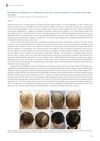
July 2020 in “Dermatologic Therapy” Tofacitinib may effectively treat folliculitis decalvans.
 8 citations
,
May 2017 in “Singapore Medical Journal”
8 citations
,
May 2017 in “Singapore Medical Journal” A Korean woman with complete hair loss regrew her hair after taking tofacitinib, with no side effects.
8 citations
,
January 2017 in “Dermatology online journal” This case study reports that tofacitinib led to remission of psoriasis but did not improve alopecia universalis in one patient, suggesting varied responses in treating such conditions.