101 citations
,
July 1998 in “Journal of Investigative Dermatology” This study found that UV exposure in human skin induces IL-10 production by macrophages, while Langerhans cells are depleted and their IL-12 production is downregulated.
26 citations
,
January 1983 in “PubMed” This study reports that despite normal cystine incorporation into hair follicles, trichothiodystrophy patients have decreased cystine levels in hair shafts, contradicting the hypothesis of defective transport in hair follicles.
22 citations
,
June 2024 in “Cell” Understanding tissue self-organization can improve treatments for diseases and advance regenerative medicine.
20 citations
,
December 1995 in “Veterinary Dermatology” This study identified a marked reduction in melanin in the hair of Yorkshire Terriers with Colour Dilution Alopecia and proposed a new pathogenetic mechanism based on these observations.
13 citations
,
July 2012 in “International Journal of Trichology” In this study, the varied phenotype of trichothiodystrophy was highlighted, with findings of distinctive hair shaft abnormalities and a wide range of multisystem issues, including neurologic and urologic disorders.
7 citations
,
May 2021 in “Animal Genetics” This study found that the Siberian sunshine tabby coat modification is associated with a specific CORIN gene variant, suggesting a genetic basis for this golden phenotype in cats.
3 citations
,
January 2021 in “Veterinary dermatology” This study describes a rare form of congenital alopecia in domestic short hair cats, characterized by hair shaft defects and follicular dystrophy similar to those seen in certain mutant mouse strains.
2 citations
,
January 2018 in “International Journal of Trichology” This case report describes trichothiodystrophy in two sisters with only hair fragility, illustrating the condition's variable presentation and the importance of regular monitoring for potential associated impairments.
 2 citations
,
January 2002 in “PubMed”
2 citations
,
January 2002 in “PubMed” This study introduces a new test using a pendulum device to assess the bending stiffness of hair fibers, which can evaluate the effects of different hair treatments.

In these randomized, placebo-controlled trials, patients with alopecia areata who received baricitinib showed significantly higher eyebrow and eyelash hair regrowth rates compared to placebo, with greater responses observed at the 4 mg dose and in those achieving overall scalp hair improvement by Week 52.
 November 2024 in “Journal of the European Academy of Dermatology and Venereology”
 This study found that nearly 40% of patients with severe alopecia areata who showed eyebrow or eyelash regrowth on baricitinib 4 mg achieved significant scalp hair regrowth by the second year of treatment.
 April 2024 in “Expert opinion on investigational drugs”
 In this study, JAK inhibitors were reported as safe and effective treatments for moderate-to-severe chronic alopecia areata, although the appropriate duration of treatment remains uncertain, as stopping these medications often results in relapse.
 January 2023 in “Indian dermatology online journal”
 This case study describes a previously unknown association of the PIBIDS complex with autoimmune thyroiditis and autoimmune hemolytic anemia in a five-year-old Indian child.
This abstract provides information on various oral contraceptives, their potential hazardous interactions, and possible side effects, without presenting new research findings.
January 2013 in “International Journal of Trichology” This case report describes a young girl with trichothiodystrophy and suggests the need for early diagnosis and multidisciplinary interventions for her educational challenges.
This article reviews potential drug and herbal interactions with warfarin that may increase bleeding risk, and reports no new clinical results.
 3 citations
,
June 2002 in “Transgenic Research”
3 citations
,
June 2002 in “Transgenic Research” This study suggests that inducible transgenic mice showing hair follicle changes similar to telogen effluvium in humans might serve as a useful model for understanding this type of hair loss.
 1 citations
,
May 2018 in “Emergency Nurse”
1 citations
,
May 2018 in “Emergency Nurse” In this article, two case studies of hair tourniquets around digits are discussed, highlighting the condition's potential causes and management strategies, and emphasizing the role of midwives and health visitors in educating expectant mothers to minimize the risk to children.
1 citations
,
May 2019 in “International Journal of Applied Pharmaceutics” This study evaluated hair tonic and gel formulations containing Angiopteris evecta root water extract and found both fulfilled pharmaceutical preparation standards, with the 12.5% hair tonic and 10.0% gel concentrations most effective for hair growth without a significant difference in performance.
 1 citations
,
February 2022 in “Clinical, Cosmetic and Investigational Dermatology”
1 citations
,
February 2022 in “Clinical, Cosmetic and Investigational Dermatology” In this study, researchers found that the thyroxine receptor agonist TDM10842 accelerated the onset of anagen, a hair growth phase, in C3H mice, potentially through activation of the Wnt/beta-catenin and Hedgehog pathways, with Pclaf playing a key role in this process.
33 citations
,
December 2005 in “British Journal of Clinical Pharmacology” This study found that the Transdermal Delivery System efficiently delivers testosterone systemically and showed bioequivalent hormone concentrations to a known topical gel in healthy males.
![Discovery of 7-Methoxy-6-[4-(4-Methyl-1,3-Thiazol-2-yl)-1H-Imidazol-5-yl]-1,3-Benzothiazole (TASP0382088): A Potent and Selective Transforming Growth Factor-β Type I Receptor Inhibitor as a Topical Drug for Alopecia](/images/assets/9620bd26-3366-4f2a-bcac-f511697bbc41/small/35997.jpg) 6 citations
,
January 2013 in “Chemical & pharmaceutical bulletin/Chemical and pharmaceutical bulletin”
6 citations
,
January 2013 in “Chemical & pharmaceutical bulletin/Chemical and pharmaceutical bulletin” In this study, TASP0382088 showed potent selective inhibition of the ALK5 receptor, significantly reducing Smad2 phosphorylation in mouse skin following topical application.
 5 citations
,
April 2016 in “The American Journal of Dermatopathology”
5 citations
,
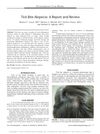
April 2016 in “The American Journal of Dermatopathology” This report describes a rare case of nonscarring alopecia linked to a tick bite on a 21-year-old male's scalp, with specific histological findings and proposed mechanisms.
 December 2022 in “Frontiers in Pharmacology”
 This study reported that Tianma Gouteng decoction improved hair follicle regeneration in mice and identified its potential mechanism, primarily involving the Wnt/β-catenin signaling pathway, through a combination of network pharmacology, molecular docking, and experimental validation.
 23 citations
,
September 2009 in “Child Abuse & Neglect”
23 citations
,
September 2009 in “Child Abuse & Neglect” This case report highlights the importance of considering hair-thread tourniquet syndrome as a potential diagnosis for girls with genital swelling and pain, emphasizing the need for prompt intervention.
July 2025 in “International Journal of Trichology” This study reported six pediatric cases of temporal triangular alopecia and highlighted the use of trichoscopy to distinguish it by detecting a distinctive carpet of vellus hair, helping to differentiate TTA from other hair loss conditions.
 May 2022 in “Journal of Immunology”
 In this study, a TGF-β mimic molecule from Heligmosomoides polygyrus was observed to enhance wound healing in mice, with improved tissue regeneration and specific immune cell recruitment without increased scarring.
1 citations
,
March 2023 in “Journal of the Turkish Academy of Dermatology” This report suggests a possible association between temporal triangular alopecia and sebaceous nevus, and identifies a pinkish background as a new trichoscopic finding for TTA.
10 citations
,
October 2009 in “Photomedicine and laser surgery” This study found that intense pulsed light treatment achieved a mean of 85% hair reduction in two patients with faun tail, although local anesthesia may be needed due to severe pain associated with neurological abnormalities.
 4 citations
,
October 2008 in “International Journal of Dermatology”
4 citations
,
October 2008 in “International Journal of Dermatology” This case report highlights a rare presentation of hair-thread tourniquet syndrome in a two-year-old child, emphasizing that prompt identification and removal of the constricting fiber is crucial for successful treatment and prevention of tissue damage.