 February 2024 in “Future science OA”
 This commentary highlights that the loss of the Y chromosome may disrupt UTY/TLE1-RUNX1 interactions, potentially impacting male hematopoietic cell development and leading to conditions like acute myeloid leukemia and T-cell acute lymphoblast leukemia.
 32 citations
,
May 2012 in “PloS one”
32 citations
,
May 2012 in “PloS one” This study found that despite the persistence of aberrant double-negative T-cells, functional immune-competence was maintained after thymic transplantation in a patient with a rare FOXN1 mutation.

This study observed that intramuscular injection of sodium 131iodide at doses of up to 1 mCi can successfully induce hypothyroidism in rats without significantly damaging muscle or nearby tissues, despite concerns of adverse effects.
4 citations
,
October 2003 in “Annales de Génétique” This study identified a mutation in the KRTHB6 gene in two monilethrix families of Indian origin, linking specific genetic variations to different severities of hair defects within the families.
 August 2016 in “Journal of Investigative Dermatology”
 This case report identifies a novel LIPH gene mutation linked to autosomal recessive woolly hair/hypotrichosis in a Japanese boy, expanding the spectrum of known mutations associated with this condition.
 21 citations
,
November 2010 in “Journal of molecular medicine”
21 citations
,
November 2010 in “Journal of molecular medicine” This study found that deleting FoxN1 in specific thymic epithelial cells disrupted the 3D thymic structure and led to age-dependent formation of 2D epithelial cysts, highlighting FoxN1's critical role in thymic morphogenesis.
99 citations
,
June 2005 in “Endocrinology” This study found that applying supraphysiologic doses of topical T3 significantly accelerated wound healing in mice compared to a control vehicle, suggesting its potential as a cost-effective wound treatment.
 October 2022 in “BMC genomics”
 This study investigated adenosine-to-inosine RNA editing in the hair follicle cycle of Tianzhu white yak, identifying numerous editing sites and suggesting their involvement in pathways related to hair growth.
 3 citations
,
May 2025 in “Cell Death and Disease”
3 citations
,
May 2025 in “Cell Death and Disease” This study found that METTL1 is upregulated in papillary thyroid cancer tissues and promotes cancer cell proliferation and metastasis through its tRNA methyltransferase activity.
19 citations
,
February 2001 in “Journal of paediatrics and child health” This report documents a 14-year-old Chinese boy with mitochondrial encephalopathy, lactic acidosis, stroke-like episodes, and a de novo A3243G mitochondrial DNA mutation, highlighting the condition's multisystem involvement without ragged red fibers in muscle biopsy.
24 citations
,
September 2014 in “PloS one” This study demonstrated that thyroid hormone receptors play a crucial role in hair growth and skin health, as mice lacking these receptors showed impaired hair cycling and wound healing.
December 2009 in “생명과학회지” This study found that thymosin β4 is highly expressed in multiple human tissues and may play a role in organ function and angiogenesis through co-localization with VEGF.
 9 citations
,
February 2018 in “The Journal of Dermatology”
9 citations
,
February 2018 in “The Journal of Dermatology” This study identified a novel splice site mutation in the LIPH gene associated with autosomal recessive woolly hair, contributing to understanding the genetic basis of this condition.
December 2014 in “Journal of Biomedical Research” In a mouse model of peripheral vascular disease, this study found that recombinant thymosin β4 treatment increased expression levels of certain proteins, promoting angiogenesis.
April 2025 in “Molecular Biology Reports” In this study, researchers found that DNMT1-mediated methylation of SRD5A2 in urethral epithelial cells from hypospadias-afflicted rats upregulates proteins associated with cell cycle and mitochondrial function, suggesting SRD5A2 as a potential therapeutic target for hypospadias due to its role in modulating cellular functions.
 3 citations
,
April 2015 in “AFRICAN JOURNAL OF BIOTECHNOLOGY”
3 citations
,
April 2015 in “AFRICAN JOURNAL OF BIOTECHNOLOGY” This study found that certain Y-chromosome alleles may influence susceptibility to prostate cancer among Iraqi males, suggesting potential genetic screening markers for the disease.
132 citations
,
January 1987 in “Annals of Internal Medicine” Methimazole may cause skin defects in babies if taken during pregnancy.
November 2024 in “Journal of Investigative Dermatology” ATP-sensitive potassium channels are important for hair growth.
December 2011 in “Thorax” In this study, researchers reported that individuals from iodine-deficient regions have an increased risk of developing hypothyroidism from MDR-TB treatment regimens containing PAS and/or Prothionamide.
12 citations
,
July 2004 in “Molecular genetics and genomics” This study identifies a new mutation in the Scd1 gene in a strain of Kunming mice, causing skin and hair defects with the mildest impact among similar mutations.
8 citations
,
July 2015 in “International Journal of Dermatology” This study reports that a homozygous A1103G mutation in DSG 4 is responsible for localized autosomal recessive hypotrichosis in a 2-year-old Chinese girl, resulting in reduced DSG 4 expression and hair defects.
 January 2012 in “heiDOK (Heidelberg University)”
 In this study, researchers observed that dormant TRP-2+ melanoma cells in bone marrow can interact with CD8+ T cells in tumor-bearing ret transgenic mice, potentially influencing immune responses.
 2 citations
,
July 2014 in “Our Dermatology Online”
2 citations
,
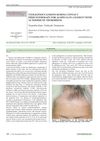
July 2014 in “Our Dermatology Online” This case report documents the development of vitiligo-like lesions in a patient with autoimmune thyroiditis following the use of topical squaric acid dibutylester for alopecia.
18 citations
,
November 2016 in “Transgenic research” This study found that transgenic cashmere goats overexpressing thymosin beta-4 have a higher secondary to primary hair follicle ratio, suggesting potential for increased cashmere yield.
29 citations
,
August 1999 in “Journal of Investigative Dermatology” New mutations in hair keratin genes cause the rare hair disorder monilethrix.
147 citations
,
August 2005 in “The Plant Cell” This study identified a key Arabidopsis thaliana gene, TIP1, whose product is involved in S-acylation crucial for normal plant cell growth, particularly affecting root hair development.
 19 citations
,
May 2006 in “Clinical and Experimental Dermatology”
19 citations
,
May 2006 in “Clinical and Experimental Dermatology” This study identified a novel insertion mutation in the hairless gene that may contribute to the development of congenital atrichia with papular lesions in a Pakistani family.
4 citations
,
August 2013 in “Chinese Medical Journal” This study found that a mutation in the seventh exon of the KRT86 gene plays a major role in the pathogenesis of monilethrix in a Chinese family.
 9 citations
,
January 2023 in “International Journal of Biological Sciences”
9 citations
,
January 2023 in “International Journal of Biological Sciences” This study suggests that CTHRC1, a protein expressed in cardiac fibroblasts, may improve wound repair and prevent cardiac rupture after myocardial infarction by activating a specific signaling pathway.
26 citations
,
December 2003 in “Experimental Dermatology” In this study, researchers identified two de novo germline missense mutations in the hair keratins hHb1 and hHb6 in patients with monilethrix whose parents were not clinically affected.