 60 citations
,
October 2014 in “Journal of the American Academy of Dermatology”
60 citations
,
October 2014 in “Journal of the American Academy of Dermatology” This review examines the definition, etiology, pathogenesis, and clinical features of polycystic ovary syndrome but reports no new clinical findings.
 57 citations
,
March 2011 in “The American Journal of Dermatopathology”
57 citations
,
March 2011 in “The American Journal of Dermatopathology” This study found that permanent alopecia can occur after certain chemotherapy treatments and presents as nonscarring hair loss similar to androgenetic alopecia, with specific histological features that could be misdiagnosed without proper clinicopathological correlation.
 51 citations
,
November 2018 in “JAMA Dermatology”
51 citations
,
November 2018 in “JAMA Dermatology” This study found that participant self-assessments suggested greater improvement in the texture and wrinkles of facial skin treated with PRP compared to normal saline, though dermatologist ratings showed no significant difference.
 51 citations
,
January 2003 in “Hormone Research in Paediatrics”
51 citations
,
January 2003 in “Hormone Research in Paediatrics” This review discusses hormonal influences on hair growth and suggests that understanding hormone-gene interactions may improve treatment of hirsutism and alopecia, but reports no new clinical findings.
 42 citations
,
December 2016 in “Cell Death & Differentiation”
42 citations
,
December 2016 in “Cell Death & Differentiation” This study found that transient mtDNA double strand breaks in mice accelerated aging in certain tissues through increased reactive oxygen species, independent of p21/p53 pathway mediation.
 42 citations
,
July 2015 in “Cosmetics”
42 citations
,
July 2015 in “Cosmetics” This review discusses the use of cosmetic nanocarriers to improve hair appearance and reports no new experimental results.
 32 citations
,
July 2018 in “Scientific Reports”
32 citations
,
July 2018 in “Scientific Reports” In this study, the authors reported that feeding cashmere goats with essential oil-cobalt significantly enhanced their growth, meat quality, and fiber quality, while stimulating immune-related physiological changes.
 28 citations
,
December 2019 in “Skin appendage disorders”
28 citations
,
December 2019 in “Skin appendage disorders” This review discusses medication-induced gray hair repigmentation, highlighting that certain anti-inflammatory drugs and melanogenesis stimulators can cause diffuse repigmentation, though evidence remains low-quality and these medications are not currently indicated for this purpose.
 23 citations
,
October 2005 in “Journal of The American Academy of Dermatology”
23 citations
,
October 2005 in “Journal of The American Academy of Dermatology” This report describes the unexpected development of alopecia areata in kidney-pancreas transplant recipients undergoing cyclosporine-based immunosuppressive therapy, suggesting a complex relationship between the treatment and disease.
 18 citations
,
April 2019 in “Archives of Dermatological Research”
18 citations
,
April 2019 in “Archives of Dermatological Research” This study found that bovine lactoferrin promotes hair growth in mice by enhancing dermal papilla cell proliferation through the Erk/Akt and Wnt signaling pathways.
 10 citations
,
December 1997 in “Plastic and Reconstructive Surgery”
10 citations
,
December 1997 in “Plastic and Reconstructive Surgery” This text provides contact information and no new research findings are reported.
 8 citations
,
December 2020 in “Scientific reports”
8 citations
,
December 2020 in “Scientific reports” This study examined the genetic basis for the curly hair trait in Mangalitza pigs, finding two specific genetic variants that contribute to this distinctive phenotype through autosomal dominant inheritance.
 4 citations
,
July 2019 in “IOP conference series”
4 citations
,
July 2019 in “IOP conference series” This study found no significant association between premature hair graying and serum ferritin or vitamin D levels in young adult males at Universitas Sumatera Utara.
 3 citations
,
October 2007 in “Expert Review of Dermatology”
3 citations
,
October 2007 in “Expert Review of Dermatology” This review discusses the biological and cosmetic aspects of hair aging and reports no new clinical results; it highlights current treatments and future research directions to address both aging factors.
 1 citations
,
October 2025 in “Scientific Reports”
1 citations
,
October 2025 in “Scientific Reports” This study investigated the Mandarin duck as a model for understanding lifelong developmental changes, finding that male sail feather morphogenesis involves a combination of local morphogenetic programs, epigenetic regulation, and hormonal cues, with increased female estrogen levels observed before the mating season.
 June 2026 in “Scholarly review .”
 This review discusses the impact of endocrine-disrupting chemicals on pediatric health, linking them to various disorders, and calls for improved biomonitoring strategies and precautionary policies.
 January 2026 in “Clinical Cosmetic and Investigational Dermatology”
 This study found that targeting both hormonal and immune pathways improved treatment outcomes in androgenetic alopecia patients with an under-recognized inflammatory component called PIILIF, which may contribute to treatment resistance.
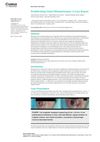
In this case report, researchers detailed a giant proliferating pilomatrixoma in a 36-year-old woman, emphasizing the importance of complete excision to prevent recurrence or potential malignant transformation, distinguishing it from malignancies like angiosarcoma or melanoma.
 March 2025 in “Journal of Environmental Science and Engineering B”
 This study analyzed soil, water, and carrot samples in Vietnam, and found that organic farming can reduce heavy metal levels in carrots compared to conventional methods, potentially improving their nutritional safety.
 July 2023 in “Nasza Dermatologia Online”
 More research is needed on CCCA in children, especially Black and Asian adolescents.
 May 2023 in “Jurnal farmasi sains dan praktis”
 In this research on cinnamon and virgin coconut oil hair tonics, F2 and F3 demonstrated stable physical properties and mild irritation potential, while formula 1 remained non-irritating but less stable regarding pH and viscosity.
This review discusses the potential risks of formaldehyde in hair keratin treatments like Brazilian blow-dry, and reports no new clinical results; it emphasizes the need for greater safety assessments including occupational exposure.
 March 2014 in “CRC Press eBooks”
 Some nutrients and antioxidants may improve skin and hair health, but more research is needed to confirm these benefits.
 July 2012 in “Springer eBooks”
 The document concludes that proper diagnosis and treatment of nonscarring alopecias can improve quality of life and hair regrowth is possible as the hair follicle remains intact.
 February 2008 in “Basic and clinical dermatology”
 Photographic imaging is crucial for documenting and managing hair loss, requiring careful preparation and standardization to be effective.
 September 2004 in “Experimental dermatology”
 This study found that normal murine hair follicles are direct targets for melatonin bioregulation, expressing receptors that are regulated in a hair cycle-dependent manner, influencing keratinocyte apoptosis.
 March 2002 in “Clin-Alert”
 In 2002, various drugs caused serious side effects, including vitamin B12 deficiency, heart issues, blindness, hypersexuality, allergic reactions, blood clotting problems, pupil dilation, capillary leak syndrome, muscle breakdown, hepatitis, skin reactions, and lupus.
 835 citations
,
October 2008 in “Nature Genetics”
835 citations
,
October 2008 in “Nature Genetics” Lgr5 is a marker for active, long-lasting stem cells in mouse hair follicles.
 286 citations
,
April 2009 in “The journal of neuroscience/The Journal of neuroscience”
286 citations
,
April 2009 in “The journal of neuroscience/The Journal of neuroscience” This study found that TRPA1-deficient mice exhibited normal cold sensitivity but had decreased mechanical response in nociceptors, suggesting TRPA1's role in mechanotransduction.
 183 citations
,
January 1987 in “British Journal of Anaesthesia”
183 citations
,
January 1987 in “British Journal of Anaesthesia” This article discusses the long-standing use and safety of opioids in anaesthesia, noting that respiratory depression is a manageable side effect due to the availability of opioid antagonists.