14 citations
,
July 2021 in “Bioscience Reports” In this study, activation of Tgr5 was found to improve alopecia areata and bone microstructure in mice by down-regulating the JAK1-STAT3 signaling pathway.
 18 citations
,
January 2008 in “Journal of The American Academy of Dermatology”
18 citations
,
January 2008 in “Journal of The American Academy of Dermatology” This study found that the proteins GDNF, NTN, GFRα-1, GFRα-2, and c-Ret are differentially expressed during various stages of the human hair follicle cycle, with potential implications for hair biology.
 1 citations
,
April 2020 in “medRxiv (Cold Spring Harbor Laboratory)”
1 citations
,
April 2020 in “medRxiv (Cold Spring Harbor Laboratory)” This study identified gene sets associated with Tourette Syndrome, implicating Ligand-gated Ion Channel Signaling, Lymphocytic, and Cell Adhesion and Trans-synaptic Signaling processes in the disorder's neurobiology.
 February 2024 in “bioRxiv (Cold Spring Harbor Laboratory)”
 This study found that tissue damage in adult mice triggers the release of mitochondrial DNA, which activates the TLR9 pathway and influences hair regeneration by recruiting gamma delta T cells, ultimately affecting healing outcomes such as fibrosis.
January 2023 in “RSC Advances” This study found that two eco-friendly analytical methods for quantifying Finasteride and Tadalafil in a new dosage form were effective, green, and suitable for quality control.
August 2026 in “Cyprus Journal of Medical Sciences” This study evaluated a multimodal treatment involving iontophoresis-assisted growth factor delivery for hair loss, reporting significant reductions in daily hair shedding and high patient satisfaction, particularly in those with telogen effluvium; however, the design suggests these findings should be seen as preliminary.
 7 citations
,
March 2012 in “Journal of Investigative Dermatology”
7 citations
,
March 2012 in “Journal of Investigative Dermatology” This study presents evidence that specific thymus-derived peptides affect human hair follicle growth, identifying thymulin as a potential hair growth stimulator despite interindividual response variations.
63 citations
,
May 2015 in “PloS one” This study found that GALT5 and GALT2 are redundant enzymes essential for O-glycosylation of AGPs, with mutations leading to significant growth and development defects in plants.
 2 citations
,
August 2025 in “Scientific Reports”
2 citations
,
August 2025 in “Scientific Reports” This study analyzed pexidartinib-associated adverse events from FDA data and reported common events such as hepatic issues and systemic reactions. It highlighted sex-specific susceptibilities and reinforced the need for risk mitigation and long-term monitoring in tenosynovial giant cell tumor management.
February 2023 in “Journal of Plant Physiology” In this study, overexpressing the cotton gene GhGT-3b_A04 in Arabidopsis thaliana enhanced resistance to Verticillium wilt but also inhibited rosette leaf growth.
 11 citations
,
June 2012 in “Acta histochemica”
11 citations
,
June 2012 in “Acta histochemica” This study found that Gsdma3 mutations in mice led to thicker skin and longer hair infundibula, possibly by negatively regulating β-catenin expression in the epidermis.
 6 citations
,
November 1980 in “Clinical Endocrinology”
6 citations
,
November 1980 in “Clinical Endocrinology” This study measured plasma testosterone glucosiduronate levels and found no overlap in those with hyperandrogenism compared to normal females, despite normal testosterone and dihydrotestosterone levels in half of the affected patients.
 10 citations
,
May 2009 in “Sexual and Relationship Therapy”
10 citations
,
May 2009 in “Sexual and Relationship Therapy” This review summarizes existing clinical guidelines for hormonal therapy in gender dysphoria, observing similarities in international practices and emphasizing the need for more evidence-based research, particularly on GnRH agonists for both trans women and men.
 27 citations
,
February 2017 in “Clinical, Cosmetic and Investigational Dermatology”
27 citations
,
February 2017 in “Clinical, Cosmetic and Investigational Dermatology” In this study, a topical formulation with compounds from the monoterpenoid family significantly improved hair growth indicators like anagen:telogen ratio, hair fall, and visual hair density in men and women with pattern hair loss.
 1 citations
,
October 2025 in “Iranian journal of pharmaceutical research”
1 citations
,
October 2025 in “Iranian journal of pharmaceutical research” This study suggests that geranyl acetate may offer protective, anti-inflammatory, and cytoprotective effects against PPD-induced toxicity in keratinocyte cells, indicating its potential as a plant-derived treatment.
 March 2012 in “Journal of The American Academy of Dermatology”
 This study found that white females with female pattern hair loss had higher hair density in the occipital scalp area, while Asian females had thicker hair diameters in both frontal and occipital areas.
 October 2024 in “Journal of the Endocrine Society”
 This study found that feminizing hormone therapy increased GFR in transgender individuals assigned male at birth, suggesting an effect of sex hormones on kidney hemodynamics, while masculinizing therapy showed a slight, nonsignificant decrease in GFR.
 13 citations
,
January 2011 in “International Journal of Trichology”
13 citations
,
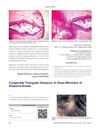
January 2011 in “International Journal of Trichology” CTA is often mistaken for AA but doesn't respond to steroids and may require hair transplantation.
2 citations
,
April 2019 in “Journal of Investigative Dermatology” This study found that overexpression of Gasdermin A3 in mice disrupts the hair follicle stem cell niche and causes hair loss through cell necrosis and abnormal hair cycle progression, without involving immune-mediated mechanisms.
9 citations
,
April 2024 in “The Oncologist” This study found that sacituzumab govitecan improved health-related quality of life in most areas for patients with HR+/HER2− metastatic breast cancer compared to chemotherapy, except for increased diarrhea, supporting its use as a treatment option.
258 citations
,
July 2005 in “Journal of lipid research” This study found that DGAT1 exhibits additional acyltransferase activities in vitro, including MGAT, wax synthase, and ARAT activities, suggesting these could be relevant to its in vivo functions.
February 2026 in “Journal of Cellular Physiology” This review discusses how TGF-β3 influences fate decisions of various stem cell types, highlighting its role in proliferation, differentiation, and cell death through classical and non-classical signalling pathways.
14 citations
,
July 1994 in “Journal of Investigative Dermatology” 147 citations
,
August 2005 in “The Plant Cell” This study identified a key Arabidopsis thaliana gene, TIP1, whose product is involved in S-acylation crucial for normal plant cell growth, particularly affecting root hair development.
11 citations
,
September 2022 in “Journal of the Endocrine Society” This study found that the incidence of hyperkalemia is low among transgender, gender nonbinary, and gender-nonconforming individuals, particularly those under 45, but increases with age.
5 citations
,
May 2024 in “Developmental Cell” Lower GATA3 levels in mice help hair regrow by changing certain immune cells.
July 2020 in “Journal of Tissue Engineering and Reconstructive Surgery” December 2022 in “Clinical and experimental dermatology and therapies” In this study, the addition of a topical gel containing growth-factor mimicking oligopeptides and other ingredients showed improved efficacy in subjects with androgenic alopecia using minoxidil or finasteride compared to drug treatment alone.
89 citations
,
January 2020 in “PubMed” This review discusses biotinidase deficiency, noting that biotin treatment from birth can prevent symptoms, but acknowledges the complexity and need for further understanding due to late-onset cases with varied clinical findings.
 17 citations
,
June 2018 in “Sexual Medicine Reviews”
17 citations
,
June 2018 in “Sexual Medicine Reviews” In this review, the authors examined guidelines and literature on the non-operative treatment of gender dysphoria, highlighting the importance of personalized, multidisciplinary care, and noting that such treatment is generally safe and effective according to WPATH and Endocrine Society recommendations.