 32 citations
,
March 2014 in “PLOS ONE”
32 citations
,
March 2014 in “PLOS ONE” This study demonstrates that FMOD deficiency in mice alters TGF-β ligand and receptor expression during wound healing stages, leading to delayed wound closure and increased scar size.
January 2013 in “edoc (University of Basel)” This study found that TRF1 plays a crucial role in maintaining pluripotency and stem cell compartments, but it is not a suitable in vivo telomere length marker.
July 2026 in “Dermatology Practical & Conceptual” This review assessed trichoscopic findings in folliculotropic mycosis fungoides of the scalp, reporting features like milky-red globules and distinct vascular patterns, but noted the predominance of small studies and the need for larger research to validate trichoscopy's diagnostic utility for this condition.
 January 2025 in “International Journal of Dermatology”
 This case report describes a patient with eruptive tumor of follicular infundibulum, emphasizing the need for dermatologists to include it in the differential diagnosis of acquired facial hypopigmentation.
27 citations
,
February 2003 in “Cell and Tissue Research” This study found that FM dyes are effective markers for tracing live Merkel cells in in vitro experiments, as they remain visible for at least seven days and highlight cell shape better than quinacrine.
 10 citations
,
January 2011 in “Case reports in dermatological medicine”
10 citations
,
January 2011 in “Case reports in dermatological medicine” This report documented a successful and sustained hair restoration surgery using follicular unit transplantation for temporal triangular alopecia, lasting over six years.
 4 citations
,
January 2019 in “Skin appendage disorders”
4 citations
,
January 2019 in “Skin appendage disorders” This study found that Follicular Maps, derived from trichoscopic images, remained consistent over time and unaffected by hair cycling or noncicatricial alopecia, offering a precise tool for diagnosing and monitoring hair and scalp conditions.
 32 citations
,
April 2006 in “The Journal of Urology”
32 citations
,
April 2006 in “The Journal of Urology” Using finasteride with TIP extends time off period for prostate cancer patients.
 5 citations
,
July 2019 in “Photodiagnosis and photodynamic therapy”
5 citations
,
July 2019 in “Photodiagnosis and photodynamic therapy” This study reports a case of a 59-year-old female with refractory follicular mucinosis and diffuse scalp alopecia who achieved complete clinical remission following treatment with a combination of topical tacalcitol and photodynamic therapy.
4 citations
,
September 2011 in “Journal of the American Academy of Dermatology” This case report describes a 46-year-old man who developed folliculotropic mycosis fungoides, a form of post-transplant lymphoproliferative disorder, following renal transplantation.
37 citations
,
December 2020 in “PLANT PHYSIOLOGY” In this study, the researchers identified a temperature-sensitive mutant in Arabidopsis thaliana, showing disrupted root hair formation and altered responses to plant hormone treatments at elevated temperatures.
January 2015 in “Pathology” A 64-year-old man had a rare skin cancer near his ear, unresponsive to antibiotics, with specific skin and hair follicle changes.
8 citations
,
January 2005 in “SKINmed Dermatology for the Clinician” This case report details three patients with follicular mycosis fungoides, highlighting an impressive response to bexarotene in advanced cases, suggesting potential for further research on this treatment's effectiveness.
4 citations
,
August 2025 in “Journal of Food Science” This review highlights that Tremella fuciformis polysaccharide exhibits various bioactivities, such as antioxidant and immune-modulating effects, and explores its potential applications in food, pharmaceutical, and cosmetic industries.
78 citations
,
August 2017 in “Endocrine Reviews” This review discusses the free hormone hypothesis for measuring "free" testosterone and critiques its theoretical basis and clinical application, noting it lacks critical empirical testing and has inconsistent utility in assessing androgen status.
This article lists the clinically important interactions and skin reactions of several drugs and substances, including THA, FK506, tamoxifen, tamsulosin, tartrazine, tea tree oil, temazepam, and temozolomide, but provides no new clinical results.
March 2003 in “Rosa P: A digital library for transportation research (United States Department of Transportation)” This article presents a toolkit created by the FTA to help transit agencies manage employees' use of medications that could impact public safety, but it reports no new results.
May 2008 in “10th European Congress of Endocrinology” This study discovered that TTR is expressed in the human placenta as early as 6 weeks gestation, with increased levels in the first trimester potentially facilitating thyroid hormone delivery to the fetus.
 September 2017 in “Journal of Investigative Dermatology”
 This study found that infrared thermography might be a useful non-invasive tool to help diagnose frontal fibrosing alopecia by identifying active phases of the disease.
 January 2025 in “Journal of Case Reports and Scientific Images”
 In this case report, a 65-year-old woman was diagnosed with folliculotropic mycosis fungoides after experiencing scarring alopecia and intense pruritus, highlighting the importance of early diagnosis due to its aggressive nature.
 January 2017 in “International journal of science and research”
 This review discusses treatment options for trichotillomania, focusing on cognitive-behavioral interventions and promising developments in combined pharmacotherapy and therapy approaches, but reports no new findings.
 5 citations
,
May 2011 in “Movement Disorders”
5 citations
,
May 2011 in “Movement Disorders” Finasteride significantly reduced tics and obsessive-compulsive symptoms in Tourette syndrome patients.
 16 citations
,
June 2009 in “Dermatologic Surgery”
16 citations
,
June 2009 in “Dermatologic Surgery” This abstract does not contain research results or findings.
 56 citations
,
March 2010 in “Journal of Dermatology”
56 citations
,
March 2010 in “Journal of Dermatology” This review provides a synopsis of 53 cases of temporal triangular alopecia, noting its frequent detection in early childhood and potential association with congenital diseases, but it reports no new clinical findings.
 39 citations
,
July 2015 in “British Journal of Dermatology”
39 citations
,
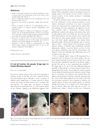
July 2015 in “British Journal of Dermatology” This article discusses the pseudo 'fringe sign' in frontal fibrosing alopecia, highlighting that it is not solely related to traction, and it reports no new clinical results.
1 citations
,
January 2016 in “Dermatology Online Journal” This case report documents a rare instance of triangular temporal alopecia in an adult woman, emphasizing the importance of correct diagnosis to avoid unnecessary treatments, and reviews the literature on TTA.
 September 2022 in “Piretc”
 This article reviews the physical factors influencing the growth of fungi, focusing on the genus Trametes and their ecological roles, but reports no new empirical findings.
October 2025 in “Diagnostics” In this case study, an 18-year-old woman's triangular alopecic patch diagnosed as temporal triangular alopecia was considered non-progressive and had no impact on her quality of life, so no treatment was initiated.
 January 2015 in “Hair transplant forum international”
 This snippet mentions an increase in women seeking surgical hair restoration and subsequently encountering more cases of frontal fibrosing alopecia, but the abstract doesn't contain results or conclusions.
January 2019 in “Florida International University Digital Commons (Florida International University)” This research describes using advanced mass spectrometry imaging techniques to analyze gunshot residue and map molecular components in biological samples, such as tumors and mosquito ovarian follicles, at unprecedented spatial resolution and specificity.