 August 2018 in “Journal of Investigative Dermatology”
 This study found that combining optical clearing methods with light-sheet fluorescence microscopy allows detailed 3D visualization of normal and pathological human skin biopsies, revealing differences in epidermal thickness and volume.
 3 citations
,
August 2021 in “Clinical, Cosmetic and Investigational Dermatology”
3 citations
,
August 2021 in “Clinical, Cosmetic and Investigational Dermatology” This study analyzed teledermatology usage in mainland China during early 2020, finding that eczema, acne, and atopic dermatitis were the most common conditions treated and varied by age group.
 January 2025 in “Journal of Fungi”
 This case report highlights the importance of early mycological diagnostics, supported by dermoscopy and ultraviolet-enhanced fluorescence dermoscopy, in preventing scarring from kerion celsi-associated hair loss in children.
 August 2024 in “Journal of Marine Medical Society”
 This case report highlighted the use of dermoscopy not only for diagnosing skin disorders but also as an educational tool to inform patients about the harmful effects of unqualified medical advice, particularly highlighting the quackery issue in dermatology.
 13 citations
,
October 2020 in “Frontiers in Medicine”
13 citations
,
October 2020 in “Frontiers in Medicine” This study found that teledermatology has a high accuracy rate of 78% for diagnosing inflammatory dermatoses, supporting its use as a viable patient care option.
 1 citations
,
January 2017 in “International Journal of Dermoscopy”
1 citations
,
January 2017 in “International Journal of Dermoscopy” This study observed that dermoscopy is a valuable tool for hair transplant surgeons to evaluate and improve the aesthetic outcomes and address technical errors in transplant procedures.
 January 2024 in “International Journal of Trichology”
 This report describes a case where dermoscopy of shed hair helped diagnose post-COVID acute telogen effluvium by revealing depigmented club-shaped bulbs, highlighting its potential as a noninvasive diagnostic tool.
 April 2018 in “Journal of Investigative Dermatology”
 This study found that combining CelluTome system and RCM is a safe and effective protocol for evaluating wound healing responses in patients with epidermolysis bullosa.
October 2015 in “CRC Press eBooks” This article reviews the use of trichoscopy for diagnosing and monitoring various scalp conditions, but it presents no new experimental findings; the authors emphasize its precision in noninvasive evaluation.
 September 2024 in “Indian Journal of Skin Allergy”
 This review article explores the current use and evidence of stem cell therapy in dermatology, detailing its applications, benefits, and limitations across various skin disorders, while also addressing teledermatology's rise during COVID-19 and proposing its ongoing integration into healthcare delivery.
 December 2023 in “International Journal of Medical Sciences And Clinical Research”
 This article discusses trichoscopy as a tool for differential diagnosis in female-type androgenetic alopecia and reports on three patient cases without providing new clinical results.
August 2021 in “Journal of the American Academy of Dermatology” In this study, both physician and patient reports revealed that more severe alopecia areata was associated with higher emotional symptoms and greater activity limitations among patients.
 December 2019 in “Medicina estética”
 This review examines the literature on dermatoscopy in aesthetic medicine, explores training supply and demand, and analyzes its adoption and use among professionals, without reporting new clinical findings.
This study suggests that dermoscopy provides additional insights for diagnosing pattern alopecia in short coated dogs, beyond what is visible through standard dermatological examination.

This study found that dermoscopy combined with calcium fluorescent white staining effectively aided in the early diagnosis and treatment evaluation of tinea capitis by highlighting specific hair changes and fluorescent patterns associated with different dermatophyte infections in a sample of 20 patients.
 2 citations
,
November 2018 in “Modern Applied Science”
2 citations
,
November 2018 in “Modern Applied Science” This study proposed a method to automatically detect and replace hair in dermoscopy images, demonstrating high sensitivity and specificity in melanoma diagnostics.
 4 citations
,
March 2022 in “Journal of The American Academy of Dermatology”
4 citations
,
March 2022 in “Journal of The American Academy of Dermatology” Direct-to-consumer teledermatology is not effectively reaching underserved populations due to language, technology, and insurance barriers.
This article reviews confocal microscopy findings in trichoepithelioma and desmoplastic trichoepithelioma, noting similarities with histological features, but it provides no new clinical results.
3 citations
,
June 2021 in “Actas Dermo-Sifiliográficas” This study found that dermoscopy can identify typical features of Malassezia folliculitis, such as folliculocentricity and perilesional erythema, offering a valuable tool for diagnosing this condition in clinical settings.
2 citations
,
January 2022 in “Indian dermatology online journal” This case report details the dermoscopic features of bilateral cutaneous larva migrans in an adult male, noting similarities with lymphangioma circumscriptum but highlights that typical dermoscopy magnification may be insufficient for diagnosis.
 1 citations
,
January 2017 in “International Journal of Dermoscopy”
1 citations
,
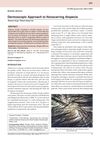
January 2017 in “International Journal of Dermoscopy” This article reviews the use of dermoscopy as a noninvasive tool for diagnosing various types of nonscarring alopecia but presents no new clinical findings.
 2 citations
,
February 2025 in “Dermatology and Therapy”
2 citations
,
February 2025 in “Dermatology and Therapy” In this observational retrospective study, UVF-dermoscopy was found to be more effective than polarized dermoscopy in identifying follicular features and distinguishing between scarring and nonscarring alopecias, particularly in individuals with lighter skin tones.

The researchers reported that asynchronous teledermatology effectively diagnosed and managed non-scarring alopecia in 91.3% of cases within the UPMC network, improving access for underserved populations, with high engagement from Black and Asian patients and significant participation from those living outside Pittsburgh.
 January 2026 in “Dermatology and Therapy”
 This study suggests that using UVFD to examine non-pigmented facial lesions can potentially enhance diagnostic accuracy and reduce unnecessary biopsies.
 34 citations
,
July 2011 in “Journal of the European Academy of Dermatology and Venereology”
34 citations
,
July 2011 in “Journal of the European Academy of Dermatology and Venereology” This study identified distinct dermoscopic patterns associated with different types of scalp tumors, highlighting variability in lesions related to patient age, gender, and tumor thickness.
 December 2022 in “Skin Pharmacology and Physiology”
 This study found that most hair shaft abnormalities can be accurately diagnosed using a handheld dermoscope in a clinical setting.
 7 citations
,
April 2022 in “Cutis”
7 citations
,
April 2022 in “Cutis” This article discusses the rise of direct-to-consumer teledermatology platforms, warning that they might cause overdiagnosis, overtreatment, and fragmented healthcare, and emphasizes the need for patient counseling about these risks and benefits.
 December 2019 in “Дерматологія та венерологія”
 Trichoscopy is a useful tool for diagnosing hair and scalp disorders.
 December 2024 in “Journal of Cutaneous and Aesthetic Surgery”
 The researchers observed that dermoscopy is valuable for assessing acne scars and their response to treatment, with shorter-duration scars responding more effectively.
 16 citations
,
July 2016 in “Veterinary Dermatology”
16 citations
,
July 2016 in “Veterinary Dermatology” This study found that dermoscopy can identify distinctive features in canine pattern alopecia, such as hair shaft thinning and pigmentation patterns, which may aid in diagnosing this and potentially other skin disorders.