 41 citations
,
December 2015 in “JAMA Dermatology”
41 citations
,
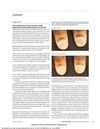
December 2015 in “JAMA Dermatology” Tofacitinib citrate improved nail dystrophy and pain in patients with alopecia universalis without causing side effects.
 16 citations
,
April 2017 in “Journal of Cosmetic Dermatology”
16 citations
,
April 2017 in “Journal of Cosmetic Dermatology” This study found that fig leaf extract significantly downregulated inflammatory and androgenic gene expression in vitro, suggesting potential topical benefits for certain skin disorders.
March 2023 in “Archives of Physical Medicine and Rehabilitation” This pilot study suggests that high-dose testosterone plus finasteride increased lower-extremity bone mineral density in men with impaired gait and low to low-normal testosterone following chronic incomplete spinal cord injury.
 8 citations
,
June 2022 in “Frontiers in Medicine”
8 citations
,
June 2022 in “Frontiers in Medicine” This study found that tofacitinib is an effective and more tolerable treatment than systemic corticosteroids for moderate-to-severe alopecia areata, and its combination with corticosteroids may offer improved efficacy.
The authors concluded that capecitabine and high-dose toremifene may be an effective treatment option for patients unable to undergo anthracycline or taxane therapies, based on one woman's cancer management.
 222 citations
,
September 2016 in “JCI insight”
222 citations
,
September 2016 in “JCI insight” This research overview highlights that although JAK inhibitors show promise as potential treatments for alopecia areata based on recent insights into the disease mechanism, their efficacy has not yet been thoroughly evaluated in a systematic manner.
56 citations
,
April 2019 in “The Plant Journal” This study found that CNGC 6, CNGC 9, and CNGC 14 are crucial for maintaining calcium oscillations necessary for normal root hair growth in plants, with mutations leading to defects like swelling and bursting.
![Discovery of 7-Methoxy-6-[4-(4-Methyl-1,3-Thiazol-2-yl)-1H-Imidazol-5-yl]-1,3-Benzothiazole (TASP0382088): A Potent and Selective Transforming Growth Factor-β Type I Receptor Inhibitor as a Topical Drug for Alopecia](/images/assets/9620bd26-3366-4f2a-bcac-f511697bbc41/small/35997.jpg) 6 citations
,
January 2013 in “Chemical & pharmaceutical bulletin/Chemical and pharmaceutical bulletin”
6 citations
,
January 2013 in “Chemical & pharmaceutical bulletin/Chemical and pharmaceutical bulletin” In this study, TASP0382088 showed potent selective inhibition of the ALK5 receptor, significantly reducing Smad2 phosphorylation in mouse skin following topical application.
August 2024 in “Indian Journal of Dermatology Venereology and Leprology”  2 citations
,
September 2022 in “Dermatologic Therapy”
2 citations
,
September 2022 in “Dermatologic Therapy” In this study, tofacitinib showed a mixed response in treating refractory alopecia areata, with some patients experiencing complete or partial hair regrowth and others showing no response, particularly those with alopecia universalis.
 3 citations
,
February 2024 in “Journal of the American Academy of Dermatology”
3 citations
,
February 2024 in “Journal of the American Academy of Dermatology” This source discusses that while oral JAK inhibitors are used for treating lichen planopilaris and frontal fibrosing alopecia, they carry significant risk of adverse events; two cases showed promising results using tofacitinib cream as a safer topical alternative.
 June 2025 in “International Journal of Science and Research (IJSR)”
 This study found that oral tofacitinib at a 5mg twice daily dosage was effective in treating recalcitrant alopecia areata, showing significant improvement in hair regrowth and a 27% reduction in SALT scores over six months, with minimal side effects among the 19 patients monitored.
 2 citations
,
November 2007 in “Hair transplant forum international”
2 citations
,
November 2007 in “Hair transplant forum international” This abstract introduces the concept of follicular units (FUs) in the human scalp but presents no new research findings.
24 citations
,
April 2022 in “International Journal of Molecular Sciences” This study found that TRPV4 activation induced massive exocytosis and cellular changes associated with ferroptosis in melanoma cells, highlighting a potential role for TRPV4 in mediating these processes.
July 2024 in “Journal of Investigative Dermatology” Targeting TCR-Vβ2 in cutaneous T cell lymphoma shows promise for safer, more specific treatment.
5 citations
,
July 1996 in “Journal of Cutaneous Medicine and Surgery” This study explains that while trichothiodystrophy and xeroderma pigmentosum share genetic defects, TTD patients primarily exhibit issues in transcription initiation, not the increased skin cancer risk seen in XP.
 May 2012 in “CRC Press eBooks”
 Some patients on anti-TNF drugs experience a type of hair loss called TAIAPA.
December 2024 in “The American Journal of Gastroenterology” This case report highlights the successful use of tofacitinib in a 12-year-old patient with Crohn’s disease who developed alopecia areata following infliximab treatment, showing significant hair regrowth and complete resolution of alopecia within eight months while maintaining remission of Crohn’s symptoms.
January 2024 in “Dermatologic Therapy” This retrospective study found that oral tofacitinib significantly reduced the severity of alopecia areata in children, achieving over a 50% reduction in hair loss severity, though relapse occurred during treatment tapering, and mild adverse effects were noted.
 16 citations
,
January 2010 in “American Journal of Neuroradiology”
16 citations
,
January 2010 in “American Journal of Neuroradiology” This case report describes a 3-year-old boy with trichothiodystrophy, highlighting specific MRI findings of diffuse dysmyelination and osteosclerosis that may be unique to the disorder.
 15 citations
,
April 2017 in “Cell Stem Cell”
15 citations
,
April 2017 in “Cell Stem Cell” This study found that glioblastoma cancer stem cells avoid immune suppression by downregulating TLR4, and restoring TLR4 signaling may reduce tumor growth and self-renewal.
80 citations
,
November 2017 in “New Phytologist” In this study, the researchers used the dual-flow-RootChip to show that Arabidopsis roots can locally adapt their hair development in response to asymmetric phosphate conditions.
 14 citations
,
July 2012 in “Journal of the American Academy of Dermatology”
14 citations
,
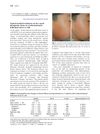
July 2012 in “Journal of the American Academy of Dermatology” This study found that topical tacalcitol improved roughness and scaling in erythromelanosis follicularis faciei et colli, although it was less effective for facial erythema.
 2 citations
,
November 2023 in “Acta dermato-venereologica”
2 citations
,
November 2023 in “Acta dermato-venereologica” This study involving 126 patients found that tofacitinib has high effectiveness and an acceptable safety profile for treating alopecia areata, with a 33.8% complete response rate at 24 weeks and sex as an independent risk factor for outcomes.
 April 2026 in “Zenodo (CERN European Organization for Nuclear Research)”
 In this study, Dodatek A operationalizes the Functional Androgen Axis framework by defining three system-level indices and an efficiency metric to describe androgen function, incorporating key methodological improvements and acknowledging significant limitations for future empirical validation.
 June 2024 in “Journal of Clinical Oncology”
 In this retrospective study, combining TACE with Donafenib showed promising results as a first-line treatment for Chinese patients with unresectable hepatocellular carcinoma, yielding a median progression-free survival of 12.8 months and a one-year overall survival rate of 87.5%, along with a favorable safety profile.
 13 citations
,
June 2012 in “Journal of Dermatological Case Reports”
13 citations
,
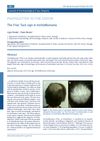
June 2012 in “Journal of Dermatological Case Reports” This report describes an 8-year-old male with trichotillomania, confirmed by trichoscopy showing characteristic hair damage and patterns.
17 citations
,
September 2009 in “British Journal of Dermatology” This study suggests that clinically apparent fragile hair in children is rarely linked to trichothiodystrophy, and the tiger-tail pattern is not wholly specific to this diagnosis.
3 citations
,
July 2022 in “Brain and Behavior” This study observed that a CARASIL mouse model demonstrated abnormal behavior, vascular and cellular changes, and upregulation of the TGF-β/Smad signaling pathway, indicating its potential involvement in CARASIL pathogenesis.
 2 citations
,
June 2019 in “Boletín médico del Hospital Infantil de México”
2 citations
,
June 2019 in “Boletín médico del Hospital Infantil de México” This study in Mexican adolescents with severe alopecia areata reported that oral tofacitinib treatment resulted in hair growth and reduced alopecia severity without serious adverse effects.