
This study from years of treating hair loss in Japan reported various treatment outcomes: some patients showed improvement with manual treatment alone, others with added finasteride, some did not respond to either, and some maintained benefits even after stopping finasteride.
 July 2023 in “IntechOpen eBooks”
 This review highlights that alopecia areata, a common type of hair loss, currently lacks preventive or curative treatments, and traditional therapies such as minoxidil and corticosteroids offer inconsistent results, necessitating patient-consensual treatment planning.
 July 2023 in “JAAD International”
 This study describes androgenetic alopecia as a common non-scarring hair loss condition primarily influenced by genetic factors and androgen sensitivity, notably impacting psychosocial well-being, especially in females and younger males seeking treatment.
 February 2025 in “JAAD International”
 Five monthly sessions of minoxidil-dutasteride-copper peptide tattooing significantly improve hair regrowth in men with androgenetic alopecia.
February 2023 in “JAAD Case Reports” Scalp tattooing may trigger hair regrowth in alopecia universalis.
August 2021 in “Journal of Investigative Dermatology” The technique effectively promotes hair growth in young men with androgenetic alopecia.
 May 2023 in “JAAD international”
 This study evaluated the clinical outcomes of using tattoo equipment to deliver a combination of minoxidil and dutasteride directly to the scalp over three sessions for treating male androgenetic alopecia, but results are not reported in the abstract.
 35 citations
,
April 2006 in “Ocular Surface”
35 citations
,
April 2006 in “Ocular Surface” This review discusses adverse effects of cosmetic products and procedures on the ocular surface, including mild discomfort to severe vision-threatening conditions, and reports no new clinical results.
71 citations
,
December 2013 in “The journal of investigative dermatology. Symposium proceedings/The Journal of investigative dermatology symposium proceedings” This review discusses various treatments for alopecia areata, highlighting their limitations and individualized approach, and reports no new clinical results.
 1 citations
,
July 2015 in “British Journal of Dermatology”
1 citations
,
July 2015 in “British Journal of Dermatology” Imiquimod improved skin pigmentation in most patients with xeroderma pigmentosum and may prevent further skin cancer, but some treatments can have side effects.
November 2025 in “Universal library of medical and health sciences.” This review highlights that while permanent eyebrow correction via micropigmentation may help restore visual appearance for patients experiencing eyebrow loss post-chemotherapy, the psychoemotional benefits of this procedure remain unclear, demonstrating a need for further research into its impact on quality of life.
 January 2023 in “Indian Dermatology Online Journal”
 This article reviews the indications for micropigmentation in dermatological conditions like stable vitiligo and alopecia, but presents no new clinical results.
July 2021 in “CRC Press eBooks” This study reports that topical finasteride significantly reduced scalp and plasma dihydrotestosterone in men and women without altering serum testosterone levels, with promising preliminary results.
SMP creates illusion of full hair, addressing various issues and bringing happiness to those with thinning hair.
 October 2023 in “Indian Journal of Ophthalmology - Case Reports”
 This report details the clinical presentation of an 18-year-old female with Kallmann syndrome, noting her ocular issues and differences in sexual development. The researchers treated her eye conditions cosmetically with superficial keratectomy and amniotic membrane graft, followed by corneal tattooing and strabismus correction.
 24 citations
,
August 2013 in “Facial Plastic Surgery Clinics of North America”
24 citations
,
August 2013 in “Facial Plastic Surgery Clinics of North America” This review discusses scalp micropigmentation techniques and their customization to individual patients, but reports no new clinical results.
 7 citations
,
November 2017 in “Plastic and reconstructive surgery. Global open”
7 citations
,
November 2017 in “Plastic and reconstructive surgery. Global open” This review discusses the combined use of follicular unit extraction and scalp micropigmentation for hair loss treatment, reporting no new clinical results; the authors note significant industry growth.
 May 2017 in “Journal of The American Academy of Dermatology”
 Combining microneedling with Q-switched laser treatment for tattoo removal did not improve results and caused more pain.
 1 citations
,
November 2020 in “Journal of Cosmetic Dermatology”
1 citations
,
November 2020 in “Journal of Cosmetic Dermatology” This letter to the editor discusses an unusual complication, crescent-shaped incisional cuts, observed with Q-switched Nd:YAG 1064 laser tattoo removal and reports no new clinical results.
 November 2025 in “Dermatology Reports”
 This review found that microinfusion of medications using tattoo devices (MMP®) shows potential as a minimally invasive method for treating ailments like alopecia and basal cell carcinoma, offering notable improvements with minimal side effects due to localized drug delivery.
 January 2026 in “International Society of Hair Restoration Surgery”
 This study reports that a novel multimodal approach, combining tattoo machine–assisted drug delivery of hair loss treatments with oral and topical medications, may enhance hair density and thickness in androgenetic alopecia patients, though larger controlled studies are needed to confirm these early findings.
 8 citations
,
January 1989 in “Journal of The American Academy of Dermatology”
8 citations
,
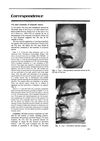
January 1989 in “Journal of The American Academy of Dermatology” This report suggests that CO2 laser treatment may be an effective alternative for removing traumatic tattoos caused by firearms, based on two successful patient cases.
 March 2026 in “Portuguese Journal of Dermatology and Venereology”
 This study observed an unexpected case where a 44-year-old woman developed linear scalp pigmentation, resembling a tattoo, after undergoing a microneedling procedure followed by hair dyeing two days later, emphasizing the need to advise patients on avoiding hair dye application soon after such treatments.
1 citations
,
April 2018 in “Dermatologic Surgery” This source outlines the scope and content of the Dermatologic Surgery journal, highlighting its focus on comprehensive peer-reviewed information related to various dermatologic surgeries, including cosmetic and reconstructive procedures and skin cancer treatment, as an essential resource for professionals in the field.
 17 citations
,
January 1996 in “Aesthetic Plastic Surgery”
17 citations
,
January 1996 in “Aesthetic Plastic Surgery” This study suggests that the tumescent technique effectively provides anesthesia and reduces bleeding during hair micrografting, eliminating the need for multiple needle injections or nerve blocks.
1 citations
,
January 1996 in “Aesthetic Plastic Surgery” This study suggests that the tumescent technique can improve hair micrografting by effectively providing anesthesia and reducing bleeding without the need for multiple needle injections or nerve blocks.
This study reports that using stamps to mark scalp incisions with gentian violet ink and a barrier film improved incision symmetry and maintained slot visibility for hair graft insertion in the frontal region.
January 2019 in “Dermatologic Surgery” This overview of the Dermatologic Surgery journal describes its extensive coverage of peer-reviewed content across various skin surgery techniques but presents no new research findings.
May 2016 in “Hair transplant forum international”  11 citations
,
June 1999 in “Seminars in Cutaneous Medicine and Surgery”
11 citations
,
June 1999 in “Seminars in Cutaneous Medicine and Surgery” This article compares modern hair restoration techniques for androgenic alopecia, focusing on procedure times, labor, and costs, but it does not provide new clinical findings.