The authors concluded that capecitabine and high-dose toremifene may be an effective treatment option for patients unable to undergo anthracycline or taxane therapies, based on one woman's cancer management.
 21 citations
,
January 2005 in “Pediatric Dermatology”
21 citations
,
January 2005 in “Pediatric Dermatology” An 8-year-old girl with vitiligo developed extra hair growth on her knee after using tacrolimus ointment.
 January 2024 in “International Journal of Dermatology Venereology and Leprosy Sciences”
 This literature review indicates that tofacitinib, both orally and topically, holds promise as a safe and effective treatment for various dermatological conditions in pediatric patients, though its use requires careful consideration of its benefits and risks.
2 citations
,
May 2011 in “Journal of Clinical Oncology” This study found that paclitaxel poliglumex showed limited effectiveness and was relatively well tolerated in post-menopausal women with advanced NSCLC, suggesting further testing of this treatment may not be justified.
 May 2017 in “Journal of The American Academy of Dermatology”
 An intact skin barrier is crucial to prevent infection in cases of tether-induced tenosynovitis.
 5 citations
,
August 2018 in “PubMed”
5 citations
,
August 2018 in “PubMed” This case report documented successful full hair regrowth in an 8-year-old with alopecia universalis after oral tofacitinib treatment, but mild headaches led to discontinuation.
 9 citations
,
May 2021 in “International Journal of Dermatology”
9 citations
,
May 2021 in “International Journal of Dermatology” In this study, sublingual tofacitinib achieved a longer estimated half-life than oral administration in treatment-resistant alopecia areata patients, potentially supporting daily dosing; overall treatment response was modest.
 1 citations
,
May 2026 in “Environmental Health Engineering and Management”
1 citations
,
May 2026 in “Environmental Health Engineering and Management” This study found that white poplar wood sawdust effectively removed up to 92.12% of thallium ions from contaminated water in laboratory conditions, demonstrating its potential as a low-cost adsorbent for reducing toxic thallium levels.
 13 citations
,
March 2002 in “Pediatric Dermatology”
13 citations
,
March 2002 in “Pediatric Dermatology” This article discusses temporal triangular alopecia, emphasizing the need for increased awareness to prevent misdiagnosis and ineffective treatment, but reports no new clinical results.
 June 2017 in “Journal of The American Academy of Dermatology”
 Tapinarof cream at 1% concentration is effective and better tolerated for treating atopic dermatitis than the 2% concentration.
 4 citations
,
October 2020 in “Journal of oral and maxillofacial surgery”
4 citations
,
October 2020 in “Journal of oral and maxillofacial surgery” This review discusses the use of Tisseel for stabilizing particulate grafts and reports no new clinical results; the authors emphasize the need for further controlled trials.
 41 citations
,
December 2015 in “JAMA Dermatology”
41 citations
,
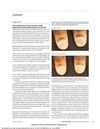
December 2015 in “JAMA Dermatology” Tofacitinib citrate improved nail dystrophy and pain in patients with alopecia universalis without causing side effects.
 September 2025 in “Tạp chí Da liễu học Việt Nam”
 This study found that both 2.5 mg/mL and 5 mg/mL concentrations of intralesional triamcinolone acetonide are effective for treating patchy alopecia areata, but the higher concentration promoted greater hair regrowth and density with more side effects.
 141 citations
,
September 2016 in “European Journal of Dermatology”
141 citations
,
September 2016 in “European Journal of Dermatology” This review examines dermatological side effects of taxane chemotherapy reported in past studies and highlights the necessity for identifying and managing these conditions to maintain cancer patients' quality of life; it presents no new clinical results.
 119 citations
,
June 1993 in “BMJ”
119 citations
,
June 1993 in “BMJ” This article discusses the high toxicity and potential use of thallium as a poison, highlighted by two cases of intentional thallium poisoning.
February 2023 in “Reactions Weekly”  2 citations
,
April 2022 in “Cutaneous and Ocular Toxicology”
2 citations
,
April 2022 in “Cutaneous and Ocular Toxicology” This systematic review reports promising efficacy and safety of Tofacitinib for treating Alopecia Areata in children, though further randomized studies are needed due to the low quality of existing evidence.
May 2025 in “International Journal of Trichology” In this case report, a 7-year-old boy with alopecia totalis experienced significant hair regrowth after adding topical tofacitinib and mometasone to his treatment regimen, suggesting potential benefits of topical Janus kinase inhibitors for pediatric patients with this condition.
 September 2019 in “Asian Journal of Pharmaceutical and Clinical Research”
 In this study, researchers found that the methanolic seed extract of Tectona grandis, known for its use in traditional medicine, demonstrated strong analgesic properties in Swiss albino mice, being effective at doses of 200–250 mg/kg and safe up to 1000 mg/kg.
 8 citations
,
April 2013 in “Journal of The American Academy of Dermatology”
8 citations
,
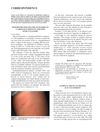
April 2013 in “Journal of The American Academy of Dermatology” This correspondence comments on the unknown prevalence of permanent alopecia following high-dose docetaxel chemotherapy and highlights the need for further understanding and prevention strategies.
January 2007 in “Frontiers in Medicine” This study found that tofacitinib was an effective and better-tolerated treatment for moderate-to-severe AA compared to SCs, though its efficacy decreased in patients with disease episodes longer than two years.
 5 citations
,
January 2021 in “Inflammatory Bowel Diseases”
5 citations
,
January 2021 in “Inflammatory Bowel Diseases” In this report, a female patient with ulcerative colitis, alopecia areata, and pyoderma gangrenosum showed improvement in all three conditions after being treated with tofacitinib.
7 citations
,
April 1979 in “The Journal of Pediatrics”  1 citations
,
May 2021 in “Annals of the rheumatic diseases”
1 citations
,
May 2021 in “Annals of the rheumatic diseases” This study found that tofacitinib may be effective for treating pediatric rheumatic diseases, with especially promising results in patients with autoinflammatory diseases, arthritis and alopecia, and juvenile dermatomyositis.
20 citations
,
June 2019 in “JAAD Case Reports” This article reviews the use of tofacitinib for rheumatoid and psoriatic arthritis and alopecia areata, noting potential serious side effects, but reports no cases of palmoplantar pustulosis from the therapy.
 1 citations
,
January 2023 in “Research Square (Research Square)”
1 citations
,
January 2023 in “Research Square (Research Square)” In this report, a 61-year-old woman with vitiligo showed significant improvement after tofacitinib treatment but developed lung adenocarcinoma, highlighting potential cancer risks associated with JAK inhibitors.
May 2025 in “OPAL (Open@LaTrobe) (La Trobe University)” The researchers reported that in a mouse model of alopecia areata, tofacitinib treatment influenced disease progression by modulating CD8+ T cell infiltration through the linoleic acid metabolism and magnesium ion pathway, offering insights into potential treatment approaches.
May 2025 in “OPAL (Open@LaTrobe) (La Trobe University)” This study found that in a mouse model of alopecia areata, tofacitinib inhibited CD8+ T cell infiltration at hair follicles by modulating linoleic acid metabolism and magnesium pathways, offering insights into potential therapeutic strategies for the condition.
 40 citations
,
September 2018 in “Journal of the American Academy of Dermatology”
40 citations
,
September 2018 in “Journal of the American Academy of Dermatology” This letter discusses the emerging use of Janus kinase inhibitors, specifically oral tofacitinib, for treating alopecia areata in children, but reports no new clinical findings.