 101 citations
,
November 1992 in “Archives of Dermatology”
101 citations
,
November 1992 in “Archives of Dermatology” In this study, tapering prednisone followed by 2% topical minoxidil helped limit hair loss in some patients with alopecia areata, with 30% to 47% showing over 25% hair regrowth initially.
24 citations
,
November 1992 in “Archives of Dermatology” This study found that a 6-week taper of prednisone led to more than 25% hair regrowth in 30% to 47% of alopecia areata patients, and applying 2% topical minoxidil helped maintain this growth.
9 citations
,
December 1977 in “Archives of Dermatology” This article rebuts a previous rejection of corticosteroid therapy for alopecia areata, reporting successful treatment in multiple patients with systemic and intralesional steroids and minimal side effects.
3 citations
,
July 2024 in “Archives of Dermatological Research” This study found that oral dexamethasone and DPCP were more effective for treating severe alopecia areata compared to oral ritlecitinib and baricitinib, but oral ritlecitinib had better safety outcomes.

In this case study, a 12-year-old boy with alopecia totalis experienced hair regrowth on the side of his scalp treated with a combination of systemic steroids and dithranol, suggesting a potential synergistic effect that may help manage severe alopecia areata with minimal side effects.
January 2023 in “International Journal of Pharmacy and Pharmaceutical Science” In this observational study conducted in Bengaluru, India, among 272 dermatology patients, the authors reported that dermatitis was the most common condition treated with corticosteroids, with a preference for topical applications; desonide was the most frequently prescribed drug.
 16 citations
,
October 1994 in “The Journal of Steroid Biochemistry and Molecular Biology”
16 citations
,
October 1994 in “The Journal of Steroid Biochemistry and Molecular Biology” Two non-steroidal antiandrogens, RU 58841 and RU 56187, form a common metabolite at different rates, which may influence their effects; RU 56187 could be used for prostate cancer treatment and RU 58841 for acne treatment.
June 2026 in “Scientific Reports” This study found that systemic testosterone exposure in transgender individuals with XX genotype alters skin biology, increasing androgen and estrogen receptor-positive cells, collagen density, and fibronectin expression while reducing immune cells, which could affect surgical outcomes by promoting a male skin phenotype.
March 2023 in “Journal of Pakistan Association of Dermatologists” This case report highlights that rosacea can be misdiagnosed as systemic lupus erythematosus, with symptom improvement seen after switching from long-term corticosteroid use to topical metronidazole, nicotinamide, and tretinoin.
1 citations
,
November 2000 in “PubMed” This case study reports that a woman with systemic lupus erythematosus experienced remission of her symptoms after receiving a combined therapy of corticosteroids and cytostatics.
 March 2024 in “JEADV. Journal of the European Academy of Dermatology and Venereology/Journal of the European Academy of Dermatology and Venereology”
 This paper discusses a consensus statement from European experts recommending systemic JAK inhibitors as first-line therapy for moderate to severe alopecia areata.
36 citations
,
January 2010 in “International Journal of Trichology” Intralesional steroids can help regrow hair in some alopecia areata patients but have side effects.
8 citations
,
February 2006 in “Canadian Medical Association Journal” A woman with lupus and antiphospholipid syndrome had bone damage, showing the need for careful treatment.
 3 citations
,
October 2019 in “JAAD Case Reports”
3 citations
,
October 2019 in “JAAD Case Reports” This review discusses different forms and patterns of alopecia associated with lupus erythematosus and reports no new clinical results; the authors highlight distinct features of these conditions.
 2 citations
,
January 2023 in “Journal of Dermatology”
2 citations
,
January 2023 in “Journal of Dermatology” This study reports that various types of alopecia, including permanent alopecia, can persist after an acute DRESS episode, but telogen effluvium and alopecia areata showed clinical improvement with treatment within six months.
 November 2025 in “Open Access CRIS of the University of Bern”
 This study compared serum and hair steroid hormone profiles in adolescents and found that hair steroid profiling is a feasible, non-invasive alternative to serum analysis, with androgen levels in both mediums correlating more strongly with body size and composition in boys than in girls.
November 2025 in “European Journal of Endocrinology” This study found that hair steroid profiling is a feasible, non-invasive alternative to serum analysis in adolescents, with androgen levels correlating more strongly with body size and composition in boys than girls.
July 2024 in “Journal of Investigative Dermatology” Tailored treatments for alopecia areata show promising results, with pulse steroids effective for mild cases and Ritlecitinib, Dupilumab, or methotrexate and prednisone effective for severe cases.
 April 2026 in “The National Medical Journal of India”
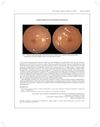
 This case report highlights a 42-year-old woman with systemic lupus erythematosus who exhibited fundus changes indicating retinal vasculitis, underlining the importance of regular ocular fundus examinations for early detection of severe disease complications.
 May 2023 in “Elsevier eBooks”
 This study reports that while systemic immunotherapies are often used for immune-mediated hair loss, they may also be considered for treating androgenetic alopecia when it coexists with immune-related conditions like alopecia areata.
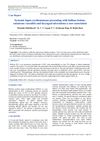 October 2022 in “International journal of research in dermatology”
 This case report documents a 31-year-old woman with bullous SLE who showed improvement with high-dose parenteral steroids and dapsone, with ongoing follow-up due to potential kidney involvement.
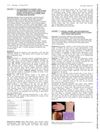
This case report details a child with a specific TNFAIP3 mutation manifesting as a severe SLE/SS phenotype, expanding the known phenotype for this genetic variant.
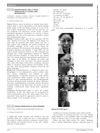
This study presents a case of neuropsychiatric lupus in a 50-year-old woman, highlighting the severe impact on quality of life and the necessity for aggressive treatment to improve outcomes.
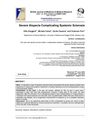 January 2015 in “British journal of medicine and medical research”
 This case report describes a patient with systemic sclerosis and severe alopecia areata who experienced complete resolution of hair loss within four months after treatment with topical steroids, minoxidil, and mycophenolate mofetil.
September 2007 in “The American Journal of Gastroenterology” This case report illustrates that Systemic Lupus Erythematosus can lead to severe malabsorption, weight loss, and small bowel inflammation, requiring recognition for effective treatment and improved outcomes.
 18 citations
,
January 2017 in “Journal der Deutschen Dermatologischen Gesellschaft”
18 citations
,
January 2017 in “Journal der Deutschen Dermatologischen Gesellschaft” This study reports that sequential high- and low-dose prednisolone therapy effectively promotes complete hair regrowth in 62% of children with severe alopecia areata, while minimizing severe side effects.
 7 citations
,
July 2019 in “Clinics in Dermatology”
7 citations
,
July 2019 in “Clinics in Dermatology” This review discusses various systemic diseases associated with secondary alopecia and reports no new clinical findings; it emphasizes the importance of addressing underlying conditions and using diagnostic tools like trichoscopy and histopathology.
 1 citations
,
December 2020 in “Dermatology Archives”
1 citations
,
December 2020 in “Dermatology Archives” This study found that pediatric patients with severe alopecia areata showed significant improvement with systemic corticosteroids but typically experienced relapse within 4-5 months, also seeing an increase in weight percentiles.
 March 2024 in “Poster presentations”
 This case report describes a 43-year-old woman diagnosed with both Kikuchi-Fujimoto disease and systemic lupus erythematosus, who showed clinical improvement after treatment with glucocorticoids and hydroxychloroquine, highlighting the rare coexistence of these conditions and the ongoing uncertainty about the precise cause of Kikuchi-Fujimoto disease.
 October 2024 in “American Journal of Case Reports”
 This case report describes a 54-year-old Saudi woman with systemic lupus erythematosus and severe alopecia, where conventional treatments were ineffective. When belimumab was ineffective, baricitinib led to significant improvement in her condition, suggesting further research is needed to evaluate baricitinib's role in managing SLE.