 January 2026 in “Frontiers in Medicine”
 This review identified evidence gaps in NHIRD, emphasizing the lack of validated diagnostic criteria and the need for further research on ocular and systemic comorbidities associated with AA to enhance patient care and treatment strategies.

This research highlights selenium's critical roles in various biological processes and underscores the potential health impacts of both its deficiency and excess, including increased mortality risk, poor immune function, and neurological issues.
 August 2025 in “Aesthetic Cosmetology and Medicine”
 In this article, researchers explored how blue light exposure affects the scalp and hair follicles, highlighting oxidative stress and hair growth disruptions, while emphasizing the importance of protective strategies like antioxidants and limiting light exposure.
 May 2025 in “The Journal of Rheumatology”
 In this case report, two patients with polyautoimmunity and difficult-to-treat lupus erythematosus experienced significant symptom improvement after adding anifrolumab to their regimen, suggesting its potential as an effective add-on therapy for refractory cutaneous symptoms in autoimmune conditions characterized by elevated interferon alpha activity.
 April 2025 in “Dermatology Practical & Conceptual”
 This study found that patients with alopecia areata had significantly higher systemic immune-inflammation index levels compared to healthy controls, regardless of the disease's severity.
 February 2025 in “International Journal of Pharmaceutical Research and Applications”
 This article reviews the symptoms, diagnosis, and management of polycystic ovary syndrome, emphasizing lifestyle changes and medical interventions, but presents no new findings.
 December 2024 in “Journal of Population Therapeutics and Clinical Pharmacology”
 According to this worldwide systematic review, psoriasis is a prevalent disease with adult prevalence ranging from 0.53% to 11.48%, more common in older populations and with substantial knowledge gaps in low and middle-income countries.
 November 2024 in “Indian Journal of Rheumatology”
 This study reported that primary care physicians' lack of knowledge about rheumatology and referrals to other specialties are major factors delaying systemic lupus erythematosus patients' access to rheumatology care in India.
 November 2024 in “International Medical Case Reports Journal”
 Glucocorticoid treatment in lupus can cause oral lesions, which need early diagnosis and comprehensive care.
 October 2024 in “Journal of Education Health and Sport”
 This article reviews treatment options for Alopecia Areata, concluding that topical corticosteroids are effective for mild cases, while systemic therapies are advised for moderate to severe cases.
 September 2024 in “Journal of Cosmetic Dermatology”
 In this study, researchers found that Ectoin, derived from halophilic bacteria, can mitigate stress-related skin damage by reducing cortisone's inhibitory effects on essential skin proteins and decreasing UVB-induced glucocorticoid activity, highlighting its potential as a preventative agent for stress-induced skin issues.
 April 2024 in “Frontiers in medicine”
 This Delphi study found that moderate-to-severe alopecia areata in Poland, Czechia, Russia, and Türkiye significantly impacts quality of life and highlights an unmet need for more effective treatments.
In this study, researchers found a strong association between premature graying of hair and deficiencies in vitamin D and B12, hypothyroidism, and deranged iron profiles, along with higher stress, altered appetite, smoking, and sleep pattern issues, significantly impacting quality of life.
 April 2024 in “International journal of women's health”
 This review explores adult female acne, focusing on its multifactorial causes, treatment options, and impact on quality of life, but reports no new clinical results.
 February 2024 in “Journal of Paediatrics and Child Health”
 This case report suggests the co-occurrence of systemic lupus erythematosus and an eating disorder in an adolescent may be linked through shared adolescent stress factors rather than neuropsychiatric lupus, despite algorithmic indications.
In this study, low-dose oral minoxidil was found to have a favorable safety profile for treating alopecia, with mostly mild side effects, in both general and hypertensive populations.
 January 2024 in “Medical Research Archives”
 This source highlights the emerging field of psychodermatology, which examines the interplay between psychological factors and skin disorders, noting a historical lack of attention due to inadequate professional training and emphasizing the need for integrated care involving dermatologists, psychiatrists, and psychologists.
 July 2023 in “The Egyptian Journal of Hospital Medicine ”
 This literature review reports that treatments for alopecia areata, including topical and intralesional corticosteroids, provide varied responses, and emphasizes the importance of supporting patients emotionally, given the limited and promising evidence of effectiveness for other treatments.
 July 2023 in “Nasza Dermatologia Online”
 More research is needed on CCCA in children, especially Black and Asian adolescents.
 July 2023 in “The Journal of Family Practice”
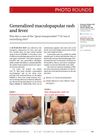
 This case study describes a 29-year-old man who presented with a fever and a generalized maculopapular rash, alongside symptoms like hair loss and joint pain, leading to an investigation into whether his condition was a case of the "great masquerader.
 March 2023 in “International Journal of Biomedicine”
 This review discusses telogen effluvium, including its causes, symptoms, diagnostic methods, and treatment strategies, without presenting new clinical findings.
 January 2023 in “Tehnika”
 This article discusses the challenges in diagnosing and treating autoimmune diseases, emphasizing the need for regenerative medicine approaches to address the root causes rather than just suppressing symptoms.
 June 2022 in “Journal of the turkish academy of dermatology”
 This study from Turkey observed that the COVID-19 pandemic adversely affected dermatology patients, particularly by interrupting treatments and restricting outpatient visits.
 June 2021 in “International Journal of Research in Medical Sciences & Technology”
 This article reviews various causes and treatments for alopecia, including nutritional deficiencies, stress, and hormonal changes, and reports no new clinical results.
 July 2019 in “Acta Scientiae Veterinariae”
 This case report describes a Canadian Husky dog with sertolioma that exhibited dermatological symptoms and aggressive behavior, both of which improved significantly after surgery.
 May 2019 in “Small Animal Dermatology”
 This chapter reviews a case of colour dilution alopecia in a Dobermann, offering insights into the clinical progression, differential diagnoses, and treatment options but reports no new findings.
 January 2019 in “Springer eBooks”
 Acne can appear or persist in adulthood due to hormonal changes, external factors, or substance use, and requires appropriate treatment.
 April 2018 in “Assiut Veterinary Medical Journal/Maǧallaẗ Asyūṭ al-ṭibiyyaẗ al-baytariyyaẗ”
 This study found that fecal zinc concentration can serve as a biomarker for early diagnosis of zinc deficiency in lambs, complementing serum zinc evaluations.

This article reviews the spectrum of connective tissue disorders and discusses the role of autoantibodies, particularly in lupus erythematosus, but reports no new findings.
 January 2014 in “Dermatology Review”
 This review discusses the potential benefits of folate supplementation to mitigate methotrexate side effects in psoriasis patients and reports no new clinical data, suggesting further randomized controlled trials are needed.