 September 2024 in “Advanced medical journal”
 In this study, spironolactone was found to be a safe and effective treatment for acne in women over 25 with abnormal hormone levels, while younger women with normal hormone levels showed less response.
 January 2018 in “Springer eBooks”
 This chapter reviews the skin side effects associated with targeted cancer therapies and emphasizes the importance of collaboration between oncologists and dermatologists without reporting new results.
 57 citations
,
April 2019 in “British journal of dermatology/British journal of dermatology, Supplement”
57 citations
,
April 2019 in “British journal of dermatology/British journal of dermatology, Supplement” This background review discusses alopecia areata, highlighting the role of CD8+NKG2D+ T cells in hair follicle pathogenesis, and notes that the exact mechanisms causing hair loss remain unclear.
 46 citations
,
January 2015 in “Pediatric Rheumatology”
46 citations
,
January 2015 in “Pediatric Rheumatology” This review highlights the importance of recognizing mucocutaneous lesions in diagnosing juvenile-onset systemic lupus erythematosus, noting that these lesions often improve with controlled lupus and can indicate disease activity.
 30 citations
,
April 2021 in “The Journal of Sexual Medicine”
30 citations
,
April 2021 in “The Journal of Sexual Medicine” This guideline provides recommendations for prescribing systemic testosterone to women with hypoactive sexual desire disorder, emphasizing safe dosing, monitoring, and the need for informed consent despite regulatory challenges.
 March 2026 in “RS Global journals (RS Global Sp. z O.O.)”
 This review reports that while finasteride effectively treats androgenetic alopecia and benign prostatic hyperplasia, persistent adverse effects on sexual, psychological, and metabolic health have been noted, highlighting the need for ongoing research and careful risk assessment for safer clinical usage.
 November 2025 in “Frontiers in Nutrition”
 Olive leaf extract may help reduce aging signs in postmenopausal women.
 May 2025 in “The Journal of Rheumatology”
 In this case report, two patients with coexisting systemic lupus erythematous and neuromyelitis optica spectrum disorder achieved remission of SLE activity using an anti-CD19 monoclonal antibody.
 March 2015 in “Polish Journal of Public Health”
 This study found that capillaroscopic patterns varied among patients with systemic scleroderma, psoriasis, psoriatic arthritis, and alopecia, suggesting potential microcirculation disturbances; however, no correlations were observed with serum angiogenic markers.
 5 citations
,
May 2023 in “Frontiers in immunology”
5 citations
,
May 2023 in “Frontiers in immunology” This review discusses how environmental factors like lifestyle, nutrition, and vitamin deficiencies may influence autoimmune diseases such as MS, SLE, and AA, highlighting associations with vitamin D levels and dietary interventions, but notes a lack of conclusive evidence for their roles in disease pathogenesis.
 1 citations
,
December 2022 in “Sultan Qaboos University medical journal”
1 citations
,
December 2022 in “Sultan Qaboos University medical journal” In this study, a machine learning framework incorporating the CatBoost algorithm accurately predicted Systemic Lupus Erythematosus in Omani patients, suggesting potential for early clinical intervention.
 December 2025 in “Cureus”
 In this case report, a 40-year-old woman with systemic lupus erythematosus developed calcinosis cutis, a rare complication characterized by calcified deposits in her legs, requiring surgical intervention and ongoing medical treatment due to infection.
 March 2019 in “Journal of medical science and clinical research”
 This study found that cutaneous manifestations, including specific skin lesions and oral ulceration, are common early indicators of SLE and may aid in its diagnosis and management.
 1 citations
,
May 2025 in “The Journal of Rheumatology”
1 citations
,
May 2025 in “The Journal of Rheumatology” In this case report, two female patients with refractory systemic lupus erythematosus showed significant improvement after treatment with the JAK inhibitor upadacitinib, indicating potential as a promising option for difficult cases, although further research is needed to confirm its broader safety and efficacy.
 March 2026 in “Quality in Sport”
 This review evaluates photobiomodulation's diverse clinical uses in sports and medicine, reporting physiological modulation and potential therapeutic benefits, but emphasizes the importance of precise dosimetry for success.
 May 2025 in “The Journal of Rheumatology”
 This case report describes a 32-year-old Filipino female with mixed connective tissue disease who sequentially developed distinct autoimmune disorders over seven years, highlighting the complexities in diagnosis and management of overlap syndromes.
 May 2025 in “The Journal of Rheumatology”
 This case report describes a 21-year-old woman whose catatonia led to the diagnosis of systemic lupus erythematosus, suggesting catatonia may be an underrecognized manifestation of neuropsychiatric lupus.

This review discusses various management methods for adolescents with PCOS, highlighting lifestyle modifications and pharmaceuticals like metformin and oral contraceptives, but reports no new clinical results; the authors emphasize individualized treatment plans.
 January 2026 in “Frontiers in Immunology”
 This case study details a 44-year-old woman with rheumatoid arthritis and systemic lupus erythematosus who developed hypereosinophilic asthma and was initially treated as ANCA-negative eosinophilic granulomatosis with polyangiitis. Her condition, eventually classified as HASM, underscores the need for evaluating EGPA-spectrum disorders in similar scenarios.
 May 2025 in “The Journal of Rheumatology”
 This case report highlights the importance of trans-esophageal echocardiography in distinguishing Libman-Sacks endocarditis from infective endocarditis in systemic lupus erythematosus patients, guiding appropriate treatment for associated cerebrovascular disease.
 May 2025 in “The Journal of Rheumatology”
 This case report describes a young female with pediatric SLE and latent TB who was found to have gastrointestinal tuberculosis, a rarely recognized and often misdiagnosed condition, highlighting the diagnostic challenges and need for early recognition in such cases.
 May 2025 in “The Journal of Rheumatology”
 In this case report, a 64-year-old woman diagnosed with both NMOSD and SLE showed mild improvement in vision and recovered from thrombocytopenia after treatment with glucocorticoids and Rituximab, highlighting the importance of accurate diagnosis and tailored treatment for overlapping autoimmune disorders.
 13 citations
,
March 2020 in “Genes”
13 citations
,
March 2020 in “Genes” This study found that FGF5-/- rabbits exhibited a significant long hair phenotype by prolonging the anagen phase, suggesting FGF5 acts as a negative regulator of hair growth.
 15 citations
,
March 2021 in “Rheumatology and Immunology Research”
15 citations
,
March 2021 in “Rheumatology and Immunology Research” The CSTAR registry, the largest in China for SLE, reports more than 25,000 patients registered since 2009, detailing demographics, clinical characteristics, and providing data for future studies.
 November 2025 in “Frontiers in Nutrition”
 This study observed that in individuals with stroke, the GNRI has a significant negative association with FI and FISI, mediated by the SII index and OBS, suggesting the importance of anti-inflammatory and antioxidant strategies to reduce FI risk.
57 citations
,
September 2016 in “Arthritis Care & Research” This study found that people with systemic lupus erythematosus consulted primary care more frequently and with specific clinical features before diagnosis, and it developed a risk prediction model that may help in identifying at-risk individuals.
March 2023 in “International Journal of Dermatology” This case report identifies a 51-year-old woman whose nonpruritic urticated rash was an initial presentation of systemic lupus erythematosus, highlighting the importance of comprehensive serological evaluation and biopsy for accurate diagnosis.
 November 2021 in “Chattagram Maa-O-Shishu Hospital Medical College Journal”
 This descriptive study reported that Chronic Cutaneous Lupus Erythematosus was the most prevalent subtype, highlighting distinct clinical and pathological features among Cutaneous Lupus Erythematosus subtypes.
157 citations
,
September 2012 in “Journal of the American Academy of Dermatology” In this retrospective cohort study, researchers reported that 11.5% of patients with DRESS developed significant long-term autoimmune or renal sequelae, with age influencing the type of sequelae observed.
 March 2022 in “The Journal of Family Practice”
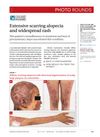
 Following treatment plans is crucial to prevent worsening skin and hair conditions.