 September 2017 in “Journal of Investigative Dermatology”
 This study found that certain circulating miRNAs in skin and plasma may serve as potential biomarkers for distinguishing frontal fibrosing alopecia from control cases, highlighting the need for further validation in larger cohorts.
 480 citations
,
August 2014 in “Nature Biotechnology”
480 citations
,
August 2014 in “Nature Biotechnology” This review discusses manipulating the stem cell niche as a strategy in regenerative medicine to repair damaged tissues, highlighting the potential benefits and challenges but reporting no new results.
 316 citations
,
June 2017 in “Stem Cell Research & Therapy”
316 citations
,
June 2017 in “Stem Cell Research & Therapy” This review covers the potential of SVF and ADSC therapies in regenerative medicine and highlights the challenges of regulation and efficacy, without reporting new clinical results.
 132 citations
,
January 2017 in “International Journal of Molecular Sciences”
132 citations
,
January 2017 in “International Journal of Molecular Sciences” This review explores how adipose-derived stem cells contribute to skin homeostasis and highlights recent advances in their clinical applications in dermatology, but it reports no new clinical results.
 23 citations
,
September 2018 in “Journal of Investigative Dermatology”
23 citations
,
September 2018 in “Journal of Investigative Dermatology” This study reported that treating wounds with a hydrogel from acellular porcine adipose tissue and adipose-derived stem cells may significantly enhance wound healing and regeneration by promoting new adipocyte formation.
 19 citations
,
July 2020 in “Journal of cancer survivorship”
19 citations
,
July 2020 in “Journal of cancer survivorship” This review discusses the unmet supportive care needs of men and women experiencing chemotherapy-induced alopecia and reports no new results, urging healthcare providers to tailor interventions to individual patient needs.
 6 citations
,
January 2023 in “npj regenerative medicine”
6 citations
,
January 2023 in “npj regenerative medicine” This study found that transplanting hair follicles into human scars may remodel fibrotic tissue and reduce scarring by altering collagen structure and decreasing pro-fibrotic factors.
 3 citations
,
November 2018 in “Oncology issues”
3 citations
,
November 2018 in “Oncology issues” This article discusses the emerging field of supportive oncodermatology, which collaborates between oncology and dermatology to address skin-related side effects of cancer treatments, and reports no new clinical results.
 2 citations
,
January 2008 in “Elsevier eBooks”
2 citations
,
January 2008 in “Elsevier eBooks” This chapter discusses the concepts of regeneration and homeostasis, noting that in vertebrates, regeneration is limited to certain tissues like liver, blood, and bone.
 1 citations
,
October 2023 in “bioRxiv (Cold Spring Harbor Laboratory)”
1 citations
,
October 2023 in “bioRxiv (Cold Spring Harbor Laboratory)” This study demonstrated that intraoperative bioprinting using a bioink with human adipose-derived extracellular matrix and stem cells achieved successful reconstruction of full-thickness craniomaxillofacial skin defects in rats, promoting wound closure, adipogenesis, and hair follicle-like structure formation within two weeks.
 4 citations
,
January 2013 in “Inflammation and Regeneration”
4 citations
,
January 2013 in “Inflammation and Regeneration” This review examines recent developments in tooth regeneration therapies using mesenchymal stem cells, but it reports no new clinical findings.
 184 citations
,
December 2018 in “Nature Communications”
184 citations
,
December 2018 in “Nature Communications” This study demonstrated that enhancing human skin constructs with hair follicles through engineered cell organization and vascularization improved hair growth in immunodeficient mice, suggesting potential advances for treating alopecia and chronic wounds.
 83 citations
,
March 2015 in “International Journal of Dermatology”
83 citations
,
March 2015 in “International Journal of Dermatology” This retrospective study found that adipose-derived stem cell-conditioned media increased hair density and thickness in women with female pattern hair loss over 12 weeks, with no severe adverse effects reported.
 81 citations
,
December 2009 in “Journal of Dermatological Science”
81 citations
,
December 2009 in “Journal of Dermatological Science” This review discusses the paracrine effects of adipose tissue-derived stem cells on surrounding cells and tissues, noting their potential therapeutic benefits, but reports no new clinical results.
 33 citations
,
January 2018 in “The International Journal of Developmental Biology”
33 citations
,
January 2018 in “The International Journal of Developmental Biology” This review discusses the dual role of cellular senescence in ageing and tissue repair and suggests potential therapeutic applications, with no new experimental results reported.
 24 citations
,
May 2016 in “Stem Cell Reviews and Reports”
24 citations
,
May 2016 in “Stem Cell Reviews and Reports” This article reviews the roles and mechanisms of stem and progenitor cell migration in adult organs for tissue homeostasis and regenerative medicine, but reports no new experimental results.
 23 citations
,
January 2017 in “Current Rheumatology Reports”
23 citations
,
January 2017 in “Current Rheumatology Reports” This study found that adipocytes in the interfacial white adipose tissue adjacent to fibrotic lesions in systemic sclerosis show unique phenotypes and contribute to the condition's pathogenesis.
 18 citations
,
August 2021 in “PLoS ONE”
18 citations
,
August 2021 in “PLoS ONE” This study found that melanocyte progenitor cells are present in human subcutaneous adipose tissue and may differentiate into mature melanocytes, suggesting potential applications in treating skin diseases and rejuvenation.
 8 citations
,
April 2019 in “ACS Biomaterials Science & Engineering”
8 citations
,
April 2019 in “ACS Biomaterials Science & Engineering” This study found that a new SIS-PEG sponge promoted rapid skin defect healing in mice and showed potential for reconstructing reconstituted skin with regenerated hair.
 1 citations
,
May 2026 in “Nature Communications”
1 citations
,
May 2026 in “Nature Communications” This study demonstrated that CD19-CAR T cell therapy may promote structural regeneration in the skin of systemic sclerosis patients, as evidenced by histological improvements and fibroblast population changes, suggesting its potential for tissue remodeling in fibrotic diseases.
 1 citations
,
January 2019 in “Elsevier eBooks”
1 citations
,
January 2019 in “Elsevier eBooks” This review discusses scaffold materials and properties used in epidermal tissue engineering to promote skin regeneration and reports no new research findings.
 June 2026 in “International Journal of Bioprinting”
 This review found that 3D bioprinting significantly advances skin tissue engineering by enabling the creation of complex, patient-specific skin structures, though technological and regulatory challenges persist, particularly in areas like scalability and physiological mimicry.
 September 2020 in “Kocatepe Veterinary Journal”
 This study suggests that equine adipose tissue stem cells may be a promising option for cellular regenerative therapy in equines due to their differentiation capabilities and proliferation potential, but further molecular characterization is needed.
 101 citations
,
July 2021 in “Nature Communications”
101 citations
,
July 2021 in “Nature Communications” This study reported that 4D-printed, aliphatic polycarbonate-based scaffolds supported adipose tissue engineering by allowing adipocyte infiltration and neovascularization in vivo, indicating potential for effective adipose tissue repair.
 29 citations
,
December 2019 in “Stem Cells Translational Medicine”
29 citations
,
December 2019 in “Stem Cells Translational Medicine” This review discusses the current challenges and strategies in hair follicle bioengineering for treating hair loss and reports no new clinical results; it highlights ongoing hurdles and future directions for developing functional hair regeneration therapies.
 7 citations
,
January 2019 in “Archives of Aesthetic Plastic Surgery”
7 citations
,
January 2019 in “Archives of Aesthetic Plastic Surgery” This piece discusses the benefits of head support during follicular unit extraction in a seated position and reports no new clinical results; the authors suggest an ergonomic support system to improve graft quality.
 June 2026 in “International Science Journal”
 This study reviewed recent advances in regenerative technologies for aesthetic and reconstructive medicine and found that adipose-derived stem cells and platelet-rich plasma are well-established for tissue repair due to their safety and effectiveness, while emerging technologies like exosome-based therapies hold future potential.
 November 2025 in “Frontiers in Nutrition”
 Olive leaf extract may help reduce aging signs in postmenopausal women.
 May 2025 in “The Journal of Rheumatology”
 This case report describes a 32-year-old Filipino female with mixed connective tissue disease who sequentially developed distinct autoimmune disorders over seven years, highlighting the complexities in diagnosis and management of overlap syndromes.
 418 citations
,
September 2012 in “Nature”
418 citations
,
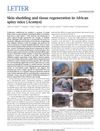
September 2012 in “Nature” This study reports the first instance of skin autotomy in mammals, specifically in African spiny mice, and suggests they may possess a greater regenerative capacity than previously understood, possibly offering insights for regenerative medicine.