 August 2022 in “Turkish journal of veterinary research”
 This study found that dogs with clinical demodicosis experienced oxidative stress, indicated by higher MDA (a marker of oxidation) and lower antioxidant levels, compared to control and post-treatment groups.
June 1998 in “Pathophysiology” This summary offers an overview of selenium's forms, its biological roles, and dietary sources, but reports no specific research findings.
 March 2024 in “Biochimica et biophysica acta. Molecular basis of disease”
 This study found that deferoxamine may protect against sensorineural hearing loss by reducing oxidative stress-induced hair cell death through iron chelation and activation of the Nrf2 signaling pathway in lab models.
January 2025 in “Interdisciplinary Research in Medical Sciences Specialty” This article proposes a novel approach to remodel the microenvironment of radiotherapy-induced skin defects, highlighting the lack of a standardized animal model as a barrier to progress in this field.
 57 citations
,
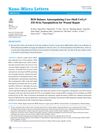
March 2024 in “Nano-Micro Letters”
57 citations
,
March 2024 in “Nano-Micro Letters” In this study, researchers created a core-shell nanozyme, CeO2@ZIF-8/Au, which autonomously regulates ROS levels to efficiently eliminate bacteria, reduce inflammation, and promote wound healing by balancing ROS generation and scavenging in response to environmental conditions.
1 citations
,
March 2019 in “Hygiene and Sanitation” This study observed that exposure to heavy metal salts affected skin and hair morphology in mice, with lead acetate decreasing keratinocyte proliferation and zinc sulfate and sodium dichromate increasing it.
 March 2010 in “International Journal of Cosmetic Science”
 This study found that oxidative treatment with peracetic acid dissociates some disulfide bonds in human hair fibers while maintaining the crystalline structure, suggesting different mechanisms stabilize different regions of intermediate filaments.
March 2026 in “Chemical Engineering Journal” The hydrogel helps heal diabetic wounds by combining antibacterial, antioxidant, and immune-boosting effects.
14 citations
,
July 2015 in “International Journal of Molecular Sciences” This study found that S-Methylmethionine sulfonium (SMMS) enhances cell survival and reduces damage from UVB irradiation in skin cells, suggesting its potential as a cosmetic ingredient for UV protection.
4 citations
,
April 2025 in “Antioxidants” This study found that α-ketoglutarate protected dermal papilla cells from oxidative stress by enhancing the Nrf2 pathway and mitigating cell damage through the ERK/Nrf2 axis.
 January 2013 in “Transactions of the Materials Research Society of Japan”
 In this study, carboxymethylalanyl disulfide keratin was shown to effectively prevent hair damage during repeated bleaching and permanent waving treatments.
29 citations
,
March 2022 in “Biomedicines” This review discusses recent findings on cellular antioxidant responses to oxidative stress and their implications for treating various human diseases but reports no new clinical results.
 25 citations
,
December 2011 in “Surface and interface analysis”
25 citations
,
December 2011 in “Surface and interface analysis” This study reports that hair damage from bleaching is associated with the oxidative cleavage of fatty acid thioester bonds, detectable by measuring the decrease in mass spectrometry peak at m / z 76.
 August 2026 in “Molecules”
 This study found that Eucommia ulmoides bark extract shows potential antioxidant and hair follicle-support properties in vitro and in vivo, but further validation is needed to confirm these effects.
6 citations
,
September 2023 in “International journal of molecular sciences” This review explores the connection between oxidative stress and polycystic ovary syndrome, discussing potential mechanisms and the possible role of antioxidants; it reports no new clinical results.
November 2025 in “OPAL (Open@LaTrobe) (La Trobe University)” In this study, researchers developed a hierarchically engineered microreactor that effectively combats infected wounds by releasing antimicrobials at acidic sites, eradicating MRSA while avoiding resistance, and enhancing tissue repair through immune system modulation.
14 citations
,
September 2016 in “Journal of Photochemistry and Photobiology B Biology” This study observed that mercury-lamp irradiation may cause cleavage of disulfide bonds in keratins of white hair, leading to the formation of thiols in laboratory settings.
 January 2026 in “Beilstein Journal of Organic Chemistry”
 This study developed a metal-free method for synthesizing sulfinimidate esters, showcasing their potential as versatile intermediates for enantioselective bond formation under mild conditions.
January 2026 in “Molecules” In this study, the novel thiol-Michael click perming molecule, MA2-CySS, achieved repeatable perming with reduced oxidative damage, preserving hair keratin's structure while maintaining efficiency comparable to traditional oxidative methods.
This review discusses various environmental pollutants and their potential role in promoting mitochondrial dysfunction, which may contribute to aging-related diseases, cancer, and other adverse health outcomes, but reports no new experimental results.
February 2020 in “The Pharmaceutical Society of Japan”  April 2025 in “International Journal of Cosmetic Science”
 This study found that using 1,4-butylenediamine bismaleimide for hair perming through thiol-Michael click chemistry offers comparable efficiency to conventional oxidative methods, with enhanced durability and reduced damage to hair fibres, preserving mechanical, color, and surface properties.
 2 citations
,
June 2011 in “Journal of clinical and experimental investigations”
2 citations
,
June 2011 in “Journal of clinical and experimental investigations” This study found that oral zinc sulphate appeared effective and safe for treating thallium poisoning, particularly in reducing hair and skin symptoms and mitigating its severe progression in patients.
 3 citations
,
January 2009 in “Sen'i Gakkaishi”
3 citations
,
January 2009 in “Sen'i Gakkaishi” This study found that using a bicomponent reduction system with TGA and DTDG for hair straightening limited hair damage by forming only thiol groups, while a TGA-only system formed more damaging mixed disulfide groups.
December 2024 in “Applied Functional Materials” This study reported that a scalp serum containing Zanthoxylum ailanthoides extract effectively reduced inflammation and increased melanin production in cell assays, while demonstrating stable formulation and microbial safety, suggesting its potential to address scalp issues and enhance scalp health.
 1 citations
,
May 2026 in “Environmental Health Engineering and Management”
1 citations
,
May 2026 in “Environmental Health Engineering and Management” This study found that white poplar wood sawdust effectively removed up to 92.12% of thallium ions from contaminated water in laboratory conditions, demonstrating its potential as a low-cost adsorbent for reducing toxic thallium levels.
 June 2022 in “Research Square (Research Square)”
 In this study, higher DHA/omega-6 fatty acid ratios were linked to increased social impairment in individuals with autism, alongside lower antioxidant enzyme levels and higher markers of lipid peroxidation.
 48 citations
,
July 1996 in “Human & Experimental Toxicology”
48 citations
,
July 1996 in “Human & Experimental Toxicology” Human enzymes can detoxify harmful substances but might also increase their cancer risk.
24 citations
,
November 2015 in “International Journal of Cosmetic Science” This study demonstrated that oxidative stress contributes to dandruff, and using a potentiated ZPT shampoo improves scalp and hair condition by reducing oxidative stress.
1 citations
,
September 2018 in “International journal of research - granthaalayah” This paper introduces a new understanding that the human hair follicle medulla lacks metabolic activity for H2O2 breakdown, indicating that H2O2 decomposition occurs primarily in the cortical areas.