 14 citations
,
May 2013 in “Emerging infectious diseases”
14 citations
,
May 2013 in “Emerging infectious diseases” This case study reports a prolonged incubation period of over 8 years for a C. gattii infection in a cat that likely originated from exposure in California, suggesting the fungus may remain dormant longer than previously thought.
 11 citations
,
August 2019 in “Journal of Molecular Histology”
11 citations
,
August 2019 in “Journal of Molecular Histology” This study found that upregulation of NFIC may enhance proliferation and osteogenic/cementogenic differentiation in rat dental follicle cells.
 10 citations
,
January 2003 in “Journal der Deutschen Dermatologischen Gesellschaft”
10 citations
,
January 2003 in “Journal der Deutschen Dermatologischen Gesellschaft” In this study, hydroxychloroquine treatment in patients with scleromyxoedema led to complete or partial remission of skin symptoms and improved mobility, though it did not affect paraproteinaemia.
 9 citations
,
June 1959 in “Archives of dermatology”
9 citations
,
June 1959 in “Archives of dermatology” This article discusses the importance of integrating clinical observations with laboratory research, emphasizing the need for clinicians to collaborate with researchers to address medical problems.
 7 citations
,
February 2006 in “Clinical and Experimental Dermatology”
7 citations
,
February 2006 in “Clinical and Experimental Dermatology” This clinical report details the case of a 22-year-old man experiencing severe pustular eruptions on his chest and back, which improved after increasing minocycline to 100 mg twice daily.
 5 citations
,
November 2008 in “Advances in Dermatology”
5 citations
,
November 2008 in “Advances in Dermatology” This review discusses advancements in understanding hair cycle and inflammatory alopecias, proposing a standard classification and tiered treatment recommendations, but reports no clinical results.
 3 citations
,
July 2024 in “Cureus”
3 citations
,
July 2024 in “Cureus” In this study, PRP was found to show promise in treating melasma, offering consistent positive outcomes and satisfaction rates among patients, especially when combined with treatments like hydroquinone and tranexamic acid, though further research is needed to confirm long-term efficacy and safety.
 3 citations
,
October 2010 in “Wiley-VCH Verlag GmbH & Co. KGaA eBooks”
3 citations
,
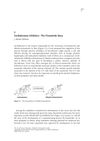
October 2010 in “Wiley-VCH Verlag GmbH & Co. KGaA eBooks” Finasteride safely treats enlarged prostate and male-pattern baldness.
 2 citations
,
January 2015 in “Springer eBooks”
2 citations
,
January 2015 in “Springer eBooks” Environmental factors and exposure to toxins may contribute to male infertility by affecting sperm and hormone function.
 1 citations
,
July 2018 in “Elsevier eBooks”
1 citations
,
July 2018 in “Elsevier eBooks” This article reviews the role of trichoscopy in diagnosing hair weathering conditions like trichorrhexis nodosa and trichoptilosis and suggests treatment by avoiding harmful chemical and physical factors, but it provides no new research findings.
 1 citations
,
April 2010 in “Expert Review of Dermatology”
1 citations
,
April 2010 in “Expert Review of Dermatology” This review discusses primary cicatricial alopecias, detailing their classification, pathogenesis, clinical features, histopathologic findings, and treatment, without reporting new experimental results.
 June 2019 in “Poster presentations”
 This study found that patients with rheumatoid arthritis who discontinued and restarted methotrexate had less improvement in disease activity, more side effects, and more initial comorbidities than those who persisted on the therapy.
 April 2026 in “Journal of Pharmaceutical Innovation”
 In this study, the researchers developed and optimized a curcumin nanocrystal gel to enhance skin permeability, reporting improved dissolution properties and antiproliferative effects on cell lines, suggesting it as a promising topical delivery system.

In this expert consensus, the authors aimed to address the challenges of diagnosing and treating uncommon dermatophytoses due to their distinct characteristics and lack of standardized protocols, by providing scientific guidance on their epidemiology, clinical features, diagnosis, and treatment.
 December 2025 in “MEDFARM Jurnal Farmasi dan Kesehatan”
 This review evaluates existing research on topical metformin for skin conditions, reporting promising outcomes such as improved wound healing, melasma, psoriasis, acne, and alopecia, with innovative formulations like hydrogels and lipid nanoparticles enhancing its cutaneous delivery while minimizing systemic exposure.
This study suggests that using cell-free dexamethasone-primed stem cell media may offer a promising alternative treatment for systemic lupus erythematosus, showing immunomodulatory benefits and therapeutic efficacy in reducing various complications.
 November 2023 in “Linköping University medical dissertations”
 This research presents a comprehensive workflow for producing EMA-compliant autologous keratinocyte-based therapies for wound healing and explores miRNA-mediated regulations in human keratinocytes and adipose-derived mesenchymal stem cells.
 January 2023 in “Åbo Akademi University Research Portal”
 This study found that vimentin is essential for proper wound healing and cell growth by influencing EMT signaling and mTOR activity in mice.
 February 2020 in “Our Dermatology Online”
 A synthetic drug and a South American herb may help treat alopecia areata in Chinese men.
 December 2019 in “University of Malaya Students Repository”
 This study found that Soxhlet extraction is more effective at removing the toxin mimosine from Leucaena leucocephala, and mimosine shows promise as a biodiesel additive due to its antioxidative properties.
 November 2019 in “Journal of Aesthetic Nursing”
 This article reviews the classifications and characteristics of androgenic alopecia and provides no new clinical results; it emphasizes the importance for aestheticians to understand current treatment evidence.
 October 2019 in “International journal of research in dermatology”
 This case report describes two instances of hyper-pigmentation induced by prolonged misuse of Betnovate cream, where cessation and appropriate treatment led to significant improvement within 15 days.
 August 2007 in “Journal of Investigative Dermatology”
 This review covers presentations from the 68th Annual Meeting of the Society of Investigative Dermatology and highlights research advances in dermatology, but reports no new clinical results.
 September 2020 in “International journal of computer science and mobile computing”
 This article discusses the use of low-level laser therapy for hair regrowth in men and women but reports no new clinical results; it reviews types of lasers and evidence from animal and human studies.
 29 citations
,
March 2020 in “Stem Cell Research & Therapy”
29 citations
,
March 2020 in “Stem Cell Research & Therapy” This study suggests that adipose-derived mesenchymal stem cells from diabetic mice can enhance wound healing by promoting fibroblast growth, migration, angiogenesis, and differentiation into fibroblasts and endothelial cells.
 351 citations
,
February 2010 in “Nature Cell Biology”
351 citations
,
February 2010 in “Nature Cell Biology” Basal cell carcinoma mostly starts from cells in the upper skin layers, not hair follicle stem cells.
 87 citations
,
September 2019 in “Nature Communications”
87 citations
,
September 2019 in “Nature Communications” In this study, researchers identified that upon tissue injury in a mouse model, epidermal cells at the wound edge convert to an embryonic-like state with SOX11 and SOX4 playing a central role in modulating epidermal development and cell migration genes.
 76 citations
,
June 2018 in “EMBO Reports”
76 citations
,
June 2018 in “EMBO Reports” This study demonstrates that YAP and TAZ are essential for initiating basal and squamous cell carcinomas in mice, and suggests targeting these pathways could be beneficial for treating skin cancers.
 47 citations
,
March 2017 in “Materials Science and Engineering: C”
47 citations
,
March 2017 in “Materials Science and Engineering: C” In this study, decellularized human amniotic membrane was found to promote wound healing and reduce scar formation in rats with full-thickness skin defects, compared to traditional clinical treatments.
 40 citations
,
August 2014 in “Journal of Nanoparticle Research”
40 citations
,
August 2014 in “Journal of Nanoparticle Research” This study found that biologically synthesized silver nanoparticle gel demonstrated excellent wound healing efficacy in rats, surpassing both marketed formulations and ionic silver.