 32 citations
,
April 2016 in “Journal of Investigative Dermatology”
32 citations
,
April 2016 in “Journal of Investigative Dermatology” This study found that STAT5 activation in the dermal papilla acts as a key switch to trigger anagen entry in postdevelopmental hair follicle cycling.
17 citations
,
October 2005 in “Journal of Biological Chemistry” This study found that Hirosaki hairless rats experience transient activation of STAT5A in the mammary glands during early lactation, involving O-GlcNAc modification rather than Tyr-phosphorylation.
 1 citations
,
January 2019 in “Annals of dermatology/Annals of Dermatology”
1 citations
,
January 2019 in “Annals of dermatology/Annals of Dermatology” STAT5 is crucial for hair growth in 3D cultured human dermal papilla cells.
 1 citations
,
August 2016 in “Journal of Investigative Dermatology”
1 citations
,
August 2016 in “Journal of Investigative Dermatology” This research reported that STAT5 activation in the dermal papilla plays a crucial role in triggering anagen entry during post-developmental hair follicle cycling.
 April 2018 in “Journal of Investigative Dermatology”
 This study found that elevated STAT5 levels are linked to improved hair-inducing capabilities in human dermal papilla cells, and reducing STAT5 impairs hair follicle induction.
20 citations
,
March 2014 in “Molecular Endocrinology” This study suggests that NFIB and STAT5 work together to control cell-specific genetic programs in mammalian tissues, particularly in mammary and hair follicle stem cells.
 April 2018 in “Journal of Investigative Dermatology”
 This study identified a specific subset of macrophages as a key source of oncostatin M, maintaining hair follicle stem cell quiescence during the resting phase in mice, suggesting a potential target for treating hair disorders.
 April 2017 in “Journal of Investigative Dermatology”
 This study found that knocking out STAT5 expression in specific mouse hair follicles after tamoxifen treatment initiated uniform hair growth, highlighting STAT5's role in regulating the hair growth cycle.
 101 citations
,
March 2019 in “Cell Stem Cell”
101 citations
,
March 2019 in “Cell Stem Cell” This study found that Oncostatin M, via JAK-STAT5 signaling, keeps hair follicle stem cells inactive, and its removal leads to hair growth initiation in mice.
 14 citations
,
September 2018 in “The journal of allergy and clinical immunology/Journal of allergy and clinical immunology/The journal of allergy and clinical immunology”
14 citations
,
September 2018 in “The journal of allergy and clinical immunology/Journal of allergy and clinical immunology/The journal of allergy and clinical immunology” In this study, a novel homozygous mutation in the STAT5B gene was identified in a 17-year-old boy with growth hormone-refractory growth failure, severe eczema, and autoimmune disease, suggesting a similarity to known STAT5B deficiency phenotypes.
 4 citations
,
April 2019 in “Cell Stem Cell”
4 citations
,
April 2019 in “Cell Stem Cell” This study found that a specific macrophage subpopulation in the dermis helps maintain hair follicle stem cell quiescence through cytokine-mediated signaling.
1 citations
,
January 2024 in “Pharmaceuticals” The researchers reported that dPGS-PCL as a carrier improved the penetration of tofacitinib in an ex-vivo human skin model compared to free tofacitinib, but did not show significant differences in inhibiting IL-6 and IL-8 during short incubation.
 August 2016 in “Journal of Investigative Dermatology”
 This study found that stimulating olfactory receptor OR2AT4 in human hair follicles with Sandalore® may slow catagen development and reduce keratinocyte apoptosis, suggesting potential implications for hair growth management.
This study found that STAT5 activation and Sox18 are key in regulating hair follicle induction and cycling, while transducing SKPs with active STAT5B improved wound healing by reducing inflammation.
 40 citations
,
April 2014 in “Genes & Development”
40 citations
,
April 2014 in “Genes & Development” The researchers reported that in mice, prolactin signaling in the skin epithelium inhibits hair follicle stem cell activation, promoting quiescence during periods of high serum prolactin like pregnancy and lactation.
4 citations
,
January 2019 in “Evidence-based Complementary and Alternative Medicine” This study found that the Yangyin Qingre Huoxue Prescription effectively reduced the progression of atherosclerosis in mice, with lipid-regulating and anti-inflammatory functions and lower hepatotoxicity than simvastatin.
11 citations
,
January 1983 in “Educational leadership” This study found that NFIB and STAT5 work together to regulate mammary-specific genetic programs in mice, with their combined absence hindering functional alveoli formation.
 21 citations
,
January 2024 in “Science Immunology”
21 citations
,
January 2024 in “Science Immunology” This study developed a technique to limit genetic recombination to regulatory T cells to investigate whether self-tolerance is maintained in non-lymphoid tissues, an area previously not well understood.
 January 2018 in “Figshare”
 This study found that transverse sections of scalp biopsies showing lower anagen:non-anagen hair ratios and presence of pigment casts help differentiate alopecia areata from androgenetic alopecia.
 19 citations
,
September 2019 in “EMBO molecular medicine”
19 citations
,
September 2019 in “EMBO molecular medicine” This study found that deletion of c-Jun and JunB in mouse bulge hair follicle stem cells was sufficient to trigger psoriasis-like skin disease through thymic stromal lymphopoietin signaling.
 July 2022 in “L Endocrinologo”
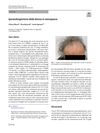
 This case report describes a 77-year-old woman with female pattern hair loss and elevated testosterone levels, who showed no improvement with minoxidil and lacked adrenal tumors on imaging.
 April 2015 in “Archives of disease in childhood”
 This case report describes a British toddler diagnosed with Kwashiorkor, highlighting that such malnutrition-related disorders are rare in developed countries due to strong socio-economic support systems.
 124 citations
,
October 2019 in “Frontiers in Immunology”
124 citations
,
October 2019 in “Frontiers in Immunology” This review discusses the role of the JAK-STAT pathway in autoimmune skin diseases and suggests potential therapeutic benefits of JAK inhibitors, but reports no new experimental results.
 2 citations
,
April 2018 in “Journal of Investigative Dermatology”
2 citations
,
April 2018 in “Journal of Investigative Dermatology” This study suggests that frontal fibrosing alopecia is a highly inflammatory disease involving TH1 and JAK-STAT pathways, without reduced hair keratins, highlighting JAK-STAT signaling as a potential therapeutic target.
 April 2018 in “Journal of Investigative Dermatology”
 This study found that kaempferol increased the proliferation potential of basal epidermal cells in three-dimensional skin models by enhancing integrin expression and altering cell morphology.
 April 2018 in “Journal of Investigative Dermatology”
 This study found that treating human dermal fibroblast cells with ginsenoside Rd increased the expression of mRNA associated with the dermal-epidermal junction, suggesting potential as an anti-aging cosmetic ingredient.
 April 2018 in “Journal of Investigative Dermatology”
 This study found that TGFbeta is a key pathway causing age-related loss of dermal fat's antimicrobial function, suggesting that targeting TGFBR might help restore skin defense against infections in older age.
 April 2018 in “Journal of Investigative Dermatology”
 This study found that the absence of Hes1 in hair follicles delays secondary hair germ activation and shortens the anagen phase, impacting HFSC self-renewal and long-term hair regeneration.
 91 citations
,
December 2017 in “Systems Biology in Reproductive Medicine”
91 citations
,
December 2017 in “Systems Biology in Reproductive Medicine” This meta-analysis found that lower serum SHBG levels are associated with an increased risk of PCOS, and improving SHBG levels through treatment may reduce PCOS complications.
 71 citations
,
May 2007 in “The FASEB journal”
71 citations
,
May 2007 in “The FASEB journal” This study found that human hair follicles express erythropoietin and its receptor, suggesting these follicles may use erythropoietin signaling to modulate apoptosis under stress conditions like hypoxia and chemotherapy.