 10 citations
,
October 2016 in “Journal of Biomolecular NMR”
10 citations
,
October 2016 in “Journal of Biomolecular NMR” This study reported that using 2D solid-state NMR techniques on extensively labeled mouse fur improves resolution in detecting chemical shifts and secondary structure features, potentially aiding the analysis of the effects of commercial or therapeutic treatments on specific amino acids.
 10 citations
,
October 2010 in “International Journal of Andrology”
10 citations
,
October 2010 in “International Journal of Andrology” In this study, co-administration of finasteride with oral testosterone undecanoate in young men with induced hypogonadism had no significant effect on serum testosterone or dihydrotestosterone levels, likely due to TU's unique absorption route.
9 citations
,
January 2011 in “Journal of X-ray science and technology” This study found that perming and bleaching hair result in different distributions of cysteic acid, suggesting distinct damage mechanisms between the two treatments.
9 citations
,
September 1989 in “PubMed” This study observed that selenium levels were lower in Sudanese children with malnutrition compared to healthy German children, with a good correlation between selenium and glutathione peroxidase activity.
7 citations
,
May 2025 in “Journal of Biomedical Science” This study found that KRT6A expression increases after epidermal barrier disruption, worsening skin inflammation in disease conditions, and suggests that targeting KRT6A could offer a new treatment approach for inflammatory skin diseases linked to epidermal dysfunction.
 7 citations
,
October 2011 in “International Surgery”
7 citations
,
October 2011 in “International Surgery” This article reviews the evolution of hair restoration surgery, discusses a specific technique used at the authors' center, and suggests possible future innovations, but it reports no new clinical results.
6 citations
,
June 2024 in “Drug Testing and Analysis” This review reports on the use of nails as an alternative biological matrix to hair for assessing long-term drug consumption, emphasizing that while there are clear differences between nail and hair samples, more standardized research is necessary for definitive conclusions.
5 citations
,
April 2023 in “Journal of Multidisciplinary Healthcare” This study found that chemical elements, particularly hair selenium, may indicate nutritional status in older adults, with variations observed by age and gender.
5 citations
,
December 2022 in “International Journal of Environmental Research and Public Health” This study found that living with Alopecia Areata patients is associated with a poorer quality of life, increased anxiety and depression, and reduced sexual satisfaction among cohabitants.
5 citations
,
September 2009 in “Acta Ophthalmologica” This study found that the Meibomian gland shares structural and cytokeratin composition similarities with hair follicles, and plays a role in hyper-keratinisation observed in obstructive Meibomian gland dysfunction.
4 citations
,
October 2023 in “Plastic & Reconstructive Surgery Global Open” This paper notes the rising trend of cosmetic surgery in Japan and emphasizes the future importance of developing a large-scale database to provide more accurate and beneficial information. Results are not reported.
3 citations
,
January 2025 in “International Journal of Molecular Sciences” In this study, researchers investigated EGCG's spectroscopic properties and its interaction with DPPG lipid, finding that both experimental and theoretical approaches agree on the electronic transitions and reveal an increased absorbance due to molecular interactions.
 3 citations
,
January 2023 in “Physiological Research”
3 citations
,
January 2023 in “Physiological Research” This review suggests that mesenchymal stem cells' therapeutic effects might be due to bioactive substances they release, rather than the cells themselves, highlighting the potential of the MSC secretome as a novel, cell-free therapeutic approach.
3 citations
,
December 1991 in “PubMed” This report describes an infant who was diagnosed with Rothmund-Thomson syndrome, a rare genetic disorder characterized by diverse skin changes, short stature, and other developmental anomalies.
 2 citations
,
January 2019 in “Skin appendage disorders”
2 citations
,
January 2019 in “Skin appendage disorders” This study observed that women with higher educational levels and social status are diagnosed with frontal fibrosing alopecia earlier, resulting in better therapeutic responses.
 2 citations
,
December 2021
2 citations
,
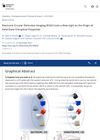
December 2021 This study found that the observed isotropic ss-ECD spectrum of finasteride is influenced by the anisotropy of locally oriented crystals, offering new possibilities for analyzing solid-state chiral materials.
2 citations
,
November 1955 in “Archives of dermatology” In this report of a pediatric alopecia case, cortisone and ACTH gel treatments did not result in significant nail improvement, but there was considerable scalp hair regrowth.
 1 citations
,
August 2023 in “Nature communications”
1 citations
,
August 2023 in “Nature communications” In this study, researchers found that Hdac1 and Hdac2 are crucial for maintaining the quiescence and survival of dermal papilla cells in the hair follicle, regulating the hair cycle by controlling cell-cycle genes and Wnt signaling.
1 citations
,
July 2022 in “JEADV Clinical Practice” This abstract outlines a guide reviewing both FDA-approved and off-label therapies for androgenetic alopecia and proposes treatment algorithms based on scientific research, highlighting a gap in common treatments for this prevalent condition.
 1 citations
,
January 2002 in “Journal of Clinical Dermatology”
1 citations
,
January 2002 in “Journal of Clinical Dermatology” This study analyzed the prevalence and demographic distribution of common skin diseases among 17,039 outpatients at Wonju Christian Hospital from 1995 to 1999, noting a decrease in certain conditions over time.
 1 citations
,
January 2000 in “Journal of pharmacopuncture”
1 citations
,
January 2000 in “Journal of pharmacopuncture” This study confirmed that microneedle therapy systems (MTS) significantly improve hair growth and skin conditions, including acne and acne scars, without serious side effects.
 1 citations
,
December 1992 in “International Journal of Dermatology”
1 citations
,
December 1992 in “International Journal of Dermatology” This study found no significant differences in hormone levels between postmenopausal women with androgenetic alopecia and healthy controls, suggesting potential alternative causes for the condition.
June 2026 in “Frontiers in Immunology” This review highlights the potential for JAK inhibitors to effectively treat inflammatory and autoimmune skin diseases by targeting the JAK-STAT signaling pathway, advocating for an integrated approach to enhance targeted therapy.
 May 2026 in “International Journal of Molecular Sciences”
 This review highlights emerging evidence that chemotherapy-induced alopecia may be driven by immune mechanisms similar to alopecia areata, involving hair follicle immune privilege collapse, and evaluates Janus kinase inhibitors as potential treatments, while cautioning about their immunosuppressive risks in cancer patients.
December 2025 in “Pharmaceutics” This review highlights new perspectives in genomics and epigenomics for skin rejuvenation, comparing innovative strategies like senolytics and DNA repair modulators with classical treatments, and emphasizing the importance of tailoring therapies using individual genomic profiles for personalized anti-ageing approaches.
 December 2024 in “Drug Discoveries & Therapeutics”
 This study investigated using baricitinib-loaded mesenchymal stem cell exosomes injected locally in an alopecia areata mouse model and found that this method improved hair regrowth better than baricitinib or exosomes alone, potentially offering a new therapeutic approach for treating alopecia areata.

This case report presented the successful treatment of a patient with alopecia universalis using tofacitinib.
 November 2022 in “Journal of Investigative Dermatology”
 This study found that a lotion containing specific plant extracts significantly increased the number of anagen hairs and the anagen/telogen ratio in subjects with androgenetic alopecia after three months of use.
 April 2019 in “The journal of investigative dermatology/Journal of investigative dermatology”
 This study used machine learning to identify molecular predictors of drug response in alopecia areata, suggesting a tool for predicting treatment efficacy based on gene signatures.
 April 2016 in “Journal of Investigative Dermatology”
 This study found that inhibiting JAK signaling can unexpectedly trigger hair growth in resting-phase mouse skin, implicating JAK-STAT pathways and oncostatin M in maintaining hair follicle stem cell quiescence.