 2 citations
,
February 2023 in “Research Square (Research Square)”
2 citations
,
February 2023 in “Research Square (Research Square)” In this study, a newly engineered scaffold, PADM-MX-Ag-Si@Dox, demonstrated potential as a multifunctional biomaterial for postoperative melanoma treatment by controlling drug release, enhancing wound healing, and enabling real-time tumor surveillance through temperature, pH, and electrical stimuli.
 April 2025 in “Journal of Skin and Stem Cell”
 This review discusses the potential of polydeoxyribonucleotide (PDRN) for various dermatological treatments and highlights its significant effects on wound healing, anti-aging, acne scars, and hair loss, but emphasizes the need for further clinical studies.

This study found that dermal papilla-like tissues derived from canine adipose stem cells promoted new hair follicle formation and increased vascularization in athymic nude mice.
23 citations
,
August 2022 in “JAMA Dermatology” In this study, patients with alopecia areata indicated a preference for shared decision-making (SDM) with their dermatologists, and those who engaged in SDM reported less decisional regret about their treatment choices.
 34 citations
,
December 2015 in “Neuroscience & Biobehavioral Reviews”
34 citations
,
December 2015 in “Neuroscience & Biobehavioral Reviews” In this study, several compounds, including estrogen and Dutasteride, showed neuroprotective effects on dopaminergic neurons in an MPTP mouse model of Parkinson's disease.
1 citations
,
September 2023 in “Journal of the American Academy of Dermatology” Mini pulse corticosteroid therapy with oral dexamethasone is effective and has fewer side effects for treating extensive alopecia areata.
1 citations
,
January 2024 in “Pharmaceuticals” The researchers reported that dPGS-PCL as a carrier improved the penetration of tofacitinib in an ex-vivo human skin model compared to free tofacitinib, but did not show significant differences in inhibiting IL-6 and IL-8 during short incubation.
 25 citations
,
May 2020 in “Stem Cells Translational Medicine”
25 citations
,
May 2020 in “Stem Cells Translational Medicine” In this randomized clinical trial, the authors reported that adipose-derived stem cell constituent extract topical solution increased hair density and thickness in patients with androgenetic alopecia over 16 weeks compared to placebo.
 8 citations
,
January 2018 in “Journal of the American Academy of Dermatology”
8 citations
,
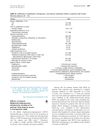
January 2018 in “Journal of the American Academy of Dermatology” This study found that maintenance treatment with diphenylcyclopropenone was associated with a lower relapse rate in alopecia areata patients, highlighting the importance of adjusting treatment intervals post-improvement.
 4 citations
,
August 2021 in “Annals of Translational Medicine”
4 citations
,
August 2021 in “Annals of Translational Medicine” In this study, dihydroartemisinin reduced prostate enlargement and related markers in a rat model of benign prostatic hyperplasia, suggesting its potential as a therapeutic agent.
 May 2014 in “Journal of The American Academy of Dermatology”
 The project aimed to understand how genetic test results affect patients' actions and feelings in dermatology.
 1 citations
,
March 2019 in “Journal of AOAC INTERNATIONAL”
1 citations
,
March 2019 in “Journal of AOAC INTERNATIONAL” New method quickly and accurately measures dexpanthenol in hair products.
 9 citations
,
March 2017 in “JAAD Case Reports”
9 citations
,
March 2017 in “JAAD Case Reports” This case report describes erosive pustular dermatosis of the scalp triggered by contact dermatitis from a glued-on hair piece, marking the first instance of this specific cause.
 April 2025 in “Dermatology Practical & Conceptual”
 This study found that erosive pustular dermatosis of the scalp is often misdiagnosed as squamous cell carcinoma, highlighting the importance of biopsy for accurate diagnosis.
November 2025 in “Indian Journal of Dermatology” This study reports a rare cluster of four patients with ectodermal dysplasia, highlighting its typical dental and dermatological manifestations and the necessity of multidisciplinary management.
1 citations
,
July 2022 in “Frontiers in Pharmacology” This study found that dutasteride may help prevent enteric neuronal damage in an animal model of Parkinson's disease, highlighting its potential for drug repurposing to address neuroinflammation.
 5 citations
,
September 2020 in “Journal of Cosmetic Dermatology”
5 citations
,
September 2020 in “Journal of Cosmetic Dermatology” This study reported that weekly intramuscular dexpanthenol may improve quality of life and satisfaction with hair appearance in women with female pattern hair loss, with no side effects observed.
 January 2015 in “프로그램북(구 초록집)”
 This article reviews the impact of dutasteride on hair growth in androgenetic alopecia, finding it significantly increases hair count and width compared to finasteride and placebo, but reports no new results.
 April 2026 in “Zenodo (CERN European Organization for Nuclear Research)”
 This presentation argues that post-exposure syndromes like PSSD and Long COVID form a coherent group of conditions driven by complex interactions in high-dimensional state spaces rather than singular molecular pathways.
May 2025 in “JEADV Clinical Practice” This study found that using calcipotriene and betamethasone dipropionate cream in a real-world setting significantly improved clinical outcomes and patient quality of life for adults with mild-to-moderate scalp psoriasis, especially among those with higher adherence, demonstrating high treatment satisfaction.

This study observed that chitosan-decorated PS404-b-PAA63 nanoparticles may enhance skin retention and reduce permeation flux of finasteride, suggesting potential for improved transdermal delivery.
 March 1998 in “Journal of dermatological science”
 Diphencyprone initially increases mouse hair growth, then slows it, possibly due to changes in specific protein levels.
 September 2011 in “Clinical Biochemistry”
 The demineralized bone matrix scaffold is better for cell attachment than the mineralized bone allograft.
 11 citations
,
January 2017 in “Evidence-based Complementary and Alternative Medicine”
11 citations
,
January 2017 in “Evidence-based Complementary and Alternative Medicine” This study investigated the effects of the herbal formulation DA-5512 on hair growth, finding that it significantly promotes dermal papilla cell proliferation and stimulates hair growth in mice while showing efficacy and safety in human trials compared to placebo and minoxidil (3%).
65 citations
,
February 2018 in “The Plant Journal” This study found that PLDζ2 and NPC4 enzymes play distinct roles in lipid remodeling and root hair growth in Arabidopsis under phosphate deficiency, influencing root hair density and length in a tissue- and time-specific manner.
13 citations
,
January 2024 in “Journal of Nanobiotechnology” This research reported that a newly developed adhesive wound dressing (SIS/PAA/LAP) demonstrated higher tissue adhesion and burst strength compared to conventional products, and improved tissue repair outcomes in animal models, suggesting potential for enhanced wound healing applications.
 10 citations
,
January 2025 in “Frontiers in Nutrition”
10 citations
,
January 2025 in “Frontiers in Nutrition” This review discusses the potential role of the dietary antioxidant index in reducing the risk of various diseases, including obesity-related conditions, certain cancers, osteoporosis, and mental illnesses, but calls for further studies to confirm these findings.
 May 2012 in “CRC Press eBooks”
 Some patients on anti-TNF drugs experience a type of hair loss called TAIAPA.
8 citations
,
July 2015 in “International Journal of Dermatology” This study reports that a homozygous A1103G mutation in DSG 4 is responsible for localized autosomal recessive hypotrichosis in a 2-year-old Chinese girl, resulting in reduced DSG 4 expression and hair defects.
 9 citations
,
April 2016 in “Australasian journal of dermatology”
9 citations
,
April 2016 in “Australasian journal of dermatology” This study suggests that adding imiquimod to diphenylcyclopropenone treatment significantly improves outcomes for alopecia areata patients who initially do not respond to diphenylcyclopropenone alone.