 January 2026 in “Biomaterials Science”
 This research outlines the characteristics and potential applications of a GMP-compliant sodium polyphosphate formulation (Na-polyP-GMP) in cellular energy storage and ATP-dependent processes like skin regeneration and wound healing.
 December 2025 in “Universal library of medical and health sciences.”
 This study analyzes contemporary theories and practices to understand key factors influencing the development of the examined phenomenon, proposing trends and practical applications for researchers and practitioners, while acknowledging study limitations and suggesting future research directions.

This study discusses a natural hair care shampoo formulated with ingredients such as Ritha, aloe Vera, and Amla fruit, designed to clean hair, eliminate oil and dandruff, and promote strength, blackness, and growth.
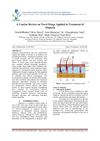
This review highlights new treatment options for alopecia, including JAK inhibitors and Wnt pathway-targeting therapies, which may offer better efficacy and safety than traditional treatments like minoxidil and finasteride, but notes the need for more research on long-term effects and patient-specific responses.
 June 2021 in “Journal of emerging technologies and innovative research”
 This article reviews the potential hair-protective effects of Onion and Aloe vera against damage from hair dyes but reports no new experimental results.
 February 2020 in “Journal of emerging technologies and innovative research”
 This study developed a multipurpose herbal hair emulgel incorporating aloe vera, tea extract, coconut oil, and castor oil, aimed at promoting hair growth and controlling dandruff, hair fall, and greying. Evaluation found the product to be stable.
 November 2017 in “Asian journal of pharmaceutical and clinical research”
 This study predicted that 6-hydroxy genistein, coreximine, and scoulerine from Dadap leaves may act as anti-alopecia agents by interacting with JAK2, but further in-vivo testing is needed.
 67 citations
,
January 2022 in “Theranostics”
67 citations
,
January 2022 in “Theranostics” This review highlights how advanced nanocarrier and microneedle-based transdermal drug delivery strategies can potentially improve the treatment of skin diseases by enhancing site-specific drug delivery, increasing skin penetration, and reducing systemic toxicity compared to conventional methods.
 14 citations
,
January 2024 in “Theranostics”
14 citations
,
January 2024 in “Theranostics” In this study involving a mouse model, researchers reported that intranasal delivery of protein-based CRISPR/dCas9 nanoparticles targeting the gene *Sirt1* reduced cerebral edema and increased survival following ischemic stroke, with no significant toxicity observed.
 13 citations
,
October 2017 in “Bioorganic & Medicinal Chemistry”
13 citations
,
October 2017 in “Bioorganic & Medicinal Chemistry” This study found that compound 3, a tetrahydropyridoindole carboxymethylated at position 5, significantly inhibited sorbitol accumulation in both rat eye lenses and tissues affected by diabetes, indicating its potential as a lead compound for ALR2 inhibition.
 10 citations
,
January 2024 in “Polymer Chemistry”
10 citations
,
January 2024 in “Polymer Chemistry” This review discusses the design and advances of lipid–polymer hybrid nanoparticles as promising delivery systems for genome editing strategies, highlighting their potential in biomedical applications.
 5 citations
,
August 2018
5 citations
,
August 2018 This paper highlights the growing scientific interest in plant extracts for cosmetics due to their potential benefits, including antioxidant, antimicrobial, and protective properties, while emphasizing the need for quality and safety assessment to mitigate possible adverse reactions.
 1 citations
,
February 2025 in “South Asian Research Journal of Pharmaceutical Sciences”
1 citations
,
February 2025 in “South Asian Research Journal of Pharmaceutical Sciences” This study used in-silico molecular docking to evaluate the antidiabetic potential of Eclipta alba leaf flavonoids, finding that compounds like apigenin, syringic acid, and vanillic acid effectively bind to the target protein aldose reductase, suggesting a promising inhibitory action.
 1 citations
,
January 2024 in “Theranostics”
1 citations
,
January 2024 in “Theranostics” This source reviews the role of exosomes in regenerative medicine, highlighting their ability to mediate cell communication and transport biomolecules to enhance or impair biological functions, with potential applications in tissue repair and regeneration.
 1 citations
,
January 2023 in “International journal of all research education and scientific methods”
1 citations
,
January 2023 in “International journal of all research education and scientific methods” This review highlights how forensic drug analysis in hair using modern instrumental techniques offers advantages such as easy sample collection and chronological tracking of drug use, emphasizing its value for law enforcement and other applications.
 January 2026 in “International Journal of All Research Education & Scientific Methods”
 This review highlights recent advancements in understanding and treating alopecia, emphasizing genetic and immune factors involved in different forms, and discusses emerging therapies such as gene-editing and exosome-based treatments, though achieving complete hair regrowth remains a challenge.
 November 2025 in “Nanoscale Advances”
 This review highlights the potential of inorganic nanoparticle-based scaffolds as innovative tools for advanced wound care, emphasizing their ability to provide antimicrobial action and regenerative support, while also discussing fabrication strategies and challenges in optimizing their clinical application.
 August 2025 in “International Journal of Applied Pharmaceutics”
 This study developed a stable nanoemulsion-based hair serum containing M. oleifera seed oil, which maintained its physical characteristics and reduced the oil's sticky texture, making it more suitable for hair loss treatment compared to traditional formulations.
 June 2025 in “International Journal for Research in Applied Science and Engineering Technology”
 This study evaluated the physicochemical properties of an herbal shampoo formulated with natural ingredients like hibiscus and henna and compared it to a common marketed shampoo, finding it effectively replaced some chemical components with safer alternatives while maintaining similar characteristics.
 January 2025 in “RSC Pharmaceutics”
 Smart microneedles using advanced tech could improve psoriasis treatment.
 60 citations
,
January 2023 in “Biomaterials Science”
60 citations
,
January 2023 in “Biomaterials Science” This study reviews recent advancements in microneedles made from PLGA, highlighting their use in delivering vaccines, drugs, and proteins through the skin with minimal invasiveness, and discusses the challenges and future potential of these delivery systems.
 37 citations
,
December 2024 in “Theranostics”
37 citations
,
December 2024 in “Theranostics” In this study, a newly developed nanoparticle-loaded hydrogel wound dressing demonstrated significant antibacterial, antioxidant, anti-inflammatory, and proangiogenic activities, effectively reducing pain and promoting healing in a murine burn wound model while preventing infection by *Staphylococcus aureus*.
 2 citations
,
June 2021 in “Notulae Botanicae Horti Agrobotanici Cluj-Napoca”
2 citations
,
June 2021 in “Notulae Botanicae Horti Agrobotanici Cluj-Napoca” This review examines the role of root hair specification and nutrient acquisition in plants, emphasizing the need for further genetic research to understand the mechanisms influencing root hair development and growth.
 2 citations
,
August 2019 in “International Journal of Applied Pharmaceutics”
2 citations
,
August 2019 in “International Journal of Applied Pharmaceutics” This study explored the use of SOD-loaded niosomes as carriers to enhance the delivery of superoxide dismutase into hair follicles on guinea pig skin, finding that niosomes improved SOD penetration and preservation compared to free SOD, suggesting their potential as effective delivery vehicles.
 1 citations
,
August 2025 in “Journal of Neonatal Surgery”
1 citations
,
August 2025 in “Journal of Neonatal Surgery” This study evaluated a new nanogel formulation containing Ciclopirox Olamine for treating cutaneous candidiasis, finding that the optimized version offered improved skin penetration, sustained drug release, and effective antifungal action against Candida albicans compared to conventional treatment.
 1 citations
,
February 2025 in “Notulae Scientia Biologicae”
1 citations
,
February 2025 in “Notulae Scientia Biologicae” In this study, researchers developed an in-situ gel formulation of antibacterial Levofloxacin for the eye, which showed prolonged drug release, increased residence time, and effective antibacterial action, suggesting it may be a safe and effective ocular delivery system for antibiotics.
 January 2026 in “RSC Advances”
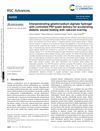
 This study found that the natural polymer-based hydrogel Gel/SA@PL released growth factors in a controlled way, which enhanced tissue regeneration and minimized scarring in the healing of diabetic wounds.
 November 2025 in “International Journal of Zoology and Applied Biosciences”
 In this review, recent innovations in hair transplantation, such as AI-assisted graft selection, robotic systems, stem cell therapy, and advanced drug delivery techniques, are reported to enhance hair density and thickness for more natural results and higher patient satisfaction by addressing limitations of traditional methods.
 November 2025 in “Frontiers of Agricultural Science and Engineering”
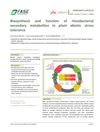
 This study observed that rhizobacterial strain RT3 significantly improved drought tolerance in lettuce by increasing survival rates and fresh biomass after rewatering, with metabolites such as proline and glycine enhancing stress resilience.
 January 2025 in “New Journal of Chemistry”
 In this study, researchers developed hollow mesoporous organosilica nanoparticles and confirmed their synthesis using IR spectroscopy, then evaluated the nanoparticles for endocytosis and biocompatibility, although specific results of these tests are not reported in the abstract.