September 2016 in “Journal of dermatological science” This study found that hair-follicle-associated-pluripotent (HAP) stem cells can be cryopreserved for future use in nerve and spinal cord repair, with human trials being planned.
11 citations
,
March 2006 in “Journal of medical ethics” This report describes a case of twins with alopecia areata totalis who did not respond to corticosteroids but showed significant hair growth with platelet rich plasma injections, suggesting PRP's potential as an alternative treatment.
August 2017 in “Otolaryngology” Using a buffering solution and applying Platelet-Rich Plasma improves hair graft survival in hair restoration surgery.
 November 2023 in “Research Square (Research Square)”
 In this study, researchers used NIR-II fluorescence imaging to track the survival and migration of EPI-NCSCs in rat models, finding that these stem cells aided in repairing facial nerve defects when applied via acellular nerve allografts.
1 citations
,
March 2025 in “Journal of Cosmetic Dermatology” This case report describes promising results in treating poliosis circumscripta with exosomes and fractional picosecond laser, showing significant hair regrowth and repigmentation, though spontaneous repigmentation cannot be ruled out.
1 citations
,
February 2025 in “Journal of the Neurological Sciences” This study suggests that BTP levels in cerebrospinal fluid might help diagnose CIDP and predict therapy response but require validation in larger cohorts.
 January 2022 in “Cellular and Molecular Biology”
 This study found that adding Triamcinolone to the local anesthetic solution and administering PRP sessions significantly improved hair transplantation outcomes, with gene expression indicating SRD5A2's role in transplant success.
18 citations
,
June 2011 in “Cell stem cell” Two studies in Cell Stem Cell reported that human and mouse somatic cells can be reprogrammed into induced pluripotent stem cells using microRNAs, eliminating the need for ectopic protein expression.
 February 2026 in “Zenodo (CERN European Organization for Nuclear Research)”
 This study reports that spironolactone, a potassium-sparing diuretic with antiandrogenic activity, effectively improves hair density, reduces shedding, and stabilizes symptoms in female pattern hair loss, though symptoms often recur after discontinuation, suggesting the need for sustained therapy.
May 2025 in “Dermatology Reports” This report describes a successful case where repeated autologous lipostructure followed by hair transplantation improved scarring alopecia in a patient with morphea en coup de sabre, suggesting potential benefits from this combined approach.
 9 citations
,
June 2021 in “International Journal of Pharmaceutics”
9 citations
,
June 2021 in “International Journal of Pharmaceutics” This study found that polymeric micelle nanocarriers delivered pharmacologically relevant amounts of spironolactone to the epidermis and upper dermis, with higher delivery to pilosebaceous units, suggesting potential for treating glucocorticoid-induced impaired wound healing and pilosebaceous androgen-related skin diseases.
 April 2019 in “The journal of investigative dermatology/Journal of investigative dermatology”
 This study used machine learning to identify molecular predictors of drug response in alopecia areata, suggesting a tool for predicting treatment efficacy based on gene signatures.
 19 citations
,
November 2023 in “npj Regenerative Medicine”
19 citations
,
November 2023 in “npj Regenerative Medicine” This study found that synthetic melanin particles applied topically in mouse injury models improved wound healing, showing potential as a therapy for accelerated healing, including in human skin explants.
 May 2020 in “Research Square (Research Square)”
 This study found that hair follicle stem cells, when transplanted in a rat model of ischaemic stroke, migrated to affected areas, expressed neuron-specific markers, and reduced infarct volume, suggesting potential therapeutic benefits.
3 citations
,
March 2024 in “Journal of the American Academy of Dermatology” Low-dose naltrexone helps improve symptoms and stabilize frontal fibrosing alopecia and lichen planopilaris.
 4 citations
,
April 2000 in “Plastic and Reconstructive Surgery”
4 citations
,
April 2000 in “Plastic and Reconstructive Surgery” The document suggests fixing common hair transplant issues by combining artistic principles with plug reduction, recycling, and additional micrograft transplantation, while also potentially using arnica to help with post-operative swelling.
 6 citations
,
December 2023 in “Lancet. Infectious diseases/The Lancet. Infectious diseases”
6 citations
,
December 2023 in “Lancet. Infectious diseases/The Lancet. Infectious diseases” This study found that treatment with the synbiotic SIM01 significantly alleviated multiple symptoms of post-acute COVID-19 syndrome compared to placebo, suggesting potential management benefits through gut microbiome modulation.
In this study, rat vibrissa follicles transplanted into mice demonstrated survival, partial sympathetic nerve reinnervation, and increased norepinephrine levels 37 days post-implantation, suggesting potential for hair growth despite not returning to normal nerve function.
3 citations
,
December 2023 in “Pain Medicine” This case report described how peripheral nerve stimulation provided significant pain relief and reversal of dermatological symptoms for a female patient with complex regional pain syndrome after conventional treatments failed.
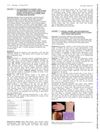
This case report details a child with a specific TNFAIP3 mutation manifesting as a severe SLE/SS phenotype, expanding the known phenotype for this genetic variant.
 3 citations
,
July 1990 in “Acta dermato-venereologica”
3 citations
,
July 1990 in “Acta dermato-venereologica” This case report describes hair regrowth in a 73-year-old male who had been bald for decades, which might be associated with the antiandrogenic effects of spironolactone.
February 2020 in “Int J Biologicals” This study found that super-activated platelet lysate increased hair follicle density in a mouse model of androgenetic alopecia, outperforming platelet-rich plasma and platelet lysate.
 1 citations
,
March 2022 in “PubMed”
1 citations
,
March 2022 in “PubMed” This review discusses the applications of platelet-rich plasma for non-scarring alopecia, including AGA and AA, but reports no new clinical results.
 1 citations
,
May 2022 in “Frontiers in Psychiatry”
1 citations
,
May 2022 in “Frontiers in Psychiatry” In this case study, a 33-year-old female with neuropsychiatric systemic lupus erythematosus experienced hair regrowth with no further loss after receiving a combination of systemic and local treatments.
17 citations
,
May 2021 in “Journal of Cell Science” In this study, the researchers discovered that specific polyamine depletion enhances stemness in hair follicle stem cells through a mechanism independent of mRNA translation.
 1 citations
,
January 2016 in “Journal of gastrointestinal & digestive system”
1 citations
,
January 2016 in “Journal of gastrointestinal & digestive system” The researchers reported that the SAGI PGP procedure resulted in excess weight loss of over 90% in the first year and normalized blood sugar levels without medication among diabetic patients by the first month post-operation.
April 2023 in “Journal of Investigative Dermatology” RNase L suppresses regeneration in mammals.
 July 2014 in “Plastic and Reconstructive Surgery”
 The document concludes that rib-sparing techniques in breast reconstruction have limited benefits, sentinel lymph node biopsy is needed for desmoplastic melanoma, certain hair preservation methods improve graft survival, partial turbinectomy effectively reduces nasal obstruction, nipple shields with irrigation may reduce capsular contracture, and thicker malignant melanomas have a higher risk of non-skin cancers.
 July 2014 in “Plastic and Reconstructive Surgery”
 The document concludes that rib-sparing techniques in breast reconstruction have limited benefits, sentinel lymph node biopsy is needed for desmoplastic melanoma, certain hair preservation methods improve graft survival, partial turbinectomy effectively reduces nasal obstruction, nipple shields with irrigation may reduce capsular contracture, and thicker malignant melanomas have a higher risk of non-skin cancers.