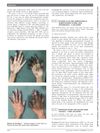
In this case report, a 19-year-old woman with systemic lupus erythematosus experienced significant improvement in neuropsychiatric symptoms, including psychosis and seizures, following treatment with high-dose corticosteroids, immunosuppressants, and antidepressants.
September 2022 in “World Journal of Advanced Research and Reviews” This study introduced a Density-Calibrated Airtouch Protocol (DCAP) that suggests customizing the Airtouch hair coloring technique based on client hair density to optimize color blend, pigment longevity, and hair health.
January 2022 in “Exclusive Real World Evidence Journal” This case report describes a 22-year-old female with systemic lupus erythematous whose primary symptom was vasculitic polyneuropathy, characterized by polyneuropathy and various positive autoimmune markers.
 March 2020 in “Poster presentations”
 This case report describes a patient with unrecognized systemic lupus erythematosus, who experienced myocarditis, polyneuropathy, and pericarditis, and recovered following cardiac support and medication.
 September 2018 in “Value in Health”
 In this study, researchers found that in Germany, orphan drugs with a phase III study and no comparable treatments available tend to receive higher HTA scores. There was no significant correlation between HTA scores and orphan drug prices or discount rates.
January 2014 in “Journal of Guangdong Pharmaceutical University” This study found that an acne complex animal model using rabbits showed more pronounced clinical symptoms and measured changes compared to the traditional Kligman model.
 4 citations
,
May 2017 in “Pediatric Dermatology”
4 citations
,
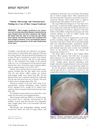
May 2017 in “Pediatric Dermatology” This case report details a 3-year-old girl with short anagen syndrome, characterized by short, sparse hair, where X-ray microanalysis showed her hair's main bioelements were normal.
May 2025 in “Journal of Traditional Chinese Medical Sciences” In this study, S. chamaejasme extract applied topically to mice enhanced hair growth dose-dependently by increasing hair follicle size and dermal thickness, while upregulating mRNA expression related to hair growth, suggesting its potential as a hair growth treatment.
 October 2024 in “Journal of the Endocrine Society”
 This case report discusses a Korean woman who experienced recurrent episodes of painless thyroiditis over 22 years, highlighting the challenges in management due to a lack of established guidelines.
7 citations
,
April 2000 in “Mammalian Genome” This study identified a new mutation in SELH/Bc mice causing distinctive whisker and body hair abnormalities, mapped near the type I keratin cluster on chromosome 11.
14 citations
,
September 1999 in “Mammalian genome” In this study, researchers generated a mouse mutation called scraggly, related to hair and skin defects, and mapped it to a genetic location on mouse Chromosome 19 distinct from similar mutations.
 13 citations
,
November 2012 in “PLoS ONE”
13 citations
,
November 2012 in “PLoS ONE” This study identified a novel recessive mutation in mice causing lethal congenital lamellar ichthyosis, with skin and hair follicle alterations similar to human congenital ichthyoses, linked to a specific genetic defect affecting Fatp4.
11 citations
,
October 2002 in “Genetics” This study mapped a spontaneous mouse hair mutation, "hague," to keratin genes on chromosome 15 but found no gene mutations in hague mice.
 19 citations
,
November 1971 in “Clinica Chimica Acta”
19 citations
,
November 1971 in “Clinica Chimica Acta” In this study, the researchers found that the absence of the NFI-C transcription factor delayed the hair growth cycle in mice by affecting key gene expressions and signaling pathways.
 May 2014 in “Clinical and Experimental Dermatology”
 A 70-year-old woman with a rare skin condition improved after treatment with topical steroids and acitretin.
This study mapped the curly mutation in mice to a specific region on chromosome 11, identifying it as a candidate model for studying human genetic hair disorders.
11 citations
,
February 1982 in “Mutation Research/Fundamental and Molecular Mechanisms of Mutagenesis” This study reports that treatment with X-rays or procarbazine induced dose-dependent mutations in melanocytes in mouse hair follicles, showing similar mutation rates to previous methods.
1 citations
,
August 2020 This study found that mutations affecting hair keratin expression on Chromosome 15 in mice may cause altered hair and skin features similar to other known mouse mutations.
September 1997 in “Clinical and Experimental Dermatology” 28 citations
,
February 2010 in “Experimental Dermatology” This study concluded that the frizzy mutation in mice is linked to a T to A transversion in Prss8 and is orthologous to the 'hairless' mutation in rats.
11 citations
,
December 2017 in “Orphanet Journal of Rare Diseases” This study found a previously unreported ST14 gene mutation in a patient with ichthyosis-hypotrichosis syndrome, highlighting novel skin and hair characteristics and emphasizing the critical role of the Asp482 amino acid in matriptase activation.
28 citations
,
June 1995 in “The Journal of Dermatology” This study reports that flaky skin mice exhibit skin and nail features that closely resemble human psoriasis vulgaris, suggesting they may serve as a natural model for this condition.
40 citations
,
September 2004 in “Biomacromolecules” In this study, molecular dynamics simulations indicated that the Glu413Lys mutation in human hair keratin significantly affects the stability of coiled coil structures, whereas Glu413Asp showed no impact on stability.
12 citations
,
July 2004 in “Molecular genetics and genomics” This study identifies a new mutation in the Scd1 gene in a strain of Kunming mice, causing skin and hair defects with the mildest impact among similar mutations.
January 2000 in “The Mouseion at the JAXlibrary (Jackson Laboratory)” This study identified a new mouse mutation associated with noninflammatory proliferative skin disease and hair abnormalities, drawing parallels to human conditions like Netherton's syndrome and monilethrix.
 December 2021 in “Molecular genetics and genomics”
 This study found that two unrelated domestic shorthair cats had novel DSG4 gene mutations causing defective hair shafts, representing the first report of pathogenic DSG4 variants in domestic animals.
7 citations
,
August 2008 in “Immunogenetics” A gene mutation in mice causes increased mast cells and disorganized hair follicles in their skin.
27 citations
,
July 1997 in “PubMed” This study suggests that the harlequin ichthyosis mouse model closely resembles human type 2 harlequin ichthyosis, indicating its potential as a useful model for studying the human condition.
 5 citations
,
July 2022 in “Orphanet journal of rare diseases”
5 citations
,
July 2022 in “Orphanet journal of rare diseases” This study found that RSPO1 mutations in patients with a 46XX disorder of sexual development contribute to impaired skin integrity and increased risk of squamous cell carcinoma in areas subject to friction.
66 citations
,
October 2002 in “Human molecular genetics online/Human molecular genetics” This study found that a nonsense mutation in the Cst6 gene of mice leads to severe skin and hair abnormalities, suggesting that cystatin M/E is crucial for epidermal function and viability.