October 2025 in “Clinical and Experimental Pediatrics” In this case report and literature review, researchers identified a novel mutation in the CLDN1 gene linked to neonatal ichthyosis-sclerosing cholangitis syndrome and found that its phenotype varies widely, suggesting a multidisciplinary approach is crucial for management.
 26 citations
,
August 2016 in “ACS Applied Materials & Interfaces”
26 citations
,
August 2016 in “ACS Applied Materials & Interfaces” In this study, cell membrane remodeling with a thermoresponsive boronic acid copolymer was shown to rapidly form spheroids from cancer or cardiac cell lines under standard conditions, promising advances in tissue engineering.
January 2009 in “Xumu shouyi xuebao” In this study, researchers successfully established a stable transgenic sheep fibroblast cell line containing an artificially synthesized spider dragline silk protein gene.
2 citations
,
October 2024 in “Phenomics”  2 citations
,
December 2019 in “Al-ʻulūm al-ṣaydalāniyyaẗ”
2 citations
,
December 2019 in “Al-ʻulūm al-ṣaydalāniyyaẗ” This study found no evidence that CTLA-4 gene polymorphism (rs733618) plays a role in polycystic ovarian syndrome among the participants.
 June 2026 in “bioRxiv (Cold Spring Harbor Laboratory)”
 This study found that inhibiting the interaction between HOTAIR and EZH2 can block pro-fibrotic gene expression in fibroblasts and interfere with tissue remodeling in systemic sclerosis patient skin.
 January 2025 in “Journal of Materials Chemistry B”
  April 2023 in “Research Square (Research Square)”
 This study found that melatonin-mediated lncRNA018392 accelerated cell proliferation and inhibited apoptosis in cashmere goat skin fibroblasts by upregulating the expression of the nearby gene CSF1R.
32 citations
,
August 2020 in “American Journal Of Pathology” This study reports that in ovarian high-grade serous carcinoma, overexpressed S100A4 likely promotes epithelial-mesenchymal transition and cancer stem cell properties, affecting tumor behavior through its interaction with NMIIA and mutant p53.
 July 2021 in “Advances in laboratory medicine”
 This article reviews differential diagnosis approaches for 46,XY DSD, proposing a diagnostic algorithm focused on biochemical and genetic data, without presenting new clinical results.
 May 2024 in “Animal genetics”
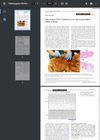
 The researchers investigated a Maine Coon cat with suspected classical Ehlers-Danlos Syndrome and discovered a heterozygous deletion in the COL5A1 gene, underscoring the value of whole-genome sequencing for precise veterinary diagnostics.
4350 citations
,
May 2012 in “Arthritis & Rheumatism” This study found that the new SLICC classification criteria for systemic lupus erythematosus were more sensitive and resulted in fewer misclassifications than the current ACR criteria, although they had lower specificity.
 March 2018 in “Suez Canal University Medical Journal”
 In this study, NKG2D polymorphism was not linked to increased susceptibility to systemic lupus erythematosus among Egyptian patients living in the Suez Canal area.
1 citations
,
January 2013 in “Lung India” This letter discusses how differentiating features in clinical and radiological findings can help distinguish pulmonary Langerhans cell histiocytosis and Birt-Hogg-Dube syndrome from lymphangioleiomyomatosis, noting overlapping symptoms but specific distinctive traits.
This study found that the Arabidopsis cation chloride cotransporter (CCC1) is crucial for regulating pH and processes in the trans-Golgi-network/early endosome, impacting plant growth and stress responses.
130 citations
,
January 2000 in “Nature biotechnology”  68 citations
,
March 2008 in “Experimental dermatology”
68 citations
,
March 2008 in “Experimental dermatology” This study introduced a novel in vitro assay for tracking melanosome transfer between melanocytes and keratinocytes, facilitating the quantification of melanin transfer and supporting the role of filopodia as a conduit.
 18 citations
,
April 2014 in “Stem cells”
18 citations
,
April 2014 in “Stem cells” The researchers reported that minor salivary gland stem cells exhibit stem cell characteristics and respond to tobacco-derived carcinogens, implicating the transforming growth factor beta pathway in their maintenance.
 1 citations
,
September 2025 in “Journal of Zhejiang University SCIENCE B”
1 citations
,
September 2025 in “Journal of Zhejiang University SCIENCE B” This abstract outlines the current understanding of cutaneous squamous cell carcinoma (cSCC), identifying it as the second most common non-melanoma skin cancer with risk factors like UV exposure and immunosuppression. It highlights cSCC's potential to metastasize and become fatal, affecting 2%-5% of in situ cases.
This study found that deleting the Mad2l1 gene in mice leads to rapid onset of acute lymphoblastic leukemia and liver cancer due to induced chromosomal instability.
May 2021 in “bioRxiv (Cold Spring Harbor Laboratory)” This study introduced rPanglaoDB, an R package that facilitates the integration of public scRNA-seq datasets to effectively characterize rare cell types, exemplified by generating the first unbiased transcriptome profile of fibrocytes.
August 2025 in “Marine Drugs” This study evaluated a new composite material made from PLA, ALG, ZnS, and HT for blood-contacting applications, finding it improved surface characteristics and displayed anticoagulant properties and high biocompatibility with no genotoxic effects on blood and skin cells.
 3 citations
,
September 2022 in “The journal of investigative dermatology/Journal of investigative dermatology”
3 citations
,
September 2022 in “The journal of investigative dermatology/Journal of investigative dermatology” This study found that enhanced wound healing in oral mucosa involves a SOX2-regulated transcriptional network which includes increased expression of keratin K75, and interaction of K75 with the LINC complex may play a crucial role in promoting rapid wound repair.
 June 2023 in “International Journal of Research in Medical Sciences”
 This case report describes the first confirmed instances of X-linked adrenomyeloneuropathy/adrenoleukodystrophy in two brothers from Bangladesh, noting their progressive neurological symptoms, MRI findings, and differing disease outcomes over several years of observation.
 5 citations
,
March 2019 in “Journal of lipid research”
5 citations
,
March 2019 in “Journal of lipid research” This study reports new fluorogenic ceramidase substrates and highlights RBM14C24:1 as an efficient substrate for neutral ceramidase, while RBM15C18:1 is the best probe for measuring ACER1 and ACER2 activities, potentially aiding high-throughput screening for ceramidase inhibitors.
 November 2022 in “Journal of the Endocrine Society”
 This case report highlights a novel NR5A1 gene variant associated with a severe 46,XY disorder of sex development, stressing the importance of genetic screening in similar cases.
December 2021 in “OPAL (Open@LaTrobe) (La Trobe University)” This study found that knocking out the Hars2 gene in mouse cochlear hair cells led to mitochondrial dysfunction and ROS stress, resulting in progressive hearing loss and differential effects on inner and outer hair cells.
3 citations
,
October 2020 in “UNC Libraries” This article discusses the SLICC's revision and validation of the ACR SLE classification criteria to enhance clinical relevance and integrate recent immunological insights, but does not report new clinical results.
 April 2024 in “arXiv (Cornell University)”
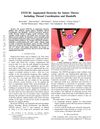
 In this study, the researchers developed an advanced robotic system called STITCH for performing suture tasks, which completed an average of 2.93 sutures autonomously and 4.47 sutures with human intervention in physical trials.
 April 2017 in “Journal of Investigative Dermatology”
 This case study reports that a heterozygous missense GJA1 mutation, p.Gly138Ser, in a 2-year-old boy with oculodentodigital syndrome primarily resulted in syndactyly, fifth finger hypoplasia, and hypotrichosis, without neurological or craniofacial abnormalities.