 May 2024 in “Open Repository of the University of Porto (University of Porto)”
 This report details the experiences gained during a pharmacy internship in both hospital and community settings, highlighting the preparation of sildenafil suspensions for hospital use, patient consultations on autoimmune conditions, and educational material creation in community pharmacy, alongside insights into diabetes and ADHD treatments.
 June 2023 in “Frontiers in Cardiovascular Medicine”
 This review identified two promising therapeutic targets for drug repurposing to treat refractory angina in patients with angina pectoris without obstructive coronary artery disease: endothelin-1 receptor blockers and soluble guanylate cyclase stimulators.
 April 2023 in “Journal of Investigative Dermatology”
 In this study, researchers observed distinct aging signatures in mouse keratinocytes, with increased expression in older mice, and noted relevant pathway changes that were also evident in human skin, suggesting potential insights into intrinsic skin aging.
September 2021 in “Assay and drug development technologies” This review covers drug repurposing patent applications from April to June 2021, detailing potential new therapeutic uses for existing medications, but reports no new clinical results; the authors highlight novel treatment possibilities and suggest further research.

This research concluded that the novel hydrogel PlacMA, derived from human placenta and curable by visible light, shows promise for cell culture and tissue engineering applications due to its tunable properties.
 835 citations
,
October 2008 in “Nature Genetics”
835 citations
,
October 2008 in “Nature Genetics” Lgr5 is a marker for active, long-lasting stem cells in mouse hair follicles.
 418 citations
,
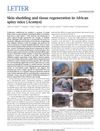
September 2012 in “Nature”
418 citations
,
September 2012 in “Nature” This study reports the first instance of skin autotomy in mammals, specifically in African spiny mice, and suggests they may possess a greater regenerative capacity than previously understood, possibly offering insights for regenerative medicine.
 271 citations
,
May 2019 in “Cells”
271 citations
,
May 2019 in “Cells” This review discusses the therapeutic potential of MSC-derived secretomes for treating degenerative and inflammatory diseases, reporting no new clinical results but highlighting their proposed mechanisms and advantages over direct MSC transplantation.
258 citations
,
July 2005 in “Journal of lipid research” This study found that DGAT1 exhibits additional acyltransferase activities in vitro, including MGAT, wax synthase, and ARAT activities, suggesting these could be relevant to its in vivo functions.
 178 citations
,
October 2001 in “Genes & Development”
178 citations
,
October 2001 in “Genes & Development” This study found that the mammalian hairless gene encodes a corepressor protein that interacts with thyroid hormone receptors, providing insights into hair loss syndromes in humans and mice.
138 citations
,
June 2004 in “Journal of Investigative Dermatology” This review discusses the regulation of involucrin gene expression, focusing on transcription factors and signaling pathways, and reports no new experimental findings.
 125 citations
,
May 2019 in “Phytomedicine”
125 citations
,
May 2019 in “Phytomedicine” This review discusses the historical development, mechanisms of action, and potential new clinical applications of the drug cepharanthine, highlighting its multi-faceted pharmacological properties; it reports no new clinical results.
102 citations
,
July 2020 in “International journal of molecular sciences” This review discusses the effects of hormonal changes on hair follicles, concluding that hormones like androgens and estradiol significantly influence hair growth and cycle, while the roles of other hormones are still being researched.
 85 citations
,
December 2017 in “Developmental Biology”
85 citations
,
December 2017 in “Developmental Biology” This review discusses mammalian models of epimorphic regeneration to define a vertebrate regeneration blastema, concluding that regenerative failure likely stems from cellular responses to the microenvironment after injury, not progenitor cell availability, and calls for targeted modification studies in mammals to advance human regeneration.
83 citations
,
August 2020 in “Resources” This review highlights the potential of marine macroalgae as a largely untapped resource for developing new active ingredients in the cosmetic industry, emphasizing their role in supporting circular economy models by utilizing waste from other industrial sectors.
 75 citations
,
November 2016 in “Medicines”
75 citations
,
November 2016 in “Medicines” This review discusses the properties and therapeutic potentials of beta-sitosterol, highlighting a need for more detailed studies on its mechanisms and long-term effects in humans; it reports no new results.
72 citations
,
March 2023 in “Biomolecules” This study reviewed the use of dupilumab, beyond its approved indications for atopic dermatitis and prurigo nodularis, and found effective treatment reports for various chronic inflammatory skin diseases such as bullous autoimmune diseases, eczema, and alopecia areata, highlighting its broad potential in dermatology.
71 citations
,
November 2005 in “The journal of investigative dermatology. Symposium proceedings/The Journal of investigative dermatology symposium proceedings” This review discusses the role of Edar signaling in hair follicle development and cycling, emphasizing its impact on cell fate, differentiation, and interactions with other pathways, but reports no new results.
 69 citations
,
January 2020 in “Veterinary World”
69 citations
,
January 2020 in “Veterinary World” This review examines factors influencing dermatophyte infection in companion animals, focusing on prevalence, clinical signs, pathogenesis, immune response, and the impact of cortisol and cytokines, but reports no new clinical results.
65 citations
,
March 2022 in “Molecules” This study examines the role of nanotechnology in cosmetics, highlighting its benefits in improving ingredient solubility and stability, but also noting challenges such as cost, shelf life, and safety concerns, along with regulatory complexities, particularly in harmonizing global legislation.
57 citations
,
February 2006 in “Journal of Investigative Dermatology” Cylindromas likely originate from hair follicle stem cells, not sweat glands.
52 citations
,
August 2021 in “Microorganisms” This review observes higher ACE2 expression in myocardial and lung tissues of heart failure and COPD patients but finds no link between RAAS inhibitors and COVID-19 severity.
 45 citations
,
January 2020 in “Pharmaceutical Biology”
45 citations
,
January 2020 in “Pharmaceutical Biology” This review discusses the potential dermatological applications of Dendrobium officinale polysaccharides, noting their hair growth promoting, skin moisturizing, and antioxidant effects, but reports no new clinical results.
 44 citations
,
October 2019 in “International Journal of Molecular Sciences”
44 citations
,
October 2019 in “International Journal of Molecular Sciences” This article reviews various studies and suggests that melatonin, produced both naturally in the skin and applied topically, may offer significant protection against environmental damage, making it a promising candidate for skincare therapies.
43 citations
,
September 2021 in “Nutrients” This review discusses the vast potential uses of persimmon beyond its dietary benefits, including applications in sustainability and new product development, but reports no new clinical outcomes.
40 citations
,
August 2021 in “International Journal of Molecular Sciences” This review discusses the role of fascial mobilization in wound healing and its potential implications for treating chronic skin wounds and scarring, but reports no new clinical results.
 40 citations
,
December 2019 in “Neurobiology of Stress”
40 citations
,
December 2019 in “Neurobiology of Stress” This review focuses on neuroactive steroids' influence on GABA-ergic signaling and discusses challenges in developing them for various therapeutic uses, citing recent excitement from FDA approval of allopregnanolone for postpartum depression but reporting no new results.
 39 citations
,
March 2008 in “Growth hormone & IGF research”
39 citations
,
March 2008 in “Growth hormone & IGF research” Raspberry ketone may help grow hair and improve skin elasticity.
 35 citations
,
July 2015 in “Journal of Affective Disorders”
35 citations
,
July 2015 in “Journal of Affective Disorders” This study found that women with polycystic ovary syndrome have significantly higher scores for affective temperaments and anxiety and depression than healthy controls, suggesting risk for depressive and anxiety disorders.
 34 citations
,
May 2012 in “International Journal of Molecular Sciences”
34 citations
,
May 2012 in “International Journal of Molecular Sciences” This study found that Ecklonia cava enzymatic extract, particularly its component dieckol, promoted hair growth by increasing dermal papilla cell proliferation and inhibiting 5α-reductase activity in cultured vibrissa follicles and C57BL/6 mice.