November 2025 in “Photochemistry and Photobiology” This review article identifies a need for standardized guidelines in using photobiomodulation therapy for spinal cord injury repair, emphasizing that current inconsistencies in therapy parameters may hinder optimal outcomes and limit clinical trials.
August 2023 in “Fermentation” This review discusses the potential of metabolic engineering to enable sustainable industrial-scale production of L-aspartate and its derivatives, detailing current microbial production progress, limiting factors, and future prospects with emerging technologies in synthetic biology.
1 citations
,
January 2016 in “Dermatology Online Journal” This case report documents a rare instance of triangular temporal alopecia in an adult woman, emphasizing the importance of correct diagnosis to avoid unnecessary treatments, and reviews the literature on TTA.
 3 citations
,
March 2024 in “Cureus”
3 citations
,
March 2024 in “Cureus” This study found that PRP may effectively reduce TMJ pain and improve jaw function and quality of life in young adults with mild TMD.
 67 citations
,
January 2020 in “Cellular & Molecular Immunology/Cellular & molecular immunology”
67 citations
,
January 2020 in “Cellular & Molecular Immunology/Cellular & molecular immunology” This review discusses the dual role of tissue-resident memory T cells in providing immune protection against infections and cancer and contributing to autoimmune skin disease pathology, without presenting new experimental results.
 April 2018 in “Journal of Investigative Dermatology”
 This study found that combining CelluTome system and RCM is a safe and effective protocol for evaluating wound healing responses in patients with epidermolysis bullosa.
1 citations
,
August 2024 in “British Journal of Dermatology” This study found that after 15 months of treatment with ritlecitinib, patients with alopecia areata and less than 95% initial hair loss experienced significant hair regrowth, though those with more extensive hair loss showed more variable improvement.
 77 citations
,
January 1980 in “Carcinogenesis”
77 citations
,
January 1980 in “Carcinogenesis” This study found that TPA was significantly more effective than mezerein in inducing dark basal keratinocytes in mouse skin, which may be important in early tumor promotion stages.
1 citations
,
November 2023 in “SKIN The Journal of Cutaneous Medicine” 13 citations
,
February 2025 in “Journal of the European Academy of Dermatology and Venereology” Ritlecitinib shows promise for treating alopecia areata, especially with early and extended treatment.
May 2025 in “Journal of the European Academy of Dermatology and Venereology” This study found that 45.5% of alopecia areata patients treated with ritlecitinib 50 mg daily achieved significant hair regrowth, with most maintaining their response over 24 months.
July 2023 in “International Journal of Molecular Sciences” In this study, Trapa bispinosa Roxb. pericarp extract demonstrated inhibitory effects on 5α-reductase activity both in vitro using LNCaP cells and in vivo in a mouse model of benign prostatic hyperplasia, suggesting its potential role in managing the condition.
34 citations
,
August 2019 in “Journal of Allergy and Clinical Immunology” mTORC2 is crucial for healthy skin barrier by regulating lipids and filaggrin.
2 citations
,
June 2025 in “Drug Testing and Analysis” This study found that after application of a testosterone cream containing 17α-methyltestosterone and testosterone propionate, these compounds could be detected in dried blood spots up to 97 hours post-application, potentially leading to sample contamination during fingertip puncture.
7 citations
,
September 2014 in “Mass spectrometry letters” This study reported that a liquid-liquid extraction method using methyl tert-butyl ether and methylene chloride was most effective for extracting dutasteride and its internal standard from rat plasma.
 1 citations
,
January 2017 in “Journal of Clinical Trials & Patenting”
1 citations
,
January 2017 in “Journal of Clinical Trials & Patenting” This study assessed the safety and efficacy of Romantaque lotion for unwanted hair growth and found statistically significant hair growth inhibition with no adverse effects in 30 volunteers after repeated applications over one year.
4 citations
,
September 1993 in “Steroids” This paper details a method for measuring testosterone metabolism into seven androgens using digital autoradiography, which offers high sensitivity and reduces the need for radioactive materials.
 May 2026 in “Journal of the Egyptian Womenʼs Dermatologic Society”
 This review discusses microneedling radiofrequency in cosmetic dermatology, particularly for skin texture improvement and various conditions, and reports no new clinical results.
July 2025 in “Indian Dermatology Online Journal” This study reports a unique case of trichotillomania incognita in an adult female that mimicked female pattern hair loss, highlighting the importance of trichoscopy and histology for accurate diagnosis.
This study investigated dual TCR Treg cells in mouse tissues, revealing a high proportion and diverse pairing patterns compared to single TCR Tregs, providing insights into their origins and characteristics across different tissue locations.
 36 citations
,
January 2018 in “Clinical and Medical Reports”
36 citations
,
January 2018 in “Clinical and Medical Reports” Rare earth elements are crucial in medical imaging and cancer treatment.
February 2023 in “Default Digital Object Group” This study demonstrated that a single multimode fiber can be used for single-shot wide-field reflectance imaging, achieving high correlation with the ground truth and enabling real-time microendoscopy at up to 180 frames per second.
May 2025 in “Immunotherapy” This study observed that patients with alopecia areata taking ritlecitinib reported higher satisfaction with hair growth after 24 and 48 weeks compared to those taking a placebo, aligning with improvements in hair growth noted by doctors.
 1 citations
,
December 2018 in “Journal of genetic medicine”
1 citations
,
December 2018 in “Journal of genetic medicine” In this case report, a 20-year-old male with tricho-rhino-phalangeal syndrome was found to have a de novo frameshift mutation in the TRPS1 gene, highlighting the challenges in diagnosing this rare disorder.
 1 citations
,
April 2026 in “Aesthetic Plastic Surgery”
1 citations
,
April 2026 in “Aesthetic Plastic Surgery” This study found that radiofrequency microneedling is effective and well-tolerated for improving various skin conditions, showing comparable efficacy to fractional lasers for atrophic acne scars with generally favorable patient satisfaction and safety.
288 citations
,
January 2001 in “Journal of Biological Chemistry” In this study, the disruption of Gh/tissue transglutaminase in mice did not affect viability but reduced thymocyte viability and fibroblast adhesion, suggesting its role in cell stabilization and extracellular matrix interactions.
 5 citations
,
February 2024 in “Clinical Pharmacokinetics”
5 citations
,
February 2024 in “Clinical Pharmacokinetics” This study found that modeling and simulation effectively informed decision-making and dose selection for ritlecitinib in treating alopecia areata, supporting an accelerated drug development strategy.
8 citations
,
March 2015 in “International Journal of Oncology” This study successfully established Tsc2-deficient embryonic stem cells from Eker rats and found these cells have distinct gene expression compared to non-mutant cells, which could help identify new therapeutic targets for TSC-related pathogenesis.
 13 citations
,
June 2012 in “Journal of Dermatological Case Reports”
13 citations
,
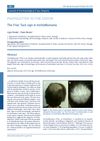
June 2012 in “Journal of Dermatological Case Reports” This report describes an 8-year-old male with trichotillomania, confirmed by trichoscopy showing characteristic hair damage and patterns.
July 2025 in “SKIN The Journal of Cutaneous Medicine” This study describes characteristics and outcomes for adults initiating ritlecitinib for severe alopecia areata, highlighting increased hair regrowth and physician satisfaction with longer treatment durations, despite ongoing psychosocial impacts like embarrassment and anxiety among patients.